
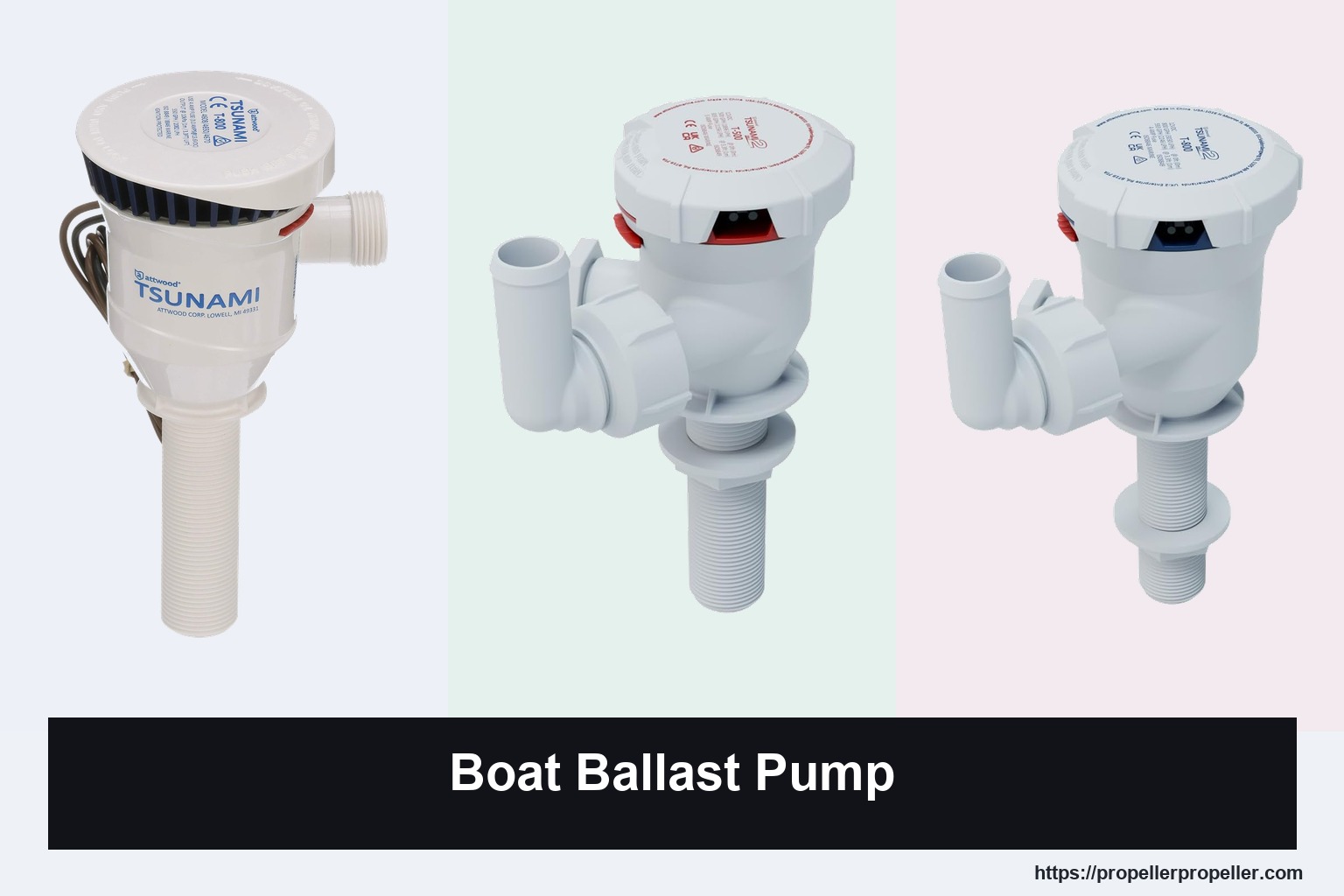
A reliable boat ballast pump is one of those parts you only notice when it falls short. Moving water fast is important, but so is fitting the boat’s electrical system, staying easy to service, and holding up in wet, corrosive marine conditions. For anglers and wake boat owners, the right pump can mean healthier livewell water, quicker fill and drain cycles, and fewer headaches when a cramped installation needs attention.
This roundup focuses on practical buying differences rather than raw flow numbers alone. Some pumps are built for compact, low-maintenance installs. Others prioritize compatibility with existing systems or replacement cartridges that simplify service. A few are better thought of as repair or refresh options than full new installations. The best choice depends on how much water you need to move, how much space you have, and whether your priority is new installation, easier upkeep, or restoring an older setup.
Top Boat Ballast Pump on the Market

Attwood Tsunami T800 Aerator Pump
- 800 GPH output
- 12-volt operation
- Threaded ¾-inch outlet
- Replaceable cartridge design

Attwood Tsunami MK2 Aerator Pump
- 500 GPH flow rate
- 12-volt marine operation
- 90 and straight outlets
- Tool-free service access

Attwood Tsunami MK2 800 GPH Pump
- 800 GPH flow rate
- 12-volt DC power
- 17.5-foot lift height
- 3-year warranty

FATSAC Supa Tsunami Pump

Shurflo 600 GPH Cartridge Kit
- 600 GPH cartridge
- 12-volt replacement part
- 357 Series compatibility
- Livewell and aerator use
This article may contain affiliate links. As an Amazon Associate, the website may earn from qualifying purchases at no additional cost to you.
Boat Ballast Pump Reviews
Attwood Tsunami T800 Aerator Pump
- Flow Rate
- 13.33 gpm
- Voltage
- 13.6 volts
- Material Type
- Stainless Steel
- Item Weight
- 14.1 ounces
Advantages
- 800 GPH rated output
- 12-volt marine power
- Corrosion-resistant wiring details
- Locking motor cartridge
- Compact for contained spaces
Limitations
- Requires correct inlet and outlet sizing
- Less focused on tool-free service
The Tsunami T800 is the strongest fit here for buyers who want a straightforward high-output aeration pump rather than a general-purpose water mover. Its rated 800 GPH output at 13.6 volts DC and 750 GPH at 12 volts DC give it more breathing room than smaller alternatives, which matters when the livewell is large or water turnover needs to stay consistent. The compact design is meant for contained spaces, so it is easier to place where a bigger body would be awkward. The threaded ¾-inch outlet and 3 ½-inch inlet also give the installer clear sizing targets before any plumbing is cut.
The electrical and service details are where this model separates itself from cheaper, more basic pumps. It runs on 12 volts and uses 29-inch wire, so the install still depends on how close the mounting point is to power. The patented shaft seal, tinned wiring, and corrosion-resistant construction are especially relevant in a marine compartment where moisture and salt exposure can shorten the life of lesser parts. The lockable motor cartridge is another practical advantage because maintenance becomes a controlled task instead of a messy teardown.
Against the other pumps in this group, the T800 stands out most for capacity and durability rather than convenience features. It is the right call when you want a mature, proven-style pump with more output than the 500 GPH class and more complete engineering than a no-frills replacement cartridge. The tradeoff is that it is not the simplest service-first design in the lineup, and buyers who care more about fast cartridge swaps may prefer a newer modular option. For a new or upgraded livewell system that needs strong performance and dependable materials, this is the most confident pick.
PHOTO: Attwood Tsunami T800 Aerator – Top housing and threaded outlet → Source: Amazon.com
Attwood Tsunami MK2 Aerator Pump
Advantages
- 500 GPH output
- Includes 90 and straight outlets
- No tools required
- One-hand cartridge release
- Backward compatible
Limitations
- Lower output than larger pumps
- Fewer construction details available
This Tsunami MK2 version is the most obviously service-oriented choice in the lineup. Its 500 GPH output is lower than the high-output pumps here, but that is not necessarily a drawback if the livewell or baitwell does not demand maximum turnover. The included 90 and straight outlets make the pump easier to adapt to different plumbing paths, which can save space in a tight compartment. For many owners, that flexibility matters more than chasing a bigger number on paper.
The strongest practical advantage is how little effort the setup appears to require. The no-sealant, no-tools approach can reduce the friction of installation and make future service less disruptive. One-hand cartridge release is especially useful when access is cramped and you do not want a full disassembly just to inspect or clean the unit. Because it runs on standard 12-volt marine systems and is backward-compatible with earlier Tsunami Aerator models, it also suits buyers replacing older gear without wanting to redesign the whole plumbing layout.
Compared with the T800, this model gives up raw output but gains ease of use and installation flexibility. Compared with the 800 GPH modular alternative in the group, it appears simpler in concept and more accessible for routine service, though it does not show the same output ceiling. That makes it a strong fit for smaller setups, retrofit work, and owners who value straightforward maintenance over maximum water movement. If installation convenience and compatibility matter more than brute force, this is the one to shortlist first.
PHOTO: Attwood Tsunami MK2 Aerator – Angled outlet fitting → Source: Amazon.com
Attwood Tsunami MK2 800 GPH Pump
- Flow Rate
- 13.33 gpm
- Voltage
- 12 volts_of_direct_current
- Maximum Lifting Height
- 17.5 feet
- Material Type
- Plastic
- Manufacturer Warranty Description
- 3 year
Advantages
- 800 GPH output
- 12-volt DC operation
- 17.5-foot lifting height
- Includes straight and 90-degree outlets
- 3-year warranty
Limitations
- Plastic construction
- No very detailed material breakdown
This Tsunami MK2 variant targets buyers who want stronger performance than the smaller 500 GPH version without moving into a more complicated product category. The 800 GPH rating puts it in the same output class as the highest-capacity option in the group, so it has the flow headroom for a more demanding livewell or ballast-style duty cycle. Its 12-volt DC power source keeps it compatible with standard marine electrical systems, which is important when the goal is an upgrade rather than a full redesign. The compact dimensions also matter in real boats where the pump location rarely offers generous space.
The 17.5-foot maximum lifting height is a useful differentiator because it points to stronger hydraulic capability than many smaller pumps can claim. That can matter when the plumbing route is not short and direct. The included straight and 90-degree outlets further reduce installation friction because the system can be adapted to the boat instead of forcing the boat to fit the pump. A 3-year warranty adds another layer of confidence for buyers who want a little more protection around a working marine part that will see repeated wet use.
Against the other selected pumps, this one lands in a very practical middle. It has the output to satisfy demanding use, but it also keeps the convenience of the MK2 family, including tool-free service and easy cartridge access. That makes it more versatile than the lower-output version and less specialized than the original T800’s materials-first design. If your priority is a modern pump that balances power, compatibility, and serviceability, this is the most broadly appealing choice in the set.
PHOTO: Attwood Tsunami MK2 800 – Angled outlet fitting → Source: Amazon.com
FATSAC Supa Tsunami Pump
Advantages
- Replacement-oriented design
- Known pump family
- 4.6-star rating
- 158 reviews
Limitations
- Very limited technical detail
- Not ideal for new builds
This pump is the least information-heavy option in the group, but it still serves a clear role for buyers trying to keep an existing setup moving. It is best viewed as a replacement-oriented choice rather than a feature-rich new-install pump. The available rating and review volume suggest it has been on the market long enough to attract sustained buyer attention, which can matter when you are looking for a known replacement path instead of experimenting with a new format. In a category where compatibility often matters more than novelty, that can be enough to keep it in consideration.
Because the product record does not provide detailed installation or performance specifications, the buying case here depends more on fit and replacement intent than on measurable output. That makes it most relevant when you already know the pump family you are matching or when you need a straightforward swap rather than an engineered upgrade. Buyers planning a fresh ballast or livewell build will likely want more exacting information before committing, while those replacing a worn pump may care more about continuity than expanding capability.
Relative to the other picks, this is the least transparent on technical detail and therefore the hardest to recommend as a first choice for a new system. It does not compete on the clear output figures of the Attwood pumps, and it lacks the documented service features that make the MK2 models easier to live with. Where it can still make sense is in a replacement scenario that rewards familiarity and a simple swap over a more ambitious redesign. For that narrow use, it is worth considering, but not as the leading option.
PHOTO: FATSAC Supa Tsunami Pump – Coiled pump hose assembly → Source: Amazon.com
Shurflo 600 GPH Cartridge Kit
- Specific Uses For Product
- Livewell and Aerator Pumps
- Material Type
- Plastic
- Item Weight
- 16 ounces
- Part Interchange Info
- replacement
Advantages
- 600 GPH replacement cartridge
- 12-volt compatibility
- Restores existing pumps
- Targeted repair approach
- Interchange replacement part
Limitations
- Only for compatible systems
- Not a full pump
This Shurflo kit is the clear choice if the real problem is not the whole pump but the internal cartridge. The 600 GPH replacement rating positions it between the smaller 500 GPH option and the larger 800 GPH pumps, which is useful when you want to restore a midrange system without changing the entire assembly. Because it is designed for 357 Series Piranha livewell and aerator pumps, it is most valuable to owners who already have a compatible platform and want to bring it back to life rather than start over.
The cartridge format changes the economics of repair. Instead of replacing everything, you can focus on the wear component that has likely taken the punishment. That can be a smart choice in boats where the outer housing and plumbing are still fine, but flow has dropped or reliability has slipped. The 12-volt design keeps it aligned with standard marine electrical systems, and the interchange and replacement orientation mean the part is about continuity rather than novelty. It is also the most clearly maintenance-driven item in the group, which may appeal to buyers comfortable with targeted repairs.
Compared with full pump replacements, this kit is only attractive when compatibility is already established. It will not suit buyers who want the easiest possible one-box installation or the highest published output in the set. What it does better than the rest is preserve an existing livewell or aerator investment at a lower disruption level. If you know you need a cartridge for a 357 Series setup, this is the most logical purchase. If you are building from scratch, one of the complete pumps is the better place to spend the money.
PHOTO: Shurflo 600 GPH Cartridge – Replacement pump cartridge → Source: Amazon.com
How to Choose a Boat Ballast Pump
Choosing a boat ballast pump is mostly about matching the pump to the job you actually need it to do. A high-output unit is useful only when the plumbing, electrical supply, and compartment layout can support it. A lower-output pump can be the smarter choice when the system is compact, the service access is limited, or the goal is simply to maintain healthy water circulation. The best purchase is the one that fits your boat’s space, wiring, and maintenance habits instead of forcing changes in every other part of the system.
Flow and Use Case
Start by matching output to the way the pump will be used. A larger livewell or a system that needs faster turnover naturally benefits from higher flow, while a smaller baitwell or a simple replacement often does not. Choosing more capacity than the system can actually use may increase complexity without improving day-to-day performance. The practical question is whether you need sustained circulation, a fast refill cycle, or a repair that restores the original behavior of the boat.
Voltage and Wiring
Voltage compatibility matters because marine pumps usually live inside an existing electrical setup. A 12-volt pump is the most straightforward option for standard boats, but the wiring run and connector length still affect where the pump can be mounted. Longer wire can ease placement, while short leads may force you to position the unit closer to power. Good wiring also matters in wet spaces, where corrosion and water intrusion can shorten service life if the components are not built for that environment.
Installation Space
The available compartment space often decides which pump is practical before anything else. Compact pumps are much easier to route around hoses, elbows, and nearby hardware. Outlet style matters too, especially when a straight fitting works better in one boat and a 90-degree fitting is the cleaner answer in another. When access is tight, a design that allows easier cartridge service can save time later, because the hardest part of maintenance is often reaching the part rather than replacing it.
Service and Repairs
Think about how the pump will be maintained over time, not just how it will work on installation day. A cartridge-based design can be a strong choice when you want to replace wear components without rebuilding the whole system. That is especially relevant if the housing, plumbing, and electrical path are still good. If you expect the boat to stay in service for many seasons, a pump that simplifies cleaning or replacement can reduce downtime and make routine upkeep far more manageable.
Durability in Water
Marine pumps spend their lives in wet, corrosive conditions, so construction details matter more than they would in a dry application. Corrosion-resistant wiring, better seals, and robust internal materials can pay off in longer life and fewer leaks. In practice, this is what separates a pump that keeps working from one that becomes an annual problem. If your boat sees salt exposure, heavy use, or repeated vibration, durability should carry nearly as much weight as output.
Replacement Versus New Build
A repair kit and a full pump solve different problems. If the existing setup is compatible and only the internal wear parts are tired, a cartridge kit can be the economical path. If you are starting from scratch or changing the plumbing, a complete pump is usually easier to plan around. The right decision comes down to whether you are restoring an established system or designing a new one around current needs.
Boat Ballast Pump Comparison Table
| Product | Best For | Weight | Color | Material Type | Number of Items | Specific Uses For Product |
|---|---|---|---|---|---|---|
| Attwood Tsunami T800 Aerator Pump | Best High-Output Pick | 14.1 ounces | White | Stainless Steel | 1 | boating, wakeboarding, marine environments |
| Attwood Tsunami MK2 Aerator Pump | Best Service-Friendly Pick | Not Specified | Not Specified | Not Specified | Not Specified | Not Specified |
| Attwood Tsunami MK2 800 GPH Pump | Best Balanced Upgrade | 1.1 pounds | White/ Blue | Plastic | 1 | Boating, Fishing |
| FATSAC Supa Tsunami Pump | Best Replacement Option | Not Specified | Not Specified | Not Specified | Not Specified | Not Specified |
| Shurflo 600 GPH Cartridge Kit | Best Repair Kit | 16 ounces | No Color | Plastic | 1 | Livewell and Aerator Pumps |
How We Tested & Analyzed Boat Ballast Pump
This guide was built around the factors that most directly affect real boat use: flow capacity, electrical compatibility, service access, and fit inside a cramped marine compartment. Those criteria matter because a pump can look impressive on paper yet still be awkward to install or difficult to maintain once it is in the boat. The analysis therefore focused on what each product is actually positioned to do, and on the consequences of its construction details for a buyer making a practical purchase.
Comparisons emphasized meaningful tradeoffs rather than simply ranking models by a single number. Output mattered, but so did outlet style, cartridge access, wiring length, warranty coverage, and whether the product was a full pump or a repair part. That approach helps separate strong candidates for new installs from better choices for replacements and service work. It also avoids overvaluing one spec when the rest of the system would not benefit from it.
Where the available facts were sparse, the analysis stayed conservative. Products with limited technical detail were evaluated more cautiously because a boat pump choice depends heavily on compatibility and setup implications. In those cases, the guidance prioritizes what is clearly supported and points out when a product is better suited to a narrower use case. That keeps the recommendations grounded in what a buyer can actually act on without guessing.
Frequently Asked Questions
How much flow do I need in a boat pump?
The right flow depends on the size of the livewell or ballast compartment and how quickly you want water moved. Smaller systems usually do not need the highest rating available. Larger or more demanding setups benefit from more output because the pump can keep circulation steady under load. Match the flow to the system, not the biggest number you can find.
Is 12-volt power standard for boat pumps?
Yes, 12-volt operation is the most common setup for marine pumps and is usually the easiest to integrate into an existing boat electrical system. That said, you still need to consider wiring length, mounting location, and connector quality. A compatible voltage is only the starting point. The rest of the installation has to fit the boat cleanly and safely.
When should I choose a repair kit instead of a full pump?
Choose a repair kit when the existing pump platform is still compatible and the problem appears to be wear inside the assembly rather than failure of the entire unit. A cartridge or rebuild part can restore performance without changing the full plumbing layout. If the pump body, wiring path, or fittings are also worn out, a complete replacement is usually the better investment.
What matters more, output or serviceability?
That depends on how often you expect to access the pump. Output is more important when the system needs strong circulation or fast fill and drain performance. Serviceability matters more when the pump sits in a tight compartment or will be cleaned and maintained regularly. In many boats, the best choice balances both instead of maximizing only one.
Final Thoughts
The best boat ballast pump is the one that fits your actual system, not the one with the biggest headline number. Output matters, but so do voltage, outlet style, service access, and whether you are replacing a worn cartridge or installing a full new pump. Once those basics line up, the choice becomes much clearer and the odds of a clean, reliable install go up sharply.
For buyers who want the most confident all-around path, the strongest options are the ones that combine enough flow with sensible installation details and durable marine construction. If your boat already has a compatible setup, a repair part can be the most economical answer. If you are building or upgrading, focus on compatibility first and capacity second. That order usually leads to the best long-term result.



