
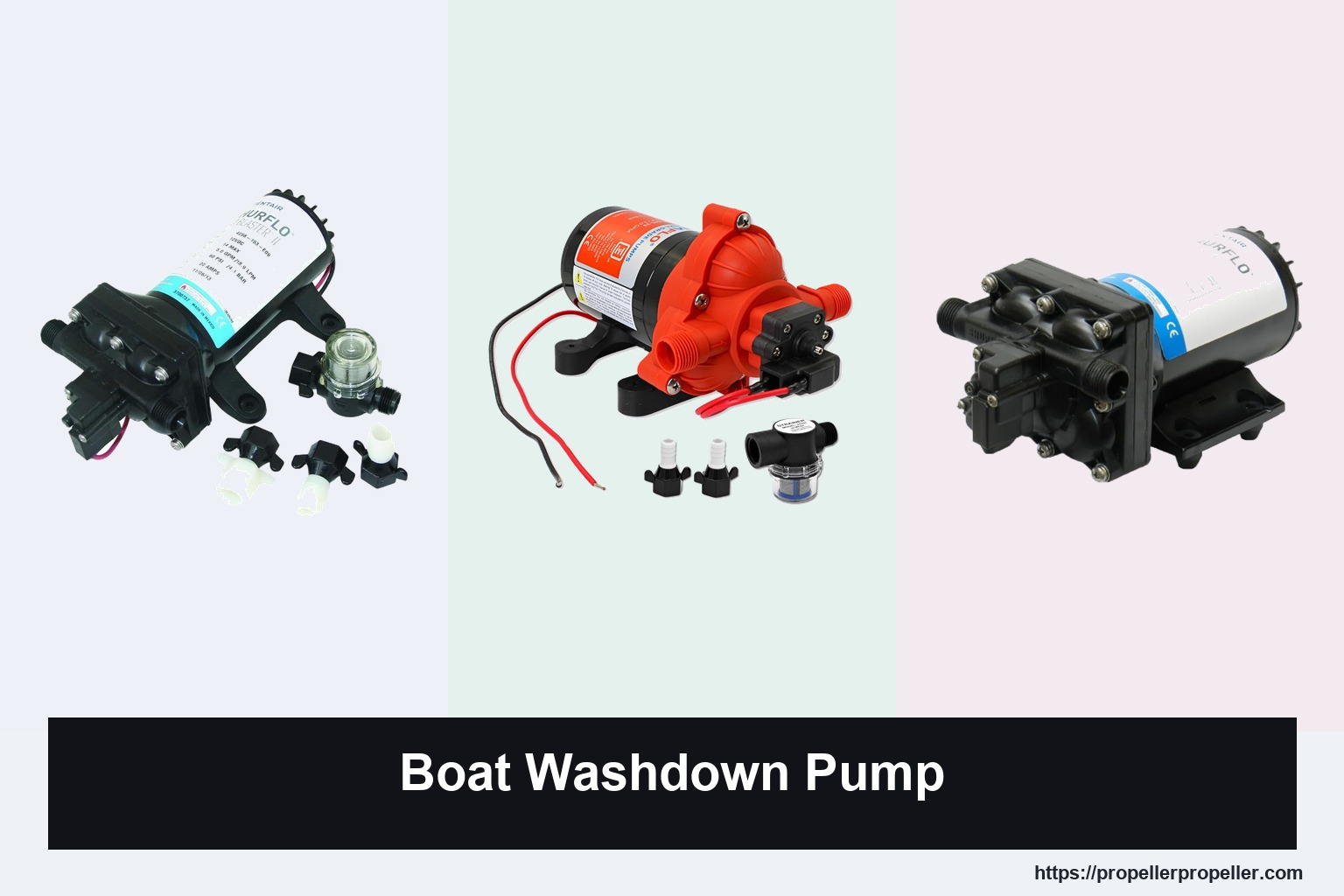
A boat washdown pump has to do more than move water. It needs enough pressure to clear salt, mud, fish slime, and deck grit without wasting time at the dock, and it has to keep working in an environment that is wet, corrosive, and often cramped. The right choice depends on how much cleaning force you need, how much flow you want for rinsing larger surfaces, and how much value you place on protection features that keep a marine pump alive over time.
The three pumps below cover distinct buyer priorities. One leans hard into maximum washdown performance, one emphasizes value and simpler 12V utility, and one sits in the middle with a strong balance of pressure, flow, and marine durability. The most useful comparison is not just raw output. It is how each pump handles self-priming, dry-run tolerance, installation demands, and the kind of boat cleaning work it is actually built to handle.
Top Boat Washdown Pump on the Market

PENTAIR SHURFLO Pro Blaster II 4.0 Marine Washdown Pump
- 4.0 GPM output
- 60 PSI pressure
- Self-primes to 6 feet
- Includes inlet strainer
- Marine-grade protection

SEAFLO 33 Series 12V Diaphragm Pump
- 12V DC power
- 3.0 GPM flow
- 45 PSI shut-off
- Self-primes to 6 feet
- 4-year warranty

PENTAIR SHURFLO Blaster II Washdown Pump
- 3.5 GPM output
- 45 PSI pressure
- Self-priming design
- Run-dry protection
- Corrosion-resistant materials
This article may contain affiliate links. As an Amazon Associate, the website may earn from qualifying purchases at no additional cost to you.
Boat Washdown Pump Reviews
PENTAIR SHURFLO Pro Blaster II 4.0 Marine Washdown Pump
Advantages
- Highest pressure in the group
- Strong 4.0 GPM flow
- Self-primes up to 6 feet
- Dry-run tolerant design
- Includes nozzle and fittings
Limitations
- Highest price here
- May be more pump than needed for light use
This is the pump for boat owners who want the most aggressive cleaning performance in the group. Its 4.0 GPM flow and 60 PSI pressure give it the strongest rinse force here, which matters when you are stripping salt, sand, and fish residue from a deck after a hard day on the water. That combination also shortens washdown time on larger surfaces, so you spend less effort chasing debris around with the nozzle and more time actually clearing the boat.
The rest of the package is built for hard marine use rather than light freshwater duty. The self-priming diaphragm design reaches up to 6 feet, which gives more flexibility when the pump has to sit below or near the water source. It can run dry without damage, and the sealed pressure switch, ignition-protected motor, thermal overload protection, and corrosion-resistant components all point toward better survival in a wet, punishing installation. The included inlet strainer, spray nozzle, two 3/4 inch hose barb fittings, and one 3/4 inch GHT male fitting also reduce the amount of extra parts you need to source before installation.
Compared with the other two pumps, this one is the clear step-up choice when cleaning speed matters more than upfront savings. It costs more than the SEAFLO and does not target the same budget lane, but it also delivers a more forceful washdown package than the 3.5 GPM model in this roundup. If you run a larger fishing boat, a cruiser, or any setup that sees frequent salt and grime buildup, this is the one to favor. It is the strongest recommendation for buyers who want a dedicated washdown pump with real margin.
PHOTO: PENTAIR SHURFLO Pro Blaster – Marine washdown pump with fittings → Source: Amazon.com
SEAFLO 33 Series 12V Diaphragm Pump
- Power Source
- 12V DC
- Flow Rate
- 3 gpm
- Maximum Lifting Height
- 6 feet
- Voltage
- 12 volts
- Manufacturer Warranty Description
- 4-Year Warranty
Advantages
- Lowest price here
- 12V on-demand operation
- Self-primes to 6 feet
- Run-dry capable
- 4-year warranty
Limitations
- Lower pressure than dedicated washdown pumps
- Not the strongest rinse option
This pump fits buyers who want a practical on-demand water pump without stepping into the higher-cost marine washdown tier. Its 12V DC power and 3.0 GPM flow place it in a more moderate output class, which is enough for many boat utility tasks where steady delivery matters more than brute-force spray. The 45 PSI shut-off pressure also keeps it from feeling undersized in everyday use, especially if you are relying on it for general freshwater supply rather than aggressive deck blasting.
The installation and operating details are what make it attractive beyond price. It self-primes up to 6 feet, so placement is more forgiving in a compact marine compartment, and it can run dry without damage. The automatic pressure switch starts and stops the pump on demand, which simplifies daily use when you are opening and closing fixtures. A rubber mounting base is also included to reduce noise and vibration, while the EPDM valves, Santoprene diaphragm, and thermal overload protection support longer service life in damp conditions. The pump is listed with a 4-year warranty, which is unusually reassuring in this price range.
Against the two PENTAIR options, the main tradeoff is clear: you give up raw washdown force, but you gain a lower purchase price and a more versatile general-purpose water pump profile. That makes it especially appealing for smaller boats, lighter-duty freshwater setups, or owners who want one pump to serve multiple fixtures rather than a dedicated high-pressure washdown rig. If the job is routine rinsing and dependable onboard water delivery, this is the most cost-conscious recommendation in the group.
PHOTO: SEAFLO 33 Series 12V – Pump with strainer and fittings → Source: Amazon.com
PENTAIR SHURFLO Blaster II Washdown Pump
Advantages
- Balanced 3.5 GPM flow
- 45 PSI washdown pressure
- Self-priming design
- Run-dry protection
- Corrosion-resistant materials
Limitations
- Less force than the top-output model
- Fewer included installation extras
This pump lands in the middle for buyers who want a real washdown unit without moving all the way to the most powerful option. The 3.5 GPM diaphragm design gives it enough flow to rinse decks and gear efficiently, while the 45 PSI output adds enough bite to remove dirt, salt, and grime in regular marine cleaning chores. It is a better fit than a general-purpose utility pump when the main goal is washdown performance, but it avoids the top-end price and output of the most aggressive model here.
Its self-priming design makes installation less restrictive, and the run-dry protection is a useful safeguard when conditions are less than ideal. Those two traits matter on boats because pumps often live in spaces that are not perfectly convenient, and cleaning sessions do not always stay perfectly constant. The corrosion-resistant construction is another important practical point. In marine use, materials are not a side detail. They are the difference between a pump that stays dependable through repeated exposure and one that becomes a recurring maintenance headache.
Relative to the other two pumps, this one is the balanced choice. It gives up some peak pressure to the 4.0 GPM model, but it also avoids the higher cost of that premium unit. Compared with the SEAFLO, it is much more specifically a washdown pump and less of an all-purpose water system component. That makes it the best fit for owners who want a straightforward marine washdown solution with respectable force and sensible protection features. For most midrange buyers, this is the most even-handed pick.
PHOTO: PENTAIR SHURFLO Blaster II – Marine washdown pump assembly → Source: Amazon.com
How to Choose a Boat Washdown Pump
The right washdown pump is a balance between cleaning force, installation flexibility, and how often you expect the pump to work in harsh marine conditions. A pump that feels impressive on paper can still be the wrong choice if it is too loud, too weak, or poorly matched to the way you actually clean the boat. A better approach is to think about pressure, flow, priming, durability, and the kind of job the pump will do most often.
Pressure Matters Most
Pressure is what gives a washdown pump the ability to push salt, mud, and fish residue off a deck quickly. Higher pressure usually means a more forceful spray pattern and less time spent scrubbing stubborn areas by hand. That matters most on fishing boats and larger decks where grime builds fast after every outing. If your cleaning tasks are mostly light rinsing, you may not need the highest pressure available, but if you fight heavy buildup, pressure should sit near the top of your list.
Flow Rate and Coverage
Flow rate affects how much water reaches the surface at once, which changes how quickly you can rinse larger areas. A stronger flow helps with wide decks, bait prep areas, and gear washdowns because it covers more surface before the spray feels weak or narrow. Lower flow can still be useful for smaller boats or lighter tasks, especially when you want to conserve water. The practical question is whether you need aggressive cleaning force, broad rinse coverage, or a combination of both.
Priming and Placement
Self-priming ability is important when the pump will not sit perfectly close to the water source. A pump that can lift water from a modest distance gives you more freedom to mount it where space allows, rather than where plumbing is easiest. That can matter a great deal in tight compartments. Dry-run tolerance is also worth attention because marine use is messy and interruptions happen. A pump that can survive brief dry running is usually easier to live with over time.
Durability in Salt Air
Marine environments punish pumps with moisture, vibration, and corrosion. Materials, sealed switches, and thermal protection all contribute to how long the unit can keep working without trouble. If you regularly boat in saltwater, corrosion resistance should not be treated as a bonus feature. It is part of the core value. The same is true for thermal overload protection, which helps the pump survive stress when use patterns get rough or when conditions are hotter than ideal.
Installation and Included Parts
Installation is rarely just about bolting a pump in place. Hose fittings, inlet strainers, and connector types affect how many extra parts you need before the system is ready. A more complete kit can save time and reduce guesswork, especially if you want the pump in service quickly. You should also think about power source and voltage compatibility. A pump that matches the electrical system cleanly is easier to integrate and less likely to create avoidable setup frustration.
Boat Washdown Pump Comparison Table
| Product | Best For |
|---|---|
| PENTAIR SHURFLO Pro Blaster II 4.0 Marine Washdown Pump | Best High-Pressure Choice |
| SEAFLO 33 Series 12V Diaphragm Pump | Best Budget Option |
| PENTAIR SHURFLO Blaster II Washdown Pump | Best Midrange Pick |
How We Tested & Analyzed Boat Washdown Pump
This roundup was built around category-level buying criteria that matter on real boats: wash pressure, flow, priming behavior, dry-run tolerance, durability in wet environments, and how complete the installation package appears to be. Those factors determine whether a pump simply moves water or actually solves deck-cleaning problems in a useful way. The analysis also considered how each product sits in the market, because the best choice is not always the strongest pump. It is the one whose output and features match the use case without unnecessary cost or complexity.
Comparisons were made by weighing the meaningful differences in performance and ownership tradeoffs. Pressure and flow were treated as separate signals because they affect the feel of the spray in different ways. Setup convenience mattered when a pump included fittings, a strainer, or other useful installation parts. Protection features were also important because marine pumps live in difficult conditions and replacement costs can quickly erase an initial bargain. Where a product emphasized broader utility rather than dedicated washdown duty, that distinction was treated as part of its value rather than as a flaw.
Limitations were handled conservatively. Only verified facts were used, and any claim that could not be grounded in the product record was left out. That means the guidance focuses on what can be compared cleanly and what a buyer can infer from those details. It also means the article avoids pretending that every boat owner needs the same pump. A smaller, less aggressive unit can be the smarter choice when the job is lighter. A more powerful model can be worth it when cleaning demand is high and downtime is unacceptable.
Frequently Asked Questions
What pressure is best for a boat washdown pump?
The best pressure depends on how hard your boat gets worked. Higher pressure is better for salt, algae, and stubborn grime on larger decks. Moderate pressure can still be enough for routine rinsing and lighter cleanup. The key is matching force to your cleaning habits so you do not overpay for output you rarely use.
Is self-priming important on a marine pump?
Yes, especially when the pump cannot sit right beside the water source. Self-priming gives you more flexibility in where you mount it and can make installation easier in tight compartments. It also helps the system recover more reliably after plumbing changes or interruptions, which is useful in real marine use.
Can a washdown pump run dry safely?
Some can, but not all pumps are equally tolerant. Dry-run capability matters because real-world use on boats is not perfectly controlled. A brief loss of water should not automatically mean damage. That protection can reduce downtime and make the pump less stressful to operate when conditions are messy or variable.
What matters more, flow rate or pressure?
Both matter, but they do different jobs. Pressure affects how forcefully the water cleans, while flow rate affects how much area you rinse at once. For washdown work, the best choice usually blends enough pressure to break up dirt with enough flow to cover decks efficiently. Your boat size and cleaning style decide which one deserves more weight.
Final Thoughts
A good boat washdown pump should save time, not create a new maintenance problem. The strongest option is the one that matches your real cleaning workload, your installation space, and your electrical setup. If you need maximum cleaning force, a high-pressure marine washdown pump earns its keep quickly. If your use is lighter or more general, a moderate-output unit can be the smarter buy because it gives you reliable service without unnecessary cost.
The safest way to choose is to start with the mess you clean most often. Heavy salt and grime justify a stronger washdown system. Smaller boats and mixed-use setups usually benefit more from balanced flow, easier installation, and better value. Once you rank those priorities honestly, the right pump becomes much easier to spot, and you will end up with a system that feels well matched instead of merely powerful.



