
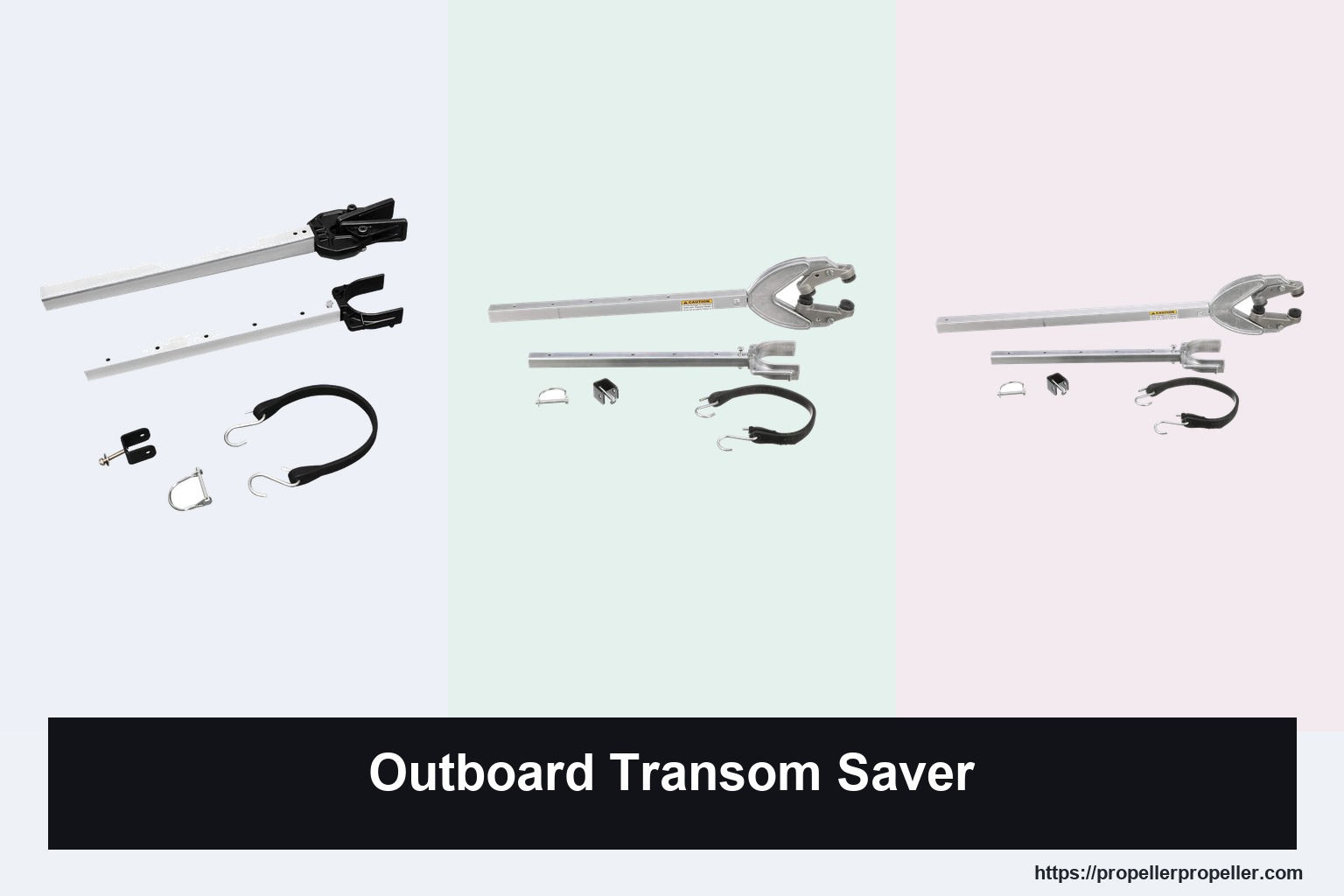
Trailering an outboard without the right support turns every mile into stress on the transom, the motor bracket, and the trailer setup that carries them. A good transom saver is not just a convenience piece. It changes how the engine’s weight moves during transport, which can reduce bounce, limit leverage on the hull, and make the whole rig feel more controlled on rough roads.
The strongest options in this category solve the same basic problem in different ways. Length range, mounting style, head design, material choice, and corrosion limits all matter because they determine whether the saver fits your boat-trailer combination and how confidently it holds the engine in place. The four picks below cover shorter and longer setups, lighter and heavier-duty builds, and different tradeoffs between value, reach, and long-term durability.
Top Outboard Transom Saver on the Market

Sebnux Adjustable Boat Transom Saver
- Adjustable 23 to 35 inches
- Composite head and aluminum shaft
- Roller and trailer mounts
- For motors 100 HP and under

Attwood Heavy-Duty Transom Saver 24-36
- Adjusts from 24 to 36 inches
- Heavy-duty aluminum and rubber
- Roller and trailer brackets
- Replaceable rubber pads

Attwood Heavy Duty Transom Saver 32-44
- Adjusts from 32 to 44 inches
- Heavy-duty head
- Roller and trailer mounts
- Silver and black finish

Extreme Max Universal Transom Saver
- Adjusts from 28 to 59 inches
- Rated for up to 150 HP
- Universal fit
- Two-year replacement warranty
This article may contain affiliate links. As an Amazon Associate, the website may earn from qualifying purchases at no additional cost to you.
Outboard Transom Saver Reviews
Sebnux Adjustable Boat Transom Saver
- Material
- Aluminum
- Warranty Description
- 2 Years Warranty
- Package Weight
- 1.56 kg
Advantages
- Lower entry price
- 23 to 35 inch adjustability
- Includes both mount styles
- Composite head helps protect finish
- 2-year warranty
Limitations
- Limited to motors 100 HP and under
- Shorter range than longer-duty models
Sebnux targets buyers who want a straightforward transom saver without paying for a heavier-duty premium build. The adjustable shaft spans 23 to 35 inches, which is a useful middle ground for a range of trailer geometries. Its aluminum construction keeps the structure simple, while the composite head and marine-grade ABS clip focus on holding the engine securely without adding unnecessary bulk. The stated fit for motors 100 HP and under is the key buying boundary here, so this is most compelling for smaller to mid-size outboards rather than larger rigs.
The mounting kit matters because it reduces setup friction. Roller brackets and trailer mount brackets are both included, so the saver can match more than one trailer hardware layout without requiring a separate search for fittings. The package also includes a 23-inch rubber string with two S-hooks and a clevis pin with a retainer, which is useful if you want the whole kit in one box. The tradeoff is that the product’s strength story is centered on practical support and scratch protection rather than maximum load rating, so it is better suited to routine trailering than oversized engines or especially demanding use.
Compared with the heavier attwood options, this model is the most approachable choice for buyers who need a compact, adjustable support for a lighter outboard. It also undercuts the Extreme Max in reach and potential load margin, but that narrower scope can be an advantage when your engine is within the stated limit and your trailer setup is uncomplicated. The 2-year warranty strengthens its value position. For a cost-conscious buyer who needs a complete, adjustable saver for a smaller motor, this is the one to start with and the one to buy first.
PHOTO: Sebnux Adjustable Boat Transom – Included Mounting Parts → Source: Amazon.com
Attwood Heavy-Duty Transom Saver 24-36
- Material Type
- Heavy Duty Aluminum / Rubber
- Manufacturer Warranty Description
- 90 days
- Item Dimensions
- 36.22 x 6.3 x 0.98 inches
- Item Weight
- 1 kg
Advantages
- 24 to 36 inch adjustment
- Roller and trailer brackets
- Heavy-duty aluminum and rubber
- Replaceable rubber pads
- Broad everyday fit range
Limitations
- Short warranty coverage
- Not the longest reach
This Attwood transom saver is built for buyers who want a proven, middle-of-the-road support brace with enough flexibility for common boat-and-trailer combinations. The 24 to 36 inch adjustment range is broad enough to cover many setups without becoming unwieldy, and the heavy-duty aluminum and rubber construction is aimed at reducing wear while still keeping the support simple. The reinforced head is important because it determines how securely the engine is held during transport, and that stability is central to reducing bounce and transom fatigue on the road.
The practical advantage of this model is its balance between setup range and hardware flexibility. It includes both roller and trailer mount brackets, so it can work with different trailer end configurations without forcing a single mounting path. The replaceable rubber pads on the head are a meaningful maintenance benefit because they extend service life when the contact surface starts to wear. Its 36.22-inch item length also signals that it is not the smallest option in this roundup, so buyers with tight storage or very short trailer hardware should check fit carefully before choosing it.
Against the Sebnux, this model costs more but offers a more established heavy-duty profile and a broader reputation footprint. Compared with the longer Extreme Max, it gives up reach, but for many standard rigs that is a reasonable exchange for a more compact and easier-to-manage tool. The 90-day warranty is modest, so the value here comes more from the hardware balance than from long coverage. It is the strongest all-around pick for buyers who want a classic adjustable transom saver that should suit a wide range of everyday trailering needs.
PHOTO: Attwood Heavy-Duty Transom Saver – Heavy-Duty Transom Saver → Source: Amazon.com
Attwood Heavy Duty Transom Saver 32-44
Advantages
- 32 to 44 inch range
- Heavy-duty head
- Roller and trailer mounts
- Suited to longer trailer geometry
- Strong support for extended setups
Limitations
- Bulkier than mid-length braces
- More reach than many rigs need
This longer attwood transom saver is aimed at trailer setups that need more span than the typical mid-length brace can deliver. The 32 to 44 inch adjustment range is the defining feature, and it changes the buyer profile immediately. Rather than being the general-purpose option, this is the model for rigs where the motor sits farther from the trailer support point or where the geometry simply demands extra reach. The heavy-duty head is another central piece because longer braces need a firm engine interface to keep the outboard stable over road movement.
The included roller and trailer mounts are important here because a longer brace is only useful if it can connect cleanly to the trailer end. That dual-mount approach broadens compatibility and reduces the chance of ending up with a support that technically fits the length but fails the hardware match. The drawback is obvious too. A longer model can be less convenient to store and handle than a shorter brace, so it asks for a little more attention during removal and stowage. For the right trailer layout, though, that extra span is the reason to choose it.
Compared with the 24 to 36 inch Attwood, this one is the better answer when standard-length braces come up short. It is not the most compact option in the group, and it is not the cheapest path either, but its range is what makes it valuable. Against the Extreme Max, it offers a more moderate length than a truly extended universal brace, while still covering setups that need more room than the mid-size model can handle. Buyers with a longer gap to bridge should put this one at the top of the list and treat the added reach as the main reason to buy.
PHOTO: Attwood Heavy Duty Transom – Heavy-Duty Transom Saver → Source: Amazon.com
Extreme Max Universal Transom Saver
- Material Type
- Alloy Steel
- Manufacturer Warranty Description
- 2-year warranty
- Item Weight
- 9.2 pounds
- Fit Type
- Universal Fit
- Item Dimensions
- 24.5 x 4.5 x 4.25 inches
Advantages
- 28 to 59 inch adjustment
- Up to 150 HP rating
- Universal fit
- Easy installation and removal
- Two-year replacement warranty
Limitations
- Not for saltwater trailer contact
- Heaviest-duty fit may be more than needed
Extreme Max is the broadest-reaching option in this roundup, and that makes it the natural choice for unusual trailer layouts or bigger outboards within its stated limit. The 28 to 59 inch adjustment range is dramatically wider than the others, so it can solve fit issues that shorter braces simply cannot. Its rating for outboards up to 150 HP is equally important because it sets a higher ceiling for buyers who need more support headroom. The alloy steel build also points toward a sturdier, more duty-focused role than the lighter aluminum choices.
This model is clearly designed around universal compatibility and straightforward handling. The fit type is universal, and the product is described as easy to install and remove, which matters when a transom saver is used often and not left on the trailer full time. The plated finish is another practical detail because it helps the hardware survive the marine environment better than bare metal would. There is one clear limitation to keep in mind. It is not intended for trailer contact with saltwater or brackish water, so buyers who launch in those conditions should look elsewhere.
Against the other three, this is the most specialized answer for maximum adjustability and the highest stated engine capacity. It is less compact than the Sebnux and the standard Attwood, and it is more reach than many owners will need. That is exactly why it stands out. If your rig needs the broadest fit window, or if your outboard size pushes beyond the lower-capacity choices, this is the strongest recommendation in the group. For large-span trailering with a serious fit challenge, this is the one that best justifies its place.
PHOTO: Extreme Max Universal Transom – Universal Transom Saver → Source: Amazon.com
How to Choose an Outboard Transom Saver
The right transom saver is chosen less by brand loyalty than by geometry, engine size, and how often you trailer. A brace that is too short will not support the motor correctly. One that is too long can be awkward to store or may not match the trailer-end hardware cleanly. Material, head design, and corrosion limits also matter because they affect how the saver behaves over time, especially if you travel frequently or launch in harsh conditions. The best decision comes from matching the support to your rig, not from chasing the heaviest-looking part.
Length and Reach
Length is the first number to check because it determines whether the saver can sit in the correct position between the engine and the trailer support point. A narrow adjustment window can work well when your boat and trailer geometry are predictable. A wider range is better when you swap trailers, adjust load position, or need extra span for a longer setback. In practice, the right length is the one that lets the brace support the motor without forcing the engine into a strained angle.
Engine Size Limits
Outboard size matters because a transom saver is not just a spacer. It has to carry weight and steady the motor through road movement. If a saver lists an engine limit, treat that as a real boundary rather than a rough suggestion. Smaller and mid-size outboards can often use lighter supports, while larger motors need more confidence in the head, shaft, and mounting hardware. Matching the support to the engine size reduces the risk of buying a brace that looks strong but is not rated for your setup.
Trailer Mount Compatibility
The trailer end is often where fit problems start. Some savers work with roller brackets, some with trailer mount brackets, and some include both. That detail matters because the wrong end fitting can turn an otherwise good brace into a frustrating mismatch. Before you buy, look at how your trailer is built and whether the saver’s attachment style matches it cleanly. A model with dual mounting options is usually the safest choice when you want fewer compatibility surprises.
Material and Durability
Material affects both weight and long-term resilience. Aluminum is common because it keeps the brace manageable and resistant to everyday wear. Steel builds often signal a more heavy-duty approach, especially when paired with reinforced heads or plated finishes. Rubber or composite contact points also matter because they help protect the engine from scuffs while improving grip. The best material choice depends on whether you prioritize light handling, maximum stiffness, or a tougher build for frequent trailering.
Corrosion and Storage
Marine hardware lives a hard life. A saver that handles freshwater use well may still be the wrong pick if it is not meant for saltwater exposure or if the finish is not suited to repeated wet storage. Corrosion limits should be taken seriously because a transom saver is exposed to splashes, road grime, and moisture every time you tow. Storage convenience matters too. Longer braces can be excellent on the road but less convenient in the garage, so think about where the saver will live when not in use.
Transom Saver Comparison Table
| Product | Best For | Length Range | Weight | Material | Warranty | Color |
|---|---|---|---|---|---|---|
| Sebnux Adjustable Boat Transom Saver | Best Budget Choice | Not Specified | Not Specified | Not Specified | Not Specified | Silver |
| Attwood Heavy-Duty Transom Saver 24-36 | Best Overall | 36.22 x 6.3 x 0.98 inches | 1 kg | Heavy Duty Aluminum / Rubber | 90 days | Silver / Black |
| Attwood Heavy Duty Transom Saver 32-44 | Best Long-Reach Fit | Not Specified | Not Specified | Not Specified | Not Specified | Not Specified |
| Extreme Max Universal Transom Saver | Best High-Reach Option | 24.5 x 4.5 x 4.25 inches | 9.2 pounds | Alloy Steel | 2-year warranty | SILVER |
How We Tested & Analyzed Outboard Transom Saver
This roundup was built around the factors that actually determine whether an outboard transom saver works in the real world: fit range, engine support range, mounting compatibility, material choice, and warranty support. Those details matter because this category is fundamentally about matching hardware geometry and load support to a specific boat-and-trailer setup. A product that is strong on paper but awkward in length or limited in mounting options is less useful than one that fits cleanly and stays secure during transport.
Comparisons were made by weighing each product’s verified adjustments, construction details, and practical constraints against the others in the same category. That approach makes the tradeoffs visible. A shorter brace may be easier to manage. A longer brace may solve a hard fit problem. A higher engine rating may widen the use case. The goal was to identify which products solve which problems best, not to rank everything by a single measurement.
Limitations also matter in a category like this. Warranty coverage can be short, corrosion restrictions can affect where the brace should be used, and some designs are clearly better suited to certain trailer hardware than others. Because of that, the analysis favors grounded buying consequences over generic praise. The result is a decision guide that helps you choose the right support for your rig rather than the most decorated-looking option.
Frequently Asked Questions
What does a transom saver actually do?
It supports the outboard during trailering so the motor’s weight is not hanging entirely on the transom. That reduces leverage, bounce, and long-term stress on the hull and motor mounting area. It is especially useful when you tow often or travel over rough roads.
How do I choose the right length?
Measure the distance your support has to bridge between the engine and the trailer attachment point. The saver should sit securely without forcing the motor into an awkward angle. If your setup varies or sits farther back, a wider adjustment range usually gives you more flexibility.
Do I need a specific trailer bracket?
Yes, the trailer end must match your trailer hardware. Some savers use roller brackets, some use trailer mount brackets, and some include both. Checking that detail before buying avoids fit problems and makes installation much faster.
Is a heavier transom saver always better?
Not necessarily. Heavier materials can add stiffness, but the best choice depends on your engine size, trailer geometry, and how easy you want the brace to handle. A well-fitted lighter saver can be the smarter pick for smaller outboards, while larger motors may justify a more robust build.
Final Thoughts
Choosing an outboard transom saver is mostly about matching support to geometry. The right model should fit your trailer hardware, reach the correct span, and hold your engine without forcing the setup into a bad angle. Once those basics are correct, material and warranty become the next deciding factors. That is why the best choice for one boater may be wrong for another, even when both are looking at the same category.
If your rig is compact, a shorter adjustable saver is usually the cleanest answer. If you need more span or a higher engine rating, the longer and heavier-duty options start to make more sense. The safest way to buy is to prioritize fit first, then durability, then convenience. That order keeps you from overbuying hardware you do not need, and it helps protect both the transom and the outboard during every trip to the ramp.



