
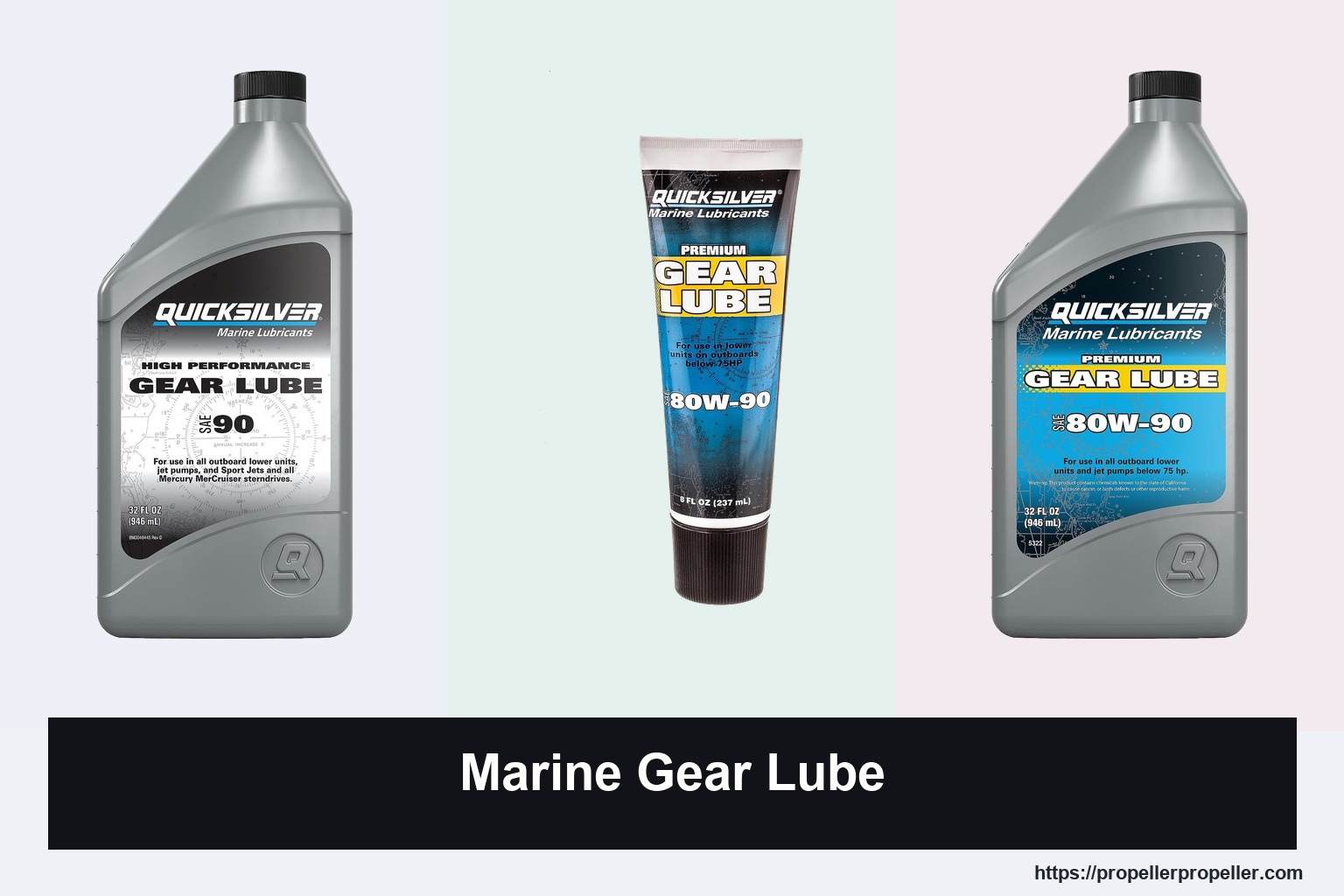
Marine gear lube is one of those maintenance purchases that looks simple until you match the wrong bottle to the wrong drive. Outboard lower units and sterndrives work in a harsh environment where corrosion, water intrusion, and gear wear can turn into expensive repairs fast. The right fluid matters because it is not just lubricating moving parts. It is also helping protect the gear case from conditions that are normal in marine use and punishing compared with many automotive applications.
The products below cover the most common decision points for buyers shopping this category. One option is aimed at higher-horsepower outboards and sterndrives, while the other two target outboard gear cases below 75hp with 80W-90 marine protection. That difference matters more than package size alone. The most useful choice is the one that matches the drive type, viscosity requirement, and service access you actually have, while still giving you corrosion resistance and water-entry protection where the application calls for it.
Top Marine Gear Lube on the Market

Quicksilver SAE 90 Gear Lube 32 oz
- SAE 90 viscosity
- For outboards and sterndrives
- Above 75hp applications
- 32 oz bottle
- Synthetic additives

Quicksilver 80W-90 Gear Lube 9 oz
- 80W-90 viscosity
- 9 oz tube
- Below 75hp applications
- Water-entry protection
- OEM specification

Quicksilver 80W-90 Gear Lube 32 oz
- 80W-90 viscosity
- 32 oz bottle
- Below 75hp applications
- Water-entry protection
- Direct replacement part
This article may contain affiliate links. As an Amazon Associate, the website may earn from qualifying purchases at no additional cost to you.
Marine Gear Lube Reviews
Quicksilver SAE 90 Gear Lube 32 oz
Advantages
- Above 75hp focus
- Synthetic extreme-pressure additives
- Corrosion protection
- Wear protection
- 32 oz service size
Limitations
- Not aimed at below-75hp use
- Less compact than tube packaging
This is the most application-specific option in the group, and that makes it a strong fit for owners who already know they need lower-unit protection in outboard motor and sterndrive use above 75hp. The SAE 90 viscosity tells you it is aimed at a particular service profile rather than serving as a generic fill-in. The synthetic extreme-pressure additives matter because marine gears do not just need lubrication. They need a film that can keep metal from contacting metal when loads climb and operating conditions become less forgiving.
The protection claims here focus on the two threats that usually decide gear-life outcomes in the marine world: corrosion and excessive wear. That is why this lube is most relevant for routine maintenance on drives that work hard or spend long periods in wet environments. The 32 oz package is a practical service size for many lower-unit jobs, though the exact fill requirement still depends on the drive you are servicing. Because it is intended for applications above 75hp, it is the more precise match when output and load are central to the choice.
Against the other two products here, this one stands out because it serves the higher-power side of the category instead of the below-75hp segment. If your main need is a marine lubricant that aligns with outboard and sterndrive use above 75hp, this is the clearest recommendation. The tradeoff is simple: it is less about universal compatibility and more about matching the right application window. For buyers who want that specificity, it is the safest first pick in this group.
PHOTO: Quicksilver SAE 90 Gear – Front Bottle Label → Source: Amazon.com
Quicksilver 80W-90 Gear Lube 9 oz
- Container Type
- Tube
- Viscosity
- 80W-90
- Upper Temperature Rating
- 250 °F
- Liquid Volume
- 9 fluid ounces
- Warranty Description
- Manufacturer Warranty
Advantages
- Below 75hp focus
- Water-entry additives
- OEM specification
- Compact tube packaging
- 250 °F rating
Limitations
- Small 9 oz volume
- Not for larger fill jobs
This tube is built for owners of outboard motor gear cases and marine lower units below 75hp, and that narrow focus is exactly what makes it useful. The 80W-90 viscosity gives it the conventional marine gear-lube profile many smaller drives call for, while the 9 oz tube format is easier to control during top-off or partial-service work. It is also produced to meet Mercury Marine original equipment manufacturer specifications, which matters when you want a direct-fit style choice rather than a loose general-purpose substitute.
Its standout practical advantage is the added protection if water enters the gear case or lower unit. That is one of the real failure paths in marine service, so additives that address water intrusion are more than a marketing line. The tube format also keeps the product convenient for smaller jobs where a full bottle would be unnecessary. The temperature rating of 250 °F is another useful reference point for buyers comparing service conditions, and the manufacturer warranty adds another layer of confidence for routine maintenance planning.
Compared with the 32 oz bottle in this lineup, this version is easier to buy for a single service event or for topping off after inspection. It is not the best value if you need larger total volume, but it is the most convenient option for compact lower-unit jobs. The decisive tradeoff is capacity versus convenience. If your drive is below 75hp and you want a small-format marine gear lube that is built around OEM-style protection, this is the most practical choice here.
PHOTO: Quicksilver 80W-90 Gear Lube – Tube Packaging → Source: Amazon.com
Quicksilver 80W-90 Gear Lube 32 oz
Advantages
- 32 oz bottle
- Below 75hp focus
- Water-entry additives
- Direct replacement part
- OEM specification
Limitations
- Larger than needed for small top-offs
- Not for above-75hp use
This bottle follows the same below-75hp marine logic as the smaller tube, but it is aimed at buyers who need more total volume and less frequent restocking. The 80W-90 viscosity keeps it in the standard marine gear-lube range for outboard motor gear cases and lower units in that class. Its direct replacement status for Mercury Marine 858058K01 adds a useful compatibility cue for owners servicing equipment that calls for that exact part path. For the right drive, that can reduce guesswork and shorten the decision process.
The 32 oz bottle is the obvious operational advantage. It is a better fit when you are handling a fuller service job, keeping a maintenance supply on hand, or working through equipment that needs more than a small tube. Like the 9 oz version, it includes additives intended to protect gears if water enters the gear case or lower unit. That is a practical safeguard in marine use, where contamination is not a hypothetical issue. The result is a product that leans more toward efficiency of volume than toward portability.
Relative to the 9 oz tube, this version is for the buyer who values fewer repurchases and a more substantial refill package. Relative to the higher-horsepower SAE 90 option, it serves a different application band, so it should not be chosen just because the bottle is larger. The best fit is a below-75hp outboard owner who wants the same marine-protection philosophy in a larger container. When capacity matters more than compact storage, this is the stronger pick.
PHOTO: Quicksilver 80W-90 Gear Lube – Front Bottle Label → Source: Amazon.com
How to Choose Marine Gear Lube
Choosing marine gear lube is mostly about matching the lubricant to the gear case you already own. The wrong viscosity or the wrong application range can create more risk than value, especially when an outboard lower unit or sterndrive is expected to live in wet, high-load conditions. A good purchase decision starts with the drive’s horsepower range, then moves to package size, service convenience, and any OEM specification that the equipment calls for.
Application Range
The first question is whether the gear lube is meant for your exact drive type and horsepower range. Marine lower units are not interchangeable in the same casual way many automotive fluids are. A product aimed at above-75hp drives serves a different need than one built for smaller outboards, and that distinction should guide the entire purchase. Match the lubricant to the equipment’s operating category before you think about bottle size or price.
Viscosity Choice
Viscosity tells you how the lube is intended to behave under load and temperature. In marine gear service, that matters because the lubricant must stay protective while gears are working hard and exposed to water-related stress. When the viscosity callout is specific, follow it closely. If you are replacing a fluid that already has a defined grade requirement, the safest choice is usually the one that matches that grade rather than a near-enough substitute.
Water Protection
Water intrusion is one of the main reasons marine gearboxes fail early, so additives that address water entry are worth serious attention. In practice, this protection can limit the damage if a seal is compromised or if the gear case has already seen contamination. That does not replace proper maintenance, but it can reduce the consequences of a problem that marine owners cannot always avoid. Buyers should treat this as a core quality feature, not a nice extra.
Package Size
Choose the container size around the kind of service you actually perform. Small tubes are convenient for topping off, compact repairs, and lower-volume jobs. Larger bottles are better when you want fewer purchases, less packaging waste, or a more practical refill supply for routine maintenance. A bigger container is not automatically better, though. If the drive only needs a small amount, the right move is the package that minimizes leftover product and storage hassle.
OEM Match
When a lubricant is designed to meet an original equipment specification or to replace a known part number, that can simplify the decision. It does not mean every marine gear lube must be an exact branded replacement, but it does give you a clearer compatibility signal. For many buyers, that matters more than broad marketing claims. If your drive has a documented service recommendation, a closer OEM-style match is usually the safer path than a generic marine oil chosen only by bottle count.
Service Convenience
Marine maintenance often happens in tight spaces and awkward conditions, so the package format matters more than many shoppers expect. Tubes can be easier for precise dispensing on smaller jobs, while bottles are more efficient for larger refills and storage. Think about where you will service the drive, how much room you have, and whether you are doing a one-time top-off or keeping fluid on hand for repeat maintenance. Convenience should support accuracy, not replace it.
Marine Gear Lube Comparison Table
| Product | Best For |
|---|---|
| Quicksilver SAE 90 Gear Lube 32 oz | Best for higher-output drives |
| Quicksilver 80W-90 Gear Lube 9 oz | Best for small service jobs |
| Quicksilver 80W-90 Gear Lube 32 oz | Best for larger refills |
How We Tested & Analyzed Marine Gear Lube
This roundup was built around the decision factors that matter most in marine gear service: application range, viscosity, water-entry protection, package size, and compatibility cues such as OEM-style replacement language. Those criteria reflect the practical realities of outboard lower units and sterndrives, where the wrong fluid choice can be more costly than the sticker price suggests. The goal was to separate broad claims from details that change real-world use.
Each product was evaluated for the evidence it provided, with emphasis on concrete facts that affect buying decisions. When the record included horsepower limits, viscosity grades, container format, temperature ratings, or replacement-part references, those details were treated as the core of the analysis because they directly influence fit and convenience. Broader protection statements were considered useful only when they pointed to a specific maintenance risk such as corrosion, wear, pitting, or water intrusion.
The comparison also accounts for limitations that matter to shoppers. A small tube can be ideal for topping off but inefficient for larger fills. A larger bottle can be better value in practice, yet it may be the wrong call for a smaller service job. Likewise, a product aimed at a different horsepower band should not be treated as an interchangeable substitute. That is why the final guidance focuses on matching the lubricant to the drive, not just picking the most familiar name.
Frequently Asked Questions
What is marine gear lube used for?
Marine gear lube protects gears inside outboard lower units and sterndrives. It reduces wear, helps control corrosion, and can add a margin of protection if water enters the gear case. The job is more demanding than ordinary lubrication because marine equipment works in wet, high-load conditions.
How do I choose the right viscosity?
Use the viscosity called for by the drive manufacturer or by the equipment’s service specification. Marine gear cases are sensitive to lubricant grade, and the wrong viscosity can affect protection under load. If the application range is clearly stated, match that range instead of choosing by container size or price alone.
Why does package size matter so much?
Package size changes how convenient the job is. A tube is easier for small top-offs and compact maintenance, while a larger bottle is more efficient for fuller refills or keeping stock on hand. The right size reduces waste and makes it easier to complete the service cleanly.
Does OEM-style labeling matter?
It can, because it gives you a clearer compatibility signal. An OEM-style replacement or specification match does not remove the need to check your drive’s service requirements, but it does help narrow the field. For marine gear lube, that is useful when you want to minimize guesswork and stick closer to the intended application.
Final Thoughts
Marine gear lube is a simple purchase only when the application is already clear. Once you account for horsepower range, viscosity, and package format, the decision becomes much easier. The best option is the one that matches the drive first and the storage or servicing convenience second. That order matters because a marine lower unit or sterndrive is not a place to improvise.
For most buyers, the right choice will come down to whether they need a higher-output SAE 90 formulation or an 80W-90 lubricant for a below-75hp outboard. From there, pick the container that fits your maintenance habit. Small tubes suit quick jobs. Larger bottles suit refills and repeat service. Keep the focus on fit, and you will end up with a marine gear lube that works with your equipment instead of against it.



