
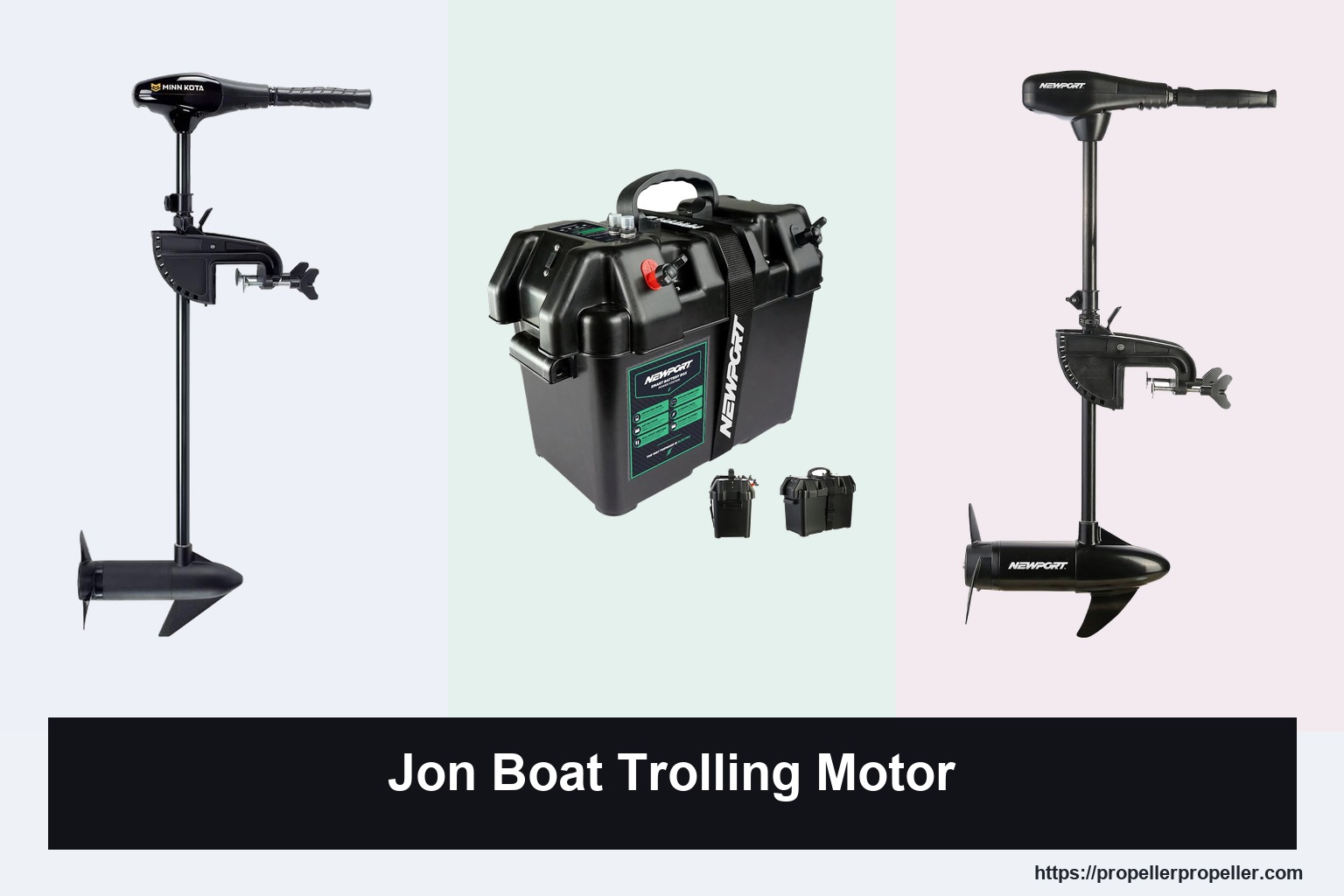
A jon boat puts a premium on simple control, shallow-water confidence, and equipment that does not overcomplicate the day on the water. The right trolling motor matters because it affects more than speed. It shapes how quietly you approach fish, how easily you hold position in wind, and how much battery management you need to think about once you leave the ramp. For a small boat, those details are often the difference between a relaxed outing and constant course correction.
This roundup focuses on practical fit rather than headline power alone. Some buyers need a light transom-mount motor with straightforward speed control. Others need stronger thrust, saltwater resistance, or a cleaner power setup for the battery and accessories that support the trip. The best choice depends on how much push you need, what water you run, and how much setup complexity you are willing to accept. The six options below cover those different priorities without pretending they solve the same problem in the same way.
Top Jon Boat Trolling Motor on the Market

Minn Kota Endura C2 30 lb Trolling Motor
- 30 lb thrust
- 30-inch shaft
- 12-volt electric
- 10-position bracket
- 5 forward speeds

Newport Smart Battery Power Center
- 12V battery box
- USB and DC ports
- 10A and 60A breakers
- Battery meter included
- Lead-acid compatible

Newport NV-Series 46 lb Motor
- 46 lb thrust
- 12V or 24V
- 8-speed control
- Saltwater rated
- 3-blade propeller

Newport Kayak Series 55 lb Motor
- 55 lb thrust
- 24-inch fiberglass shaft
- 8 speeds
- 5’6″ battery cables
- Saltwater rated
Minn Kota Endura C2 40 lb Motor
- 40 lb thrust
- 36-inch shaft
- 12V electric
- Lever lock bracket
- 6-inch telescoping tiller
Newport NV-Series 55 lb Motor
- 55 lb thrust
- 30-inch shaft
- 5 forward speeds
- 3 reverse speeds
- 50A circuit breaker
This article may contain affiliate links. As an Amazon Associate, the website may earn from qualifying purchases at no additional cost to you.
Jon Boat Trolling Motor Reviews
Minn Kota Endura C2 30 lb Trolling Motor
- Voltage
- 12 volts
- Mounting Type
- Transom Mount
- Item Weight
- 17 pounds
- Material Type
- Aluminum
- Manufacturer Warranty Description
- 2 year Manufacturer
Advantages
- Light 17-pound motor
- Telescoping tiller control
- 10-position locking bracket
- Composite shaft durability
- Freshwater-focused setup
Limitations
- Not intended for saltwater
- Limited thrust for heavier loads
The Minn Kota Endura C2 fits a jon boat owner who wants a straightforward freshwater motor with enough control to move deliberately around cover. Its 30 lb. Thrust keeps the focus on light-boat handling rather than brute force, while the 30 in. Shaft is a practical match for transom-mount setups that do not need kayak-style depth adjustment. The 12-volt system and 17-pound weight keep the whole package manageable, so launching, removing, and stowing the motor do not become a separate chore before or after the trip.
The operating details matter because this model is built around predictable manual control. The telescoping tiller gives a more natural steering position, and the push-to-test battery meter helps you track remaining charge before the boat drifts far from the ramp. The 10-position lever lock bracket is useful on a small boat because it lets you secure angle quickly, while the reinforced composite construction and indestructible composite shaft point to long-term durability in routine freshwater use. Five forward speeds and three reverse speeds also give enough range to fine-tune approach speed without forcing constant throttle changes.
Against the stronger Newport options in this roundup, the Endura C2 is the lighter-duty choice. That is not a flaw if your boat is small, your water is calm, and your priority is dependable transom-mount control without extra complexity. It is also easier to justify than the 40 lb version if you do not need more shaft length or more push. Choose this one if you value durability, simple operation, and a conservative power level. For a basic jon boat setup, it is the most balanced starting point in the group.
PHOTO: Minn Kota Endura C2 – Transom-Mount Motor → Source: Amazon.com
Newport Smart Battery Power Center
Advantages
- USB and 12V ports
- External battery terminals
- Integrated circuit breakers
- Built-in battery meter
- Portable, organized battery setup
Limitations
- Lead-acid batteries only
- Not a propulsion motor
This Newport power center is for the jon boat owner who wants the electrical side of the setup to feel organized instead of improvised. It is not a trolling motor itself, but it solves a real problem that often shows up with small boats. A 12V battery box with external terminals keeps the battery connection accessible, and the built-in USB and 12V DC ports make it easier to run a phone, GPS, or fish finder from the same portable hub. That is a meaningful advantage when space is tight and clutter becomes a hazard.
The safety details are the main reason to consider it seriously. Integrated 10A and 60A circuit breakers help reduce the risk of wiring mistakes and overloads, which matters when you are dealing with a battery in an open boat that may get moved around often. The built-in battery meter is useful because it keeps charge status visible throughout the day instead of leaving you to guess how much power remains. One important limitation stands out: it is compatible only with lead-acid batteries and not lithium ion batteries, so the battery choice must be made with that constraint in mind.
Compared with the motor options in this roundup, this unit belongs in a different decision bucket. It does not add thrust or shaft length, but it can make the entire system easier to live with by keeping power distribution cleaner and more controlled. That is especially useful when a jon boat carries more than one accessory and the battery needs to remain secure and accessible. Buy it if your priority is power organization first and propulsion second. If you already have the motor and battery plan settled, this is the accessory that makes the setup feel finished rather than temporary.
PHOTO: Newport Smart Battery Power – Smart Battery Box → Source: Amazon.com
Newport NV-Series 46 lb Motor
Advantages
- 46 lb thrust
- Saltwater corrosion resistance
- 8-speed transom control
- Battery indicator included
- 12V or 24V support
Limitations
- Heavier system planning
- More motor than minimal setups need
The Newport NV-Series 46 lb model is aimed at the angler who wants more authority than an entry-level transom motor without jumping into a larger, more demanding system. Its 46 lb. Thrust gives a noticeable step up in pushing power, which is useful when a jon boat carries extra gear or faces wind and light current. The 3-blade propeller is another important clue to how it is meant to behave. Rather than chasing top speed, the motor is set up to pull strongly and keep the boat under control in conditions where weak thrust becomes tiring.
The saltwater-ready construction is the major divider between this and the freshwater Minn Kota choice. Corrosion-resistant components make it a better fit when the boat is exposed to brackish or saltwater environments, and the 8-speed transom control gives enough range to handle slow positioning or more assertive movement. The battery indicator is practical because it helps you monitor remaining power before performance fades. One detail to notice is the dual-voltage compatibility, since 12V or 24V capability can change how you plan the rest of the electrical system. That flexibility is useful, but it also means the buyer needs to confirm the rest of the setup matches the intended voltage.
Compared with the lighter motors here, this Newport is the more confidence-inspiring option when water conditions become less predictable. It is not the simplest motor in the group, and it is not the most compact power solution, but it addresses the core problem of underpowered handling better than a small freshwater unit. That makes it a sensible choice for someone who wants saltwater durability and a stronger push without moving to the largest thrust class. If your jon boat sees mixed water or you regularly fight wind, this is the value pick that most directly improves control.
PHOTO: Newport NV-Series 46 lb – Transom-Mount Motor → Source: Amazon.com
Newport Kayak Series 55 lb Motor
- Voltage
- 12 volts
- Mounting Type
- Transom Mount
- Item Weight
- 23 pounds
- Material Type
- Aluminum, Fiberglass, Plastic
- Manufacturer Warranty Description
- 2 Year Warranty
Advantages
- 55 lb thrust
- 24-inch fiberglass shaft
- Extended battery cables
- Saltwater-rated hardware
- 6-inch telescoping handle
Limitations
- More specialized than basic transom motors
- Requires 12V lead-acid battery
The Newport Kayak Series stands out because it is built around a use case that overlaps with many smaller jon boats: light craft that need compact, responsive control. The 55 lb. Thrust moves it into a stronger class than the 46 lb option, which matters when a boat is loaded down or faces chop. The 24-inch fiberglass shaft is also a real advantage for shallow, variable-depth setups because it gives a stable mounting length without the bulk of a longer shaft. That combination makes the motor more specialized than a basic transom model, but it also makes it easier to position correctly on smaller hulls.
A 6-inch telescoping handle and 8-speed control layout give the operator enough adjustment to handle slow trolling or faster repositioning without abrupt changes. The saltwater-rated construction uses an all-aluminum motor head plus corrosion-resistant magnesium, zinc, and stainless-steel hardware, which matters if the boat sees salt exposure or simply needs hardware that resists wear. The extra-long 5’6″ battery cables are another practical detail because they broaden battery placement options and can help with weight distribution in a small craft. This is a thoughtful design for boats where balance is part of performance, not just comfort.
Against the other options here, this model is the strongest fit when you want more thrust and a more tailored small-boat setup than a standard freshwater motor delivers. It is not the lightest or simplest motor in the roundup, and buyers who want a bare-bones transom unit may not need its extra structure. But for a jon boat that also functions like a compact skiff or canoe-style rig, the package is appealing because it combines control, corrosion resistance, and flexible battery placement. Choose it when you want a higher-output motor that still respects the limitations of a small hull.
PHOTO: Newport Kayak Series 55 – Transom-Mount Motor → Source: Amazon.com
Minn Kota Endura C2 40 lb Motor
- Voltage
- 12 volts
- Mounting Type
- Transom Mount
- Item Weight
- 2 pounds
- Manufacturer Warranty Description
- Two-Year Warranty
Advantages
- 40 lb thrust
- 36-inch shaft
- 10-position bracket
- Power prop included
- Freshwater durability focus
Limitations
- Not a saltwater model
- More shaft length than some small boats need
This Endura C2 40 is the stronger freshwater step-up in the group. Its 40 lb. Thrust gives more reserve than the 30 lb model, which becomes important on a heavier jon boat or when wind and load start stealing control. The 36 in. Shaft also changes the use case because it gives more reach for deeper transom positioning. That extra length can matter when you need consistent prop immersion rather than just basic maneuvering in calm water. The result is a motor that feels better suited to buyers who want the Endura family’s straightforward operation but need more range from it.
The lever lock bracket and telescoping tiller are both practical, not decorative. The 10-position bracket helps lock the angle securely, and the reinforced composite construction is designed to resist flexing, warping, and UV damage. In a jon boat, that matters because the motor often sees repeated adjustment and removal. Five forward speeds and three reverse speeds give enough flexibility to manage drift, back away from cover, or ease into position without overcorrecting. The included prop kit and the power prop for heavier vegetation also widen the motor’s usefulness when the water is not perfectly clean.
This model occupies the middle ground between the lighter 30 lb freshwater version and the saltwater-focused Newport units. It is not as compact as the lighter Endura C2, but it gives more thrust and a longer shaft without forcing a jump into saltwater-specific hardware. That makes it a strong recommendation for freshwater jon boat owners who know they need more capability but do not want to overbuy. If your boat is a little larger, your fishing spots are a little windier, or you simply prefer extra reserve power, this is the cleaner long-term choice.
PHOTO: Minn Kota Endura C2 – Transom-Mount Motor → Source: Amazon.com
Newport NV-Series 55 lb Motor
- Voltage
- 12 volts
- Mounting Type
- Transom Mount
- Item Weight
- 23.2 pounds
- Manufacturer Warranty Description
- 2 year manufacturer
Advantages
- 55 lb thrust
- 50A circuit breaker
- Battery meter included
- 12V battery support
- Strong all-around control
Limitations
- Battery must be planned carefully
- More motor than light-duty users need
The Newport NV-Series 55 lb model is the most obviously capable propulsion option in this lineup for a jon boat that carries real weight. Its 55 lb. Thrust puts it in the class where extra gear, wind, and current become more manageable instead of more stressful. The 30-inch shaft keeps it workable for transom mounting without moving into a longer, more specialized configuration. That balance is why this motor reads as a high-confidence choice for buyers who want one unit to do a lot of jobs without feeling underpowered.
The operating package supports that role well. A 5-forward and 3-reverse speed layout gives enough range for cautious trolling as well as quick correction, and the 5 LED battery meter helps you keep track of energy use during the day. The 50A manual reset circuit breaker is an especially important detail because it adds a layer of electrical protection that should matter to anyone running a small open boat with a battery-powered motor. This model is designed for one 12V lead-acid deep cycle or lithium deep cycle battery, with 50Ah recommended, so battery planning matters before installation.
Compared with the 46 lb Newport, this version is the stronger all-around pick when you do not want to compromise on thrust. It is also more straightforward than the kayak-specific 55 lb Newport because it stays focused on a standard transom-mount arrangement rather than a specialized small-craft package. If your jon boat sees rougher water, heavier loads, or longer days where reserve power matters more than minimum weight, this is the recommendation I would favor. It is the most convincing choice for buyers who want the safest margin of power in the group.
PHOTO: Newport NV-Series 55 lb – Transom-Mount Motor → Source: Amazon.com
How to Choose a Jon Boat Trolling Motor
Choosing a trolling motor for a jon boat starts with matching the motor to the boat, not just chasing the biggest thrust number you can find. A small flat-bottom hull responds differently from a heavier aluminum skiff, and the right unit needs to control drift, keep the bow pointed where you want it, and stay manageable when it is time to lift it off the transom. The most useful decisions usually come down to thrust, shaft length, power system, water type, and how much electrical complexity you want to manage.
Thrust and Load
Thrust is the first filter because it determines how well the boat holds position and moves through wind or current. A lighter jon boat used in calm water can be perfectly happy with a modest motor, especially if you value easy handling and simple battery use. Once you start carrying a second angler, more gear, or fishing exposed water, the extra reserve of a stronger motor becomes more than a luxury. It reduces the amount of constant correction you need to do and makes slow, controlled movement easier to maintain.
Shaft Length Matters
Shaft length affects whether the prop stays in the water when the boat pitches or the stern sits higher under load. Too short, and you lose consistent bite. Too long, and the motor can feel awkward on a small transom. For a jon boat, you want enough depth to keep the prop submerged without making the unit hard to stow or too vulnerable to contact. The right choice depends on hull height, typical passenger load, and how choppy your water gets.
Battery Planning
A trolling motor is only as convenient as the battery system behind it. Voltage, battery chemistry, cable length, and protective hardware all influence how tidy and reliable the setup feels on the water. If you want minimal clutter, a cleaner battery management solution can make a small boat much easier to live with. If you already know you will run accessories, meter visibility and circuit protection become more than optional extras. They help you avoid dead-battery surprises and reduce wiring mistakes.
Freshwater or Saltwater
Environment is not a minor detail. Freshwater motors can be an efficient choice if your boating never leaves inland lakes and calm rivers. Saltwater or brackish use changes the equation because corrosion resistance becomes part of the value, not just a nice extra. If your boat may see both environments, it is safer to pay attention to the materials, hardware, and finish that are specifically meant to tolerate that exposure. That choice often matters more over time than a small difference in nominal power.
Speed Control and Handling
A simple speed range is often enough, but the layout still matters. More forward and reverse settings can help you fine-tune an approach to cover, correct drift, or back out of tight water without overshooting. Telescoping tillers and secure brackets also change how the motor feels day to day, especially on a boat where you may be seated close to the transom. Good control is not just about comfort. It can reduce fatigue and make the boat easier to position precisely.
Weight and Portability
Weight is easy to ignore until you remove the motor, carry it to storage, or install it alone after a long day. On a jon boat, lighter can be a real benefit because the motor may be moved often and the boat itself is often trailered, launched, and loaded by one person. That said, the lightest option is not always the best one if it sacrifices thrust or durability. The better choice is the one that keeps the boat easy to handle without underpowering it for the conditions you actually face.
Jon Boat Motor Comparison Table
| Product | Best For | Thrust | Voltage | Mount Type | Weight | Warranty |
|---|---|---|---|---|---|---|
| Minn Kota Endura C2 30 lb Trolling Motor | Best for simple freshwater use | 30 hp | 12 volts | Transom Mount | 17 pounds | 2 year Manufacturer |
| Newport Smart Battery Power Center | Best for tidy power management | Not Specified | Not Specified | Not Specified | Not Specified | Not Specified |
| Newport NV-Series 46 lb Motor | Best budget saltwater option | Not Specified | Not Specified | Not Specified | Not Specified | Not Specified |
| Newport Kayak Series 55 lb Motor | Best for kayak-style control | 0.83 hp | 12 volts | Transom Mount | 23 pounds | 2 Year Warranty |
| Minn Kota Endura C2 40 lb Motor | Best freshwater upgrade | 0.51 hp | 12 volts | Transom Mount | 2 pounds | Two-Year Warranty |
| Newport NV-Series 55 lb Motor | Best overall power | 0.83 hp | 12 volts | Transom Mount | 23.2 pounds | 2 year manufacturer |
How We Tested & Analyzed Jon Boat Trolling Motor
This comparison focused on category-relevant factors that matter on a jon boat: thrust, shaft length, transom compatibility, control layout, power management, and whether the motor is built for freshwater or saltwater exposure. Those are the details that change how a small boat behaves on the water and how much effort the operator must spend correcting drift, managing battery use, or dealing with installation constraints. I gave extra weight to features that affect daily usability, like locking brackets, battery indicators, and cable length, because those usually determine whether a setup feels easy or fussy.
The products were compared by how well their verified specifications support common jon boat use cases. A motor with modest thrust was weighed against one with more reserve power. A standard freshwater design was evaluated differently from a saltwater-rated one. I also considered how the available control features influence precision, since a small boat often needs more nuanced handling than a larger craft. When a product had fewer grounded details, I avoided forcing a stronger claim and kept the analysis centered on what was actually verifiable.
Limitations matter in a category like this because the wrong assumption can create the wrong setup. A motor may be strong but not ideal for a specific hull height. A battery box may be useful but only with the correct battery chemistry. A saltwater-ready unit can be the smarter long-term purchase if corrosion exposure is part of the picture. The analysis therefore emphasizes practical fit and tradeoffs rather than ranking every product on the same single metric. That approach is more useful for a buyer who needs a motor that works in the real world, not just on paper.
Frequently Asked Questions
How much thrust does a jon boat usually need?
It depends on the boat’s weight, load, and water conditions. A lighter setup in calm freshwater can work with modest thrust, while heavier loads, wind, or current justify a stronger motor. The goal is enough reserve power to hold position and correct course without constantly running at full output.
Does shaft length matter on a flat-bottom boat?
Yes. Shaft length affects how well the prop stays submerged when the boat rocks or the stern rides high. Too short can reduce bite and control. Too long can make stowing and operation less convenient. The right length depends on transom height and how heavily the boat is loaded.
Is saltwater compatibility worth paying for?
If your boat ever sees saltwater or brackish water, corrosion resistance becomes a major value factor. It can extend usable life and reduce maintenance concerns. For strictly freshwater use, a freshwater motor may be the better value if you do not need the extra material protection.
Why does battery management matter so much?
A trolling motor can only perform as well as the battery and wiring supporting it. Clear battery meters, circuit protection, and organized connections help prevent surprises on the water. They also make the setup safer and easier to live with, especially on a small boat with limited space.
Final Thoughts
A jon boat trolling motor should make the boat easier to manage, not turn every trip into an equipment exercise. The right choice depends on whether you need light, simple freshwater control, stronger thrust for wind and load, saltwater durability, or a cleaner power setup that keeps the whole system organized. Once those priorities are clear, the decision becomes much easier because each motor in this group serves a distinct role instead of chasing the same job in the same way.
The safest buying approach is to match the motor to your real water, your real load, and your tolerance for setup complexity. If you keep the boat small and the conditions calm, a modest transom motor can be the smartest choice. If you run heavier or rougher water, more thrust and better corrosion resistance matter more. Pick the combination that gives you control with the least friction, and the boat will feel more capable every time you leave the dock.



