
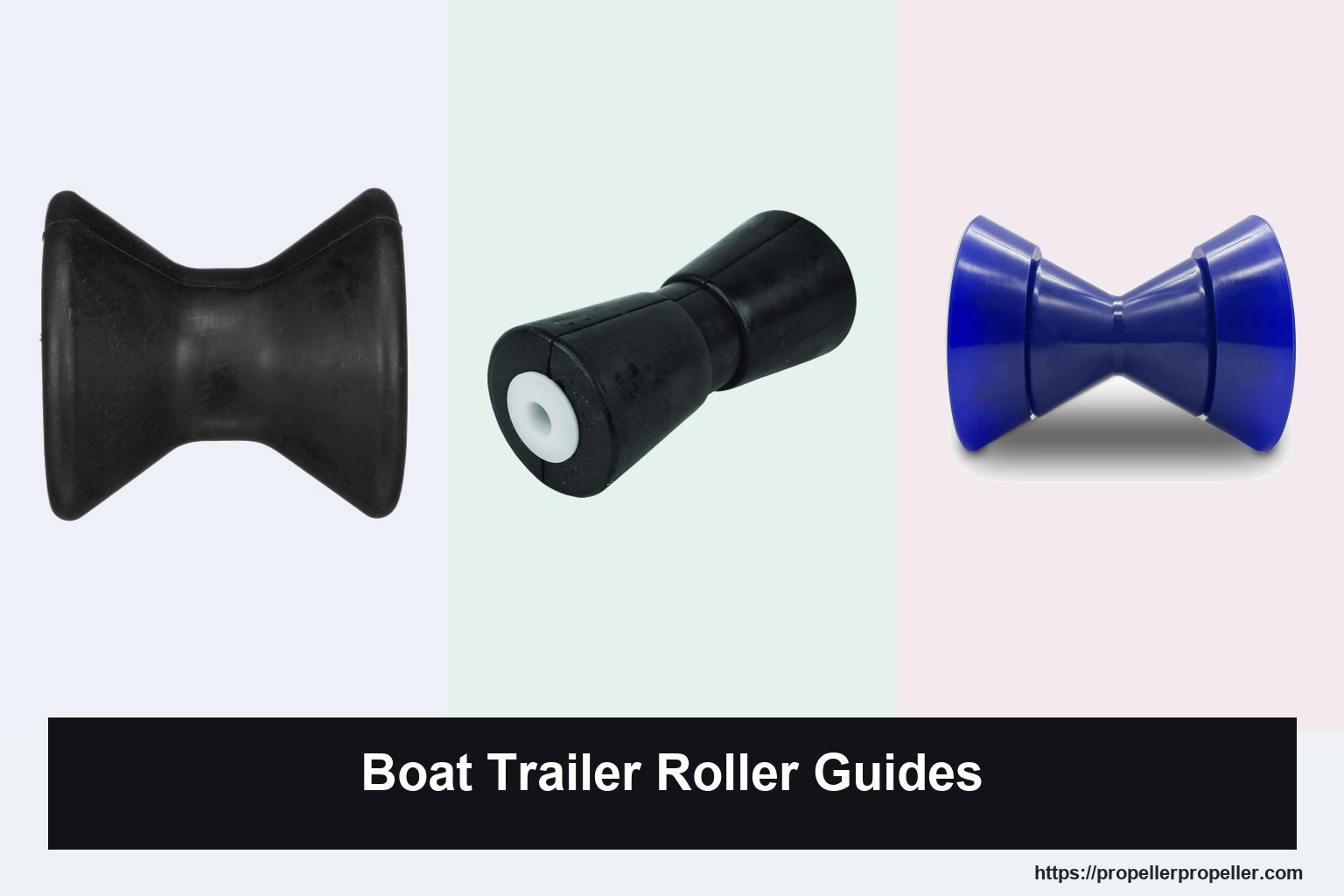
Boat trailer roller guides do one job that matters every time you launch or retrieve: they keep the hull moving where you want it instead of wandering at the worst possible moment. That matters most on windy ramps, shallow ramps, slick bunks, and any setup where a trailer has to be lined up quickly before the boat drifts off center. The right guide or roller reduces correction at the winch, limits hull contact stress, and can make loading feel controlled instead of improvised.
The best choices are not all built the same. Some are simple keel rollers that support a single contact point. Others are full guide-on systems with tall uprights, rollers, and adjustable brackets that help frame the boat as it comes aboard. In this roundup, the key differences are fit range, material, corrosion resistance, mounting flexibility, and how much guidance each design gives during loading. The strongest option for you depends on trailer frame size, water type, and whether you need basic support or a more complete centering system.
Top Boat Trailer Roller Guides on the Market

Seachoice Molded Bow Roller
- Black rubber construction
- 76 mm size
- Compact 3-inch form
- Single roller replacement

Attwood Heavy Duty Keel Roller
- Rubber keel support
- Multiple length options
- Marine exposure ready
- Replacement trailer part

COLOFULWAY 3-Inch Bow Roller
- Polyurethane bow roller
- End bells included
- 1/2-inch shaft
- 5-inch overall width

CE Smith 9-Inch Guide-On
- 9-inch rollers
- Adjustable mounting brackets
- Pre-galvanized steel
- Fully assembled

Attwood 4-Inch Keel Roller
- Natural rubber
- 4-inch length
- 5/8-inch shaft fit
- Weather-resistant build

Extreme Max Heavy-Duty Guide-On
- 13-inch roller assembly
- 97-degree arms
- Zinc-coated finish
- Bolt-on installation
This article may contain affiliate links. As an Amazon Associate, the website may earn from qualifying purchases at no additional cost to you.
Boat Trailer Roller Guides Reviews
Seachoice Molded Bow Roller
- Item Dimensions LxWxH
- 3 x 3 x 3 inches
- Package Weight
- 0.24 kg
- Color
- Black
- Size
- 3 In. x 1/2 In.
- Warranty Description
- http://www.seachoice.com/warranty-information
Advantages
- Very low price
- Simple replacement part
- Compact footprint
- Rubber contact surface
- Lightweight to handle
Limitations
- No adjustment range
- No side guidance
This is the simplest choice in the group, and that simplicity is its appeal. The black rubber build and compact 3 In. X 1/2 In. size point to a basic bow-roller replacement rather than a full guide-on system. That makes it a sensible pick when you only need a single wear surface at the bow stop area and do not want extra hardware or complexity. Its small footprint also keeps it unobtrusive on a trailer that already has enough structure in the way.
The practical upside of a roller this small is that it can be used as a direct replacement part without changing the rest of the trailer layout. The listed package weight is light, and the dimensions are very compact, so the part is easy to handle and store with other spares. The tradeoff is equally clear. You are buying a single roller, not a system that centers the boat or adds vertical guide rails. Buyers should treat it as a targeted maintenance part, not a loading aid for difficult ramps.
Against the other products here, this one sits at the minimal end of the spectrum. It does not try to solve crosswind correction, deep-water recovery, or wide-frame alignment. That is exactly why it is attractive for owners who only need a worn roller replaced at the lowest cost. If your trailer already loads predictably and you just want a straightforward bow roller, this is a clean recommendation. If you need lateral guidance or a heavier-duty mounting structure, move up to a guide-on system instead.
PHOTO: Seachoice Molded Bow Roller – Black Bow Roller → Source: Amazon.com
Attwood Heavy Duty Keel Roller
Advantages
- Rubber contact surface
- Multiple size options
- Designed for marine use
- Supports keel alignment
- Reduces hull stress
Limitations
- No frame guidance
- Limited to roller role
This roller is aimed at buyers who want stronger keel support without moving to a full guide-on frame. The main value is in the rubber construction and the fact that it is offered in 8, 10 or 12 inches, which gives you room to match the roller to different trailer layouts. Its job is to support the keel, reduce harsh contact, and keep the boat rolling toward the bow stop with less drag and less resistance at loading time.
Because this is a keel roller, it works best when the trailer already has a clear centerline and needs a durable rolling surface under the hull. The rubber material is the important clue here. It is meant to absorb impact and soften contact, which matters when the boat settles onto the trailer or when the ramp surface is uneven. The product is also presented as suitable for repeated launching cycles and outdoor exposure, so it is aimed at regular marine use rather than occasional garage storage.
Compared with the simplest bow roller in this group, this Attwood part is built for a more demanding role. It still stays focused on one contact point, but it does that job with more durability-oriented intent. It is not as structurally involved as a tall guide-on system, so it will not solve alignment problems by itself. That makes it a good fit for owners who want a dependable keel roller upgrade and already have the rest of the trailer geometry sorted out. For straightforward support with a sturdier feel, it earns a strong recommendation.
PHOTO: Attwood Heavy Duty Keel – Keel Roller → Source: Amazon.com
COLOFULWAY 3-Inch Bow Roller
- Compatible with Vehicle Type
- Marine-Personal-Craft, Trailer
- Automotive Fit Type
- Universal Fit
- Material Type
- polyurethane
- Finish Type
- Powder Coated
- Item Weight
- 500 g
Advantages
- Complete roller assembly
- End bells included
- Polyurethane material
- Rust-resistant design
- Hardware included
Limitations
- Bracket-size dependent
- No lateral guide frame
This assembly is for buyers who want a more complete bow-roller package rather than a bare roller. The core parts are all here: a 3 inch polyurethane bow roller and 1/2 inch diameter bolt mounting hardware, plus end bells that keep the hull from contacting the bracket or bolts. That combination matters because it addresses both movement and protection. The roller supports the boat, while the bells reduce the chance of metal-to-hull rubbing at the contact point.
The material choice changes the experience in an important way. Polyurethane is described as helping resist rust, avoiding marks, and preventing flat spotting. Those are the kinds of details that matter on a trailer part that sits under load for long periods and sees repeated wet-dry cycles. The stated overall width is 5 inches, so the assembly is not just a loose roller. It is a coordinated unit that is meant to mount into a matching 3-inch trailer bracket. Buyers need to check that bracket size before ordering, because this is a fit-specific replacement rather than a universal system.
Compared with the simpler rubber rollers in this roundup, this model offers more of a complete swap experience because it brings its own end bells and mounting bolt. It does not have the tall structure of a guide-on system, so it will not help as much with side-to-side alignment on difficult ramps. What it does offer is a more protective bow contact point in a compact format. That makes it a sensible choice for owners replacing a specific bow roller assembly who want a tidy, hardware-complete solution. For that use case, it is one of the best-balanced picks here.
PHOTO: COLOFULWAY 3-Inch Bow Roller – Blue Bow Roller → Source: Amazon.com
CE Smith 9-Inch Guide-On
- Item Dimensions LxWxH
- 28.25 x 17.5 x 2.5 inches
- Item Weight
- 16.7 pounds
- Material
- GALVANIZED STEEL
- Size
- 9″
- Warranty Description
- limited warranty
Advantages
- Full guide-on system
- Large adjustment range
- Pre-galvanized steel
- Fully assembled
- End caps included
Limitations
- Heavier installation
- Higher complexity
This is the most structurally complete option in the group and the one most focused on centering the boat during recovery. The 9″ rollers and pre-galvanized steel uprights show that this is built as a full guide-on rather than a simple roller replacement. The system is designed to help the boat center onto the trailer, which matters most when the ramp is shallow, the boat is fighting a crosswind, or the operator needs more visual and physical guidance during loading.
The adjustment range is a major part of the appeal. The brackets allow up to 13 inches of adjustment on frames up to 3 inches wide by 4-1/4 inches high, so the system can be fitted to a broad range of trailers without requiring a custom fabrication job. The uprights lean outward 15 degrees, and the guide-on comes fully assembled, which reduces setup friction. Its larger size and 16.7-pound item weight also signal that this is a more substantial trailer accessory than a single roller, so buyers should expect a real mounting project rather than a quick part swap.
Against the rest of the field, this is the clear choice when trailer alignment is the main issue. It is more expensive and more involved than a standalone roller, but it solves a broader loading problem. That tradeoff makes sense for boaters who launch in awkward conditions or who want the trailer to do more of the centering work for them. If you need the strongest guidance and the widest mounting flexibility among these picks, this is the one to favor.
PHOTO: CE Smith 9-Inch Guide-On – Guide-On Assembly → Source: Amazon.com
Attwood 4-Inch Keel Roller
- Item Dimensions LxWxH
- 0.98 x 0.98 x 0.98 inches
- Item Weight
- 10.72 ounces
- Material
- Rubber
- Size
- 4″ Length
- Part Number
- 11210-1
Advantages
- Natural rubber build
- Common shaft fit
- Simple replacement part
- Cushions hull contact
- Lightweight component
Limitations
- Single-component replacement
- No mounting hardware
This is another stripped-down support part, but it has a clearly defined use case. The 4″ Length and 5/8-inch roller shafts fit point to a common replacement scenario where the goal is to refresh a worn keel roller without changing the trailer’s basic design. Its job is to help the keel roll forward, center the hull, and reduce resistance during loading. That makes it especially useful when the existing roller is cracked, flattened, or no longer turning smoothly.
The natural rubber material matters because it is meant to absorb vibration and cushion the hull against scratches. That is valuable on rough pavement or whenever the trailer has to carry the boat over distance after launch. The pre-molded center hole is another practical detail because it suggests a straightforward fit on standard shafts. This is not a universal all-in-one kit, though. It is a single component, so the buyer has to be comfortable replacing just the roller and leaving the rest of the assembly intact.
Compared with the Seachoice option, this Attwood roller is more clearly sized for a common shaft standard and a longer 4-inch form. Compared with the assembly-style COLOFULWAY part, it is much less complete but also much simpler to install. That places it in the sweet spot for owners who want a basic but durable keel roller replacement with minimal fuss. If your trailer already tracks well and you mainly need a dependable wear surface under the hull, this is a practical and affordable pick.
PHOTO: Attwood 4-Inch Keel Roller – Black Keel Roller → Source: Amazon.com
Extreme Max Heavy-Duty Guide-On
- Manufacturer Warranty Description
- 2-year warranty
- Finish Type
- Zinc-Coated
- Automotive Fit Type
- Universal Fit
- Compatible with Vehicle Type
- RV, Truck
Advantages
- Heavy-duty guide rails
- Large adjustment range
- Two-year warranty
- Bolt-on installation
- Freshwater-oriented finish
Limitations
- Freshwater only
- Frame fit must match
This is the premium build in the roundup and the one aimed at owners who want the trailer to do serious alignment work. The 13″ roller assembly and 97° arms give it a more engineered stance than a basic roller. It is designed to help the boat load faster, reduce the need to back the trailer too deep, and keep the trailer position true when visual alignment is difficult. Those benefits matter most when conditions are less than ideal and precision matters more than simplicity.
Fit and environment are where the buying decision becomes most important. The system fits bunk or roller-style trailer frames up to 3 inches wide by 4.25 inches tall, and it provides up to 14 inches of horizontal adjustment on a 3-inch frame or 16 inches on a 2-inch frame. That range is useful, but only if the trailer frame matches. The zinc-coated finish is intended for freshwater use only, which is a real limitation for anyone launching in saltwater or brackish conditions. The two-year warranty adds confidence, but it does not change that water-type restriction.
Against the CE Smith guide-on, this option looks more compact in some ways but still carries a heavy-duty orientation with a distinct freshwater-only limit. Against the simpler rollers, it offers a much bigger solution to loading alignment problems. That makes it best for buyers who know they want guide rails, have measured their frame carefully, and launch in freshwater. If those conditions match your trailer, this is the strongest premium recommendation in the set. If they do not, the more universally friendly guide-on above is the safer buy.
PHOTO: Extreme Max Heavy-Duty Guide-On – Roller Guide-On System → Source: Amazon.com
How to Choose Boat Trailer Roller Guides
The right trailer guide or roller depends on the loading problem you are trying to solve. A worn keel roller, a misaligned bow stop, and a trailer that needs more side guidance are three different issues, and each calls for a different level of hardware. Start by thinking about how the boat behaves on the ramp. If it already centers well, a replacement roller may be enough. If you are correcting drift, wind push, or awkward recovery angles, a larger guide-on system is usually the better investment.
Roller or Guide-on
A single roller is best when you need support at one point under the hull. It replaces a worn contact surface and keeps loading smooth, but it does not help much with side-to-side correction. A guide-on system is the better answer when the boat tends to drift during retrieval or when you need the trailer to help align the hull. The more difficult the launch conditions, the more valuable full-length guidance becomes.
Trailer Frame Fit
Fit is one of the most important checks because trailer frames vary more than many buyers expect. Measure the frame width and height before ordering, then compare those numbers with the bracket range or shaft size. A roller that fits the wrong shaft or a guide-on that exceeds the frame dimensions can turn into a return instead of a useful upgrade. Careful measurement saves time and avoids improvising with hardware that was never meant for the trailer.
Material and Wear
Material affects how the part ages and how it treats the hull. Rubber is a common choice for cushioning and impact absorption, especially on rollers that contact the keel or bow. Polyurethane can be a stronger fit when you want a tougher surface and resistance to marking or flat spotting. Steel structures matter when the goal is to hold alignment over time. For most buyers, the question is whether the part needs to flex under load or stay rigid as a guide structure.
Water and Corrosion
Freshwater and saltwater use are not interchangeable in trailer hardware. Some finishes are built for freshwater exposure only, and that limitation matters if the trailer will see brackish or saltwater conditions. Corrosion resistance is not just a durability detail. It affects how smoothly brackets move, how long fasteners last, and how often you will revisit the setup. If the trailer lives near salt, prioritize materials and finishes that are explicitly suited to that environment.
Installation Effort
Installation complexity rises as the system becomes more complete. A single roller replacement is usually quicker and less demanding than a full guide-on assembly with tall uprights and adjustment points. That does not mean the simpler part is always better. It just means you should match the hardware to your willingness to measure, align, and tighten a more substantial setup. If you want a faster refresh, keep the job small. If you need loading control, accept the added installation work.
Loading Conditions
Think about where and how you launch. Shallow ramps, crosswinds, current, and low-light recovery all increase the value of guide rails and centering help. A trailer used on calm water with easy approach angles can often get by with a well-sized roller and a proper bow stop. But when conditions are unpredictable, the hardware becomes part of the loading process itself. Choose for the ramp you actually use, not the perfect ramp you hope to find.
Trailer Roller Comparison Table
| Product | Best For | Size | Material | Weight | Number of Items | Color |
|---|---|---|---|---|---|---|
| Seachoice Molded Bow Roller | Best Budget Roller | 3 In. x 1/2 In. | End Product & Information | Not Specified | 1 | Black |
| Attwood Heavy Duty Keel Roller | Best Heavy-Duty Roller | Not Specified | Not Specified | Not Specified | Not Specified | Not Specified |
| COLOFULWAY 3-Inch Bow Roller | Best Bow Roller Kit | Not Specified | Not Specified | 500 g | Not Specified | Not Specified |
| CE Smith 9-Inch Guide-On | Best Adjustable Guide-On | 9″ | GALVANIZED STEEL | 16.7 pounds | 1 | Beige |
| Attwood 4-Inch Keel Roller | Best Simple Keel Roller | 4″ Length | Rubber | 10.72 ounces | 1 | Black |
| Extreme Max Heavy-Duty Guide-On | Best Premium Guide-On | Not Specified | Not Specified | Not Specified | 1 | Not Specified |
How We Tested & Analyzed Boat Trailer Roller Guides
This roundup was built around category-specific performance factors that matter at the ramp. The analysis focused on how each product supports boat loading, how much alignment help it can realistically provide, and whether the design matches a simple replacement role or a more complete guide-on role. Material, fit range, mounting style, and environmental limits were treated as decision-makers because they directly affect whether the hardware is usable on a given trailer.
Comparisons emphasized practical tradeoffs rather than raw feature count. A compact roller was judged against other compact rollers for simplicity, while larger guide-on systems were judged on adjustment range, frame compatibility, and the degree of centering control they add. When a product came with a specific constraint such as a freshwater-only finish or a frame-size limit, that limitation was treated as part of the recommendation because it changes the buyer’s actual options.
The goal was to help a reader choose the right level of hardware without overbuying or underbuying. For that reason, the article favors grounded distinctions such as replacement part versus alignment system, rubber versus polyurethane, and minimal install versus more involved bolt-on setup. That approach keeps the guidance practical for real trailer owners who need dependable loading support rather than a theoretical spec comparison.
Frequently Asked Questions
Do I need a roller or a guide-on system?
Choose a roller when you mainly need to replace a worn contact point and keep the boat moving smoothly on the centerline. Choose a guide-on system when the boat drifts during retrieval, when wind or current makes alignment difficult, or when you want the trailer to help center the hull more actively.
What should I measure before buying?
Measure the trailer frame, the shaft size, and the space available at the mounting location. Those dimensions determine whether a roller will fit the existing hardware and whether a guide-on bracket can clamp to the frame without modification. Getting those numbers right matters more than matching appearance.
Which material is best for durability?
Rubber is a strong choice when cushioning and hull protection matter most. Polyurethane can be a better fit when you want a tougher surface that resists marking or flat spotting. Steel matters for the guide structure itself, especially when you need brackets and uprights to stay aligned over time.
Can one guide fit every trailer?
No. Trailer frames, mounting heights, and shaft sizes vary too much for universal fit to be assumed. Some systems allow broad adjustment, but you still need to confirm the frame dimensions and the water environment. A careful fit check is the difference between a clean installation and a frustrating return.
Final Thoughts
The best boat trailer roller guide is the one that solves your actual loading problem without adding unnecessary complexity. If all you need is a fresh wear surface, a simple roller keeps the trailer working with minimal effort. If the boat wanders on retrieval or the ramp conditions are less forgiving, a taller guide-on system is worth the extra hardware and setup time. The right choice is less about buying the biggest part and more about matching the amount of guidance your trailer really needs.
Once you narrow the job to replacement support or full alignment help, the rest of the decision becomes straightforward. Check the frame dimensions, confirm the shaft or bracket fit, and pay attention to material and water exposure limits. That is the most reliable way to avoid overbuying and to end up with hardware that improves loading every time you use the trailer. Choose the simplest design that still controls the boat well, and you will get the best long-term result.



