An outboard motor support is one of those trailer accessories that becomes important the moment you start paying attention to what highway bumps, road vibration, and poor clearance can do to a trim and tilt system. The right choice depends on how your engine tilts, how the support contacts the motor, and whether you need a simple wedge or a more traditional brace. That matters because the wrong style can be awkward to install, incompatible with your setup, or simply overbuilt for the way you tow.
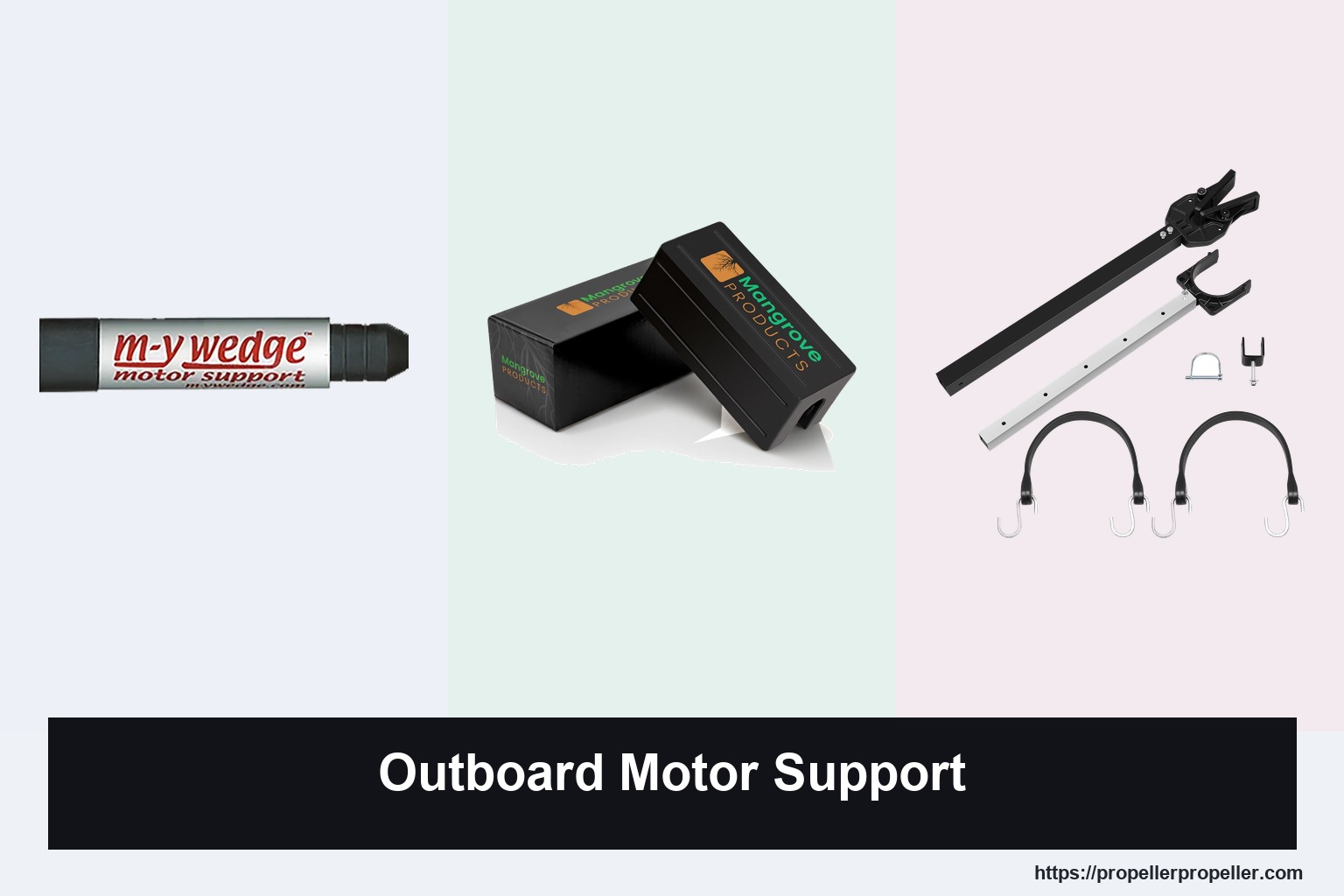
This roundup focuses on three different approaches to stabilizing an outboard while trailering. One is a transom-mounted wedge for three-ram trim and tilt systems. One is a high-pressure rubber wedge built for single-ram hydraulic tilt units. One is a telescoping aluminum support with a composite head and trailer mount hardware. Together they cover a useful spread of fitment, material, and handling priorities, so you can match the support to your motor instead of forcing a universal answer.
Top Outboard Motor Support on the Market

M-Y Wedge 3-Ram Motor Support
- Fits 3-ram trim/tilt systems
- Plastic construction
- Transom mounting
- Black finish

Mangrove Products Single-Ram Wedge
- Single-ram hydraulic tilt units
- EPDM rubber formula
- Over 2,000 lbs compression
- 10 inner notches
- 5.2 x 2.13 x 2.13 inches

Telescoping Aluminum Transom Saver
- Adjusts from 23 to 35 inches
- Supports up to 100 HP
- Aluminum shaft construction
- Composite head with ABS clamp
- Trailer mount bracket included
This article may contain affiliate links. As an Amazon Associate, the website may earn from qualifying purchases at no additional cost to you.
Outboard Motor Support Reviews
M-Y Wedge 3-Ram Motor Support
- Material Type
- Plastic
- Mounting Type
- Transom, found in image
- Color
- Black
Advantages
- Purpose-built for 3-ram systems
- Transom mount simplifies setup
- Compact plastic design
- Easy to stow
- No metal brace to manage
Limitations
- Does not fit some Evinrude/Johnson motors
- Trim limiter switch may need adjustment
This support is aimed at owners of outboards with three-ram trim and tilt systems who want a compact way to keep the motor from moving during trailering. The plastic build keeps the package simple, and the transom mounting style is a practical clue that it is meant to work as a straightforward support rather than a full brace assembly. For buyers with the right trim system, that usually means a faster setup and less hardware to manage every time the boat is prepared for the road.
The main decision point is fitment. The description notes that it does not fit some Evinrude and Johnson outboard motors, and the trim limiter switch may need to be adjusted. That is the kind of detail that matters before you buy, because a support that seems generic can still require engine-specific verification. The black plastic construction is also a reminder that this is a light, purpose-built solution rather than a heavy-duty metal support, so its appeal is ease of use more than brute strength.
Against the other two options here, this one is the most narrowly targeted. That is a strength if your boat and engine already match the three-ram setup, because it avoids the extra bulk and complexity of a telescoping brace. It is not the best pick if you need broad cross-brand fitment or if your engine style is uncertain. For a buyer who knows the trim system is compatible, this is the cleanest no-fuss choice, and that makes it the best recommendation in its lane.
PHOTO: M-Y Wedge 3-Ram Motor – Logo Label → Source: Amazon.com
Mangrove Products Single-Ram Wedge
- Item Dimensions
- 5.2 x 2.13 x 2.13 inches
- Item Weight
- 0.38 kg
- Material Type
- Mangrove Products EPDM Rubber Formula
- Mounting Type
- Outboard Motors with Single-RAM Tilt/Trim Units
Advantages
- Supports many major outboard brands
- No drilling required
- EPDM rubber construction
- Over 2,000 lbs compression testing
- Safe for saltwater and freshwater
Limitations
- Requires single-ram hydraulic tilt fitment
- Brand compatibility still needs checking
This wedge is built for outboards with single-ram hydraulic tilt systems, and that specific fitment matters more than the broad brand list might suggest. Yamaha, Mercury, Suzuki, Evinrude, Honda, and Tohatsu are all referenced, but the real buying filter is the single-ram requirement. When that matches your motor, the support acts as a compact buffer that keeps trailering movement from putting extra strain on the hydraulic system and transom. It is a focused solution, not a one-size-fits-all accessory.
The construction details are unusually useful here. The EPDM rubber formula is paired with a compression test over 2,000 pounds, and the wedge includes 10 inner notches for a secure connection to the tilt shaft. Those are the details that point to repeatable contact and stable positioning rather than a loose block that can wander under load. The stated tolerance for hot and cold temperatures also matters for boaters who trailer in changing climates, since a support can only do its job if it stays consistent in storage and use.
This is the most streamlined choice in the group if you want minimal hardware and fast handling. It does not require drilling or special installation, and it is meant to be inserted directly into the tilt ram piston before the engine is lowered. That makes it very different from the telescoping aluminum brace, which brings broader structural support but also more parts. If you have a compatible single-ram setup and want a simple, corrosion-free wedge for saltwater or freshwater use, this is the strongest overall recommendation.
PHOTO: Mangrove Products Single-Ram Wedge – Molded Wedge Block → Source: Amazon.com
Telescoping Aluminum Transom Saver
Advantages
- Adjustable 23 to 35 inches
- Rated for up to 100 HP
- Aluminum support shaft
- Composite head protects finish
- Includes mounting hardware
Limitations
- More parts than a wedge
- Best for lower-HP outboards
This transom saver is the most conventional brace in the set, and its appeal starts with adjustability. The shaft extends from 23 inches to 35 inches, which gives you room to match different trailer and motor clearances rather than relying on a fixed block. It is also rated for motors up to 100 HP, so it sits naturally in the range of smaller to mid-size outboards that still need support when trailering. That combination makes it more versatile than a narrow-fit wedge, especially when ground clearance is limited.
Material choice does a lot of the work here. The aluminum body is meant to carry motor weight with better strength and durability than a softer support, while the composite head and marine-grade ABS clamp are there to hold the engine more securely and reduce the chance of scratching. The package also includes a trailer mount bracket, two 23-inch rubber strings with S-hooks, and two clevis pins with retainers. That means the accessory arrives as a more complete mounting system, but it also asks for a more involved setup than a simple insert-style wedge.
Compared with the other two products, this is the broadest mechanical support and the least specialized to a single tilt pattern. That flexibility is the point, because it gives you an adjustable brace when your motor support needs are driven by clearance and trailer geometry rather than a specific hydraulic configuration. It is not as compact as a rubber wedge, and it is not as narrowly tailored as the 3-ram option. For buyers who want a traditional transom saver with real adjustability and a clear motor rating, this is the most sensible pick.
PHOTO: Telescoping Aluminum Transom Saver – Support Rod Kit → Source: Amazon.com
How to Choose an Outboard Motor Support
The best outboard motor support is the one that matches your engine’s trim system, your trailer clearance, and how much setup you are willing to do each time you tow. Some supports are compact wedges that work directly inside a hydraulic tilt system. Others are telescoping braces that span the gap between the motor and trailer. The right answer depends less on marketing style than on fitment, contact method, and how much protection you want from road shock and motor travel.
Fitment Comes First
Start with the trim and tilt design on your motor. A support that works beautifully on one hydraulic setup can be useless on another, even when the engine brand sounds familiar. That is why the contact point matters as much as the shape of the support. If the support cannot mate cleanly with the tilt mechanism or the motor bracket, the rest of the feature list does not matter. Matching the support to the engine architecture prevents installation surprises and keeps the motor from shifting under load.
Wedge or Brace
A wedge-style support is usually the simplest path when your engine accepts that kind of contact. It is compact, quick to store, and often easier to deploy before a trip. A telescoping brace is the better call when you need length adjustment or a more traditional trailer-mounted support. The tradeoff is obvious. Wedges are lower-profile and faster. Braces are more adaptable but add hardware and setup steps. Choose the style that fits how often you tow and how much handling you want to do at launch and recovery.
Material Matters
Material affects both durability and day-to-day handling. Rubber-style supports tend to be easy to stow, quiet in use, and less likely to leave you thinking about corrosion. Aluminum braces bring structural rigidity and can better suit users who want a more rigid mechanical support. Composite or plastic contact points can help reduce scratching where the support touches the engine. The important question is not which material sounds strongest. It is which one best balances resistance to wear, simple storage, and the kind of contact your motor actually needs.
Clearance and Length
Length adjustment matters whenever the distance between the motor and trailer changes with hull design, jack plate use, or towing angle. A support that is too short will not seat properly. One that is too long can create awkward loading or poor alignment. That is why adjustable braces are so useful for boats with more variable setups. Compact wedges avoid that issue by working inside the trim system itself, but they depend on the correct internal geometry. Measure clearance before buying so you do not end up compensating with improvised positioning.
Installation Speed
Think about how much work you want to do before every trip. Some supports are inserted directly and disappear from attention once the motor is tilted down. Others need trailer hardware, attachment points, and a more deliberate setup. Neither approach is wrong. The faster path saves time and frustration if you launch often. The more involved path can be worth it when you want a sturdier brace and do not mind a little extra handling. A good support should reduce stress, not become another chore in the towing routine.
Protection Goals
Decide what kind of protection matters most. Some buyers mainly want to limit unwanted motor travel so the trim and tilt system is not taking repeated road shock. Others want to reduce strain on the transom itself. Those are related goals, but they are not identical. A support that locks the motor into a more stable position can help with both, but the best solution depends on where your boat is most vulnerable. The right choice protects the system that would be hardest or most expensive to repair.
Outboard Motor Support Comparison Table
| Product | Best For | Mount Type | Material | Color |
|---|---|---|---|---|
| M-Y Wedge 3-Ram Motor Support | Best for 3-ram systems | Transom, found in image | Plastic | Black |
| Mangrove Products Single-Ram Wedge | Best rubber wedge option | Outboard Motors with Single-RAM Tilt/Trim Units | Mangrove Products EPDM Rubber Formula | Black |
| Telescoping Aluminum Transom Saver | Best adjustable brace | Not Specified | Not Specified | Not Specified |
How We Tested & Analyzed Outboard Motor Support
This category was judged by fitment specificity, contact method, material choice, and how clearly each support addresses trailering stress. A strong motor support should do more than look sturdy. It should match the engine’s tilt architecture, sit securely under real towing conditions, and avoid creating new handling problems. Those criteria matter because the wrong style can be inconvenient at best and incompatible at worst. The comparison therefore emphasized practical use rather than surface-level feature count.
Differences were weighed by the kinds of buyer decisions that actually matter in the driveway or at the ramp. Adjustable length, mounting style, and the way each support interacts with the trim system were prioritized because those details determine whether a product is easy to use and appropriate for a particular boat. Materials were evaluated in terms of durability, corrosion resistance, storage convenience, and contact protection. When products served different support strategies, the analysis focused on whether each one solved a clear use case cleanly.
Limitations in the available facts also shaped the analysis. When a product record did not provide dimensions, compatibility ranges, or installation details, those gaps were not filled with assumptions. That keeps the recommendations grounded and prevents overpromising on fit. The result is a practical buyer’s guide that highlights where a support is specific, where it is flexible, and where a boat owner should verify compatibility before purchase. That approach is more useful than broad claims that ignore engine and trailer differences.
Frequently Asked Questions
What does an outboard motor support actually do?
It keeps the motor from moving excessively while the boat is trailered. That reduces stress on the trim and tilt system, limits impact from road bumps, and helps protect the transom and motor bracket from repeated shock. The exact benefit depends on whether the support works as a wedge inside the tilt system or as a brace between the motor and trailer.
Should I choose a wedge or a brace?
Choose a wedge when your motor’s trim and tilt setup accepts that style and you want the fastest, most compact solution. Choose a brace when you need adjustable length or a more traditional trailer-mounted support. The better option is the one that matches your engine geometry and the amount of setup you want to handle before every tow.
Why does fitment matter so much?
Outboard supports are often specific to the tilt system they contact. Two motors from the same brand can still use different trim arrangements, and that changes whether a support seats correctly. Fitment is not a minor detail. It determines whether the support stabilizes the motor properly or becomes a poor substitute that needs adjustments you should not have to make.
What should I check before buying one?
Check your engine’s trim system type, the clearance between the motor and trailer, and whether the support style matches your towing routine. Then look at the material and installation method. Those three checks usually tell you whether you need a compact wedge, a telescoping brace, or a more specific fitment solution.
Final Thoughts
The best outboard motor support is the one that matches the way your motor tilts and the way you tow. Once those two details are clear, the decision becomes much easier. A wedge can be the cleanest solution for a compatible hydraulic system. A brace can be the smarter choice when you need length adjustment and a more traditional trailer support. The key is to buy for your actual setup, not for the broadest possible promise.
That is why the safest recommendations here separate narrow fitment from broader adjustability. Each style solves a different problem well. If you know your trim system, a compact support can be a fast and low-fuss answer. If you need more flexibility, a telescoping brace is worth the extra hardware. Choose the design that reduces strain on your motor without creating avoidable installation trouble, and you will get far better long-term value from the accessory.