A boat trailer winch does one job, but the consequences of a bad choice show up fast. Too little capacity, and the boat feels heavier than the winch can manage once the hull is wet, the ramp is steep, or the trailer angle works against you. Too much winch without the right strap, drum length, or mounting pattern can also create unnecessary bulk and setup friction. The right pick depends on how often you launch, how much assistance you want from electric power versus a hand crank, and whether corrosion resistance matters more than raw pulling strength.
This roundup focuses on practical fit rather than marketing language. Some buyers need a compact hand winch for lighter craft and seasonal use. Others need an electric unit with remote operation and synthetic rope for heavier towing jobs. The best options here stand out for different reasons, including capacity, strap length, weather resistance, mounting demands, and included hardware. That mix matters because a trailer winch is only useful when it matches the boat, the trailer, and the way you actually launch and retrieve.
Top Electric Boat Trailer Winch on the Market

OPENROAD Panther Series 3S 13500 lb Winch
- 13,500 lb breaking capacity
- 3/8 inch x 85 ft rope
- IP68 waterproof rating
- Two wireless remotes
- 10 x 4.5 inch mounting

AC-DK 1600 lb Hand Trailer Winch
- 1600 lb capacity
- 26 ft x 2 in strap
- 2-way ratchet
- 8.6-inch crank handle
- Galvanized steel build

3500 lb Hand Boat Trailer Winch
- 3500 lb pulling force
- 33 ft polyester strap
- 4:1 and 8:1 gearing
- Zinc-plated steel
- Safety pawl hook

XYCLE 13500 lb Electric Winch
- 13,500 lb capacity
- 80 ft synthetic rope
- Wireless and wired control
- IP67 waterproof rating
- 10 x 4.49 inch mount

SeaSense 900 lb PWC Winch
- 900 lb capacity
- 3:1 or 4.1:1 gearing
- 12 ft strap with hook
- Zinc-plated construction
- Free spool ratchet
This article may contain affiliate links. As an Amazon Associate, the website may earn from qualifying purchases at no additional cost to you.
Electric Boat Trailer Winch Reviews
OPENROAD Panther Series 3S 13500 lb Winch
- Item Weight
- 50 pounds
- Product Dimensions
- 20 x 12 x 12 inches
- Size
- 13500lb Black
Advantages
- Highest pulling reserve in the group
- Two wireless remotes included
- Synthetic rope reduces cable handling
- IP68 waterproof protection
- Full mounting hardware included
Limitations
- Large footprint needs planning
- More winch than light trailers need
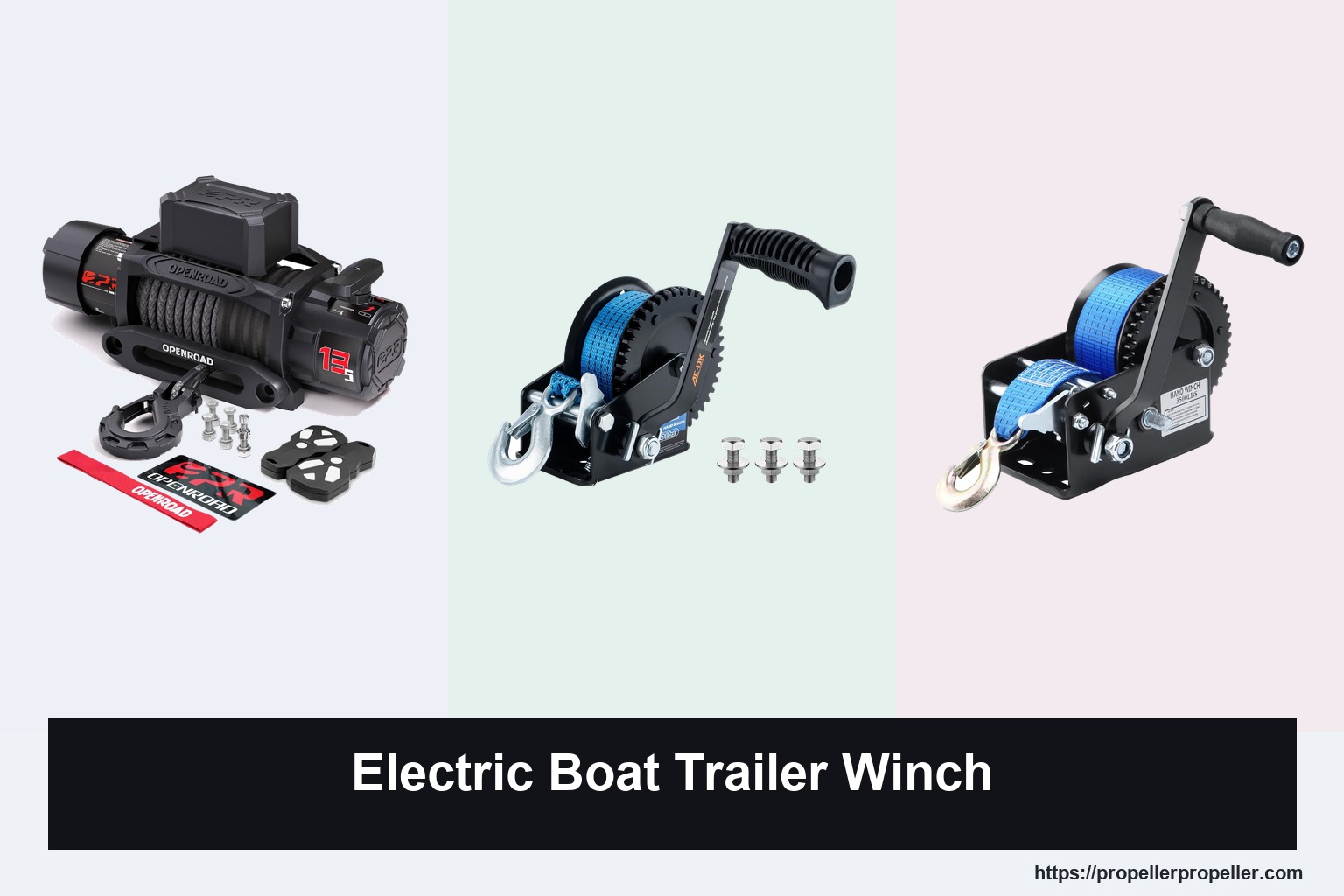
The OPENROAD Panther Series 3S is the most force-forward option in this group, and that matters when the trailer load is only part of the story. Its 3/8 inch x 85 ft synthetic rope gives you generous reach for difficult recovery angles, while the 13,500 lb breaking capacity places it in a very different class from hand-crank trailer winches. That extra headroom is useful for buyers who want one winch that can move beyond light boat-duty and still remain relevant for trucks, trailers, and other heavier pulls.
The physical format is large enough to require planning. The unit measures 20.8 x 6.3 x 9.5 inches in the feature notes, and the mounting pattern is listed at 10 x 4.5 inches. That means this is not a casual bolt-on accessory for every trailer tongue or bumper. The package does include the control box kit, fairlead, wired controller, two wireless controllers, hook, strap, installation bolts, and manual, so the ownership burden is less about sourcing parts and more about confirming space and power routing before installation.
Against the hand winches in this roundup, this model is the one for buyers who care more about powered control than compact simplicity. The IP68 rating is also meaningful if the winch will live near water, mud, or repeated weather exposure. It is the strongest recommendation when the trailer setup can accommodate its size and when the buyer wants remote convenience, broad utility, and maximum pulling reserve rather than a minimal boat-only solution.
PHOTO: OPENROAD Panther Series 3S – Winch with Accessory Kit → Source: Amazon.com
AC-DK 1600 lb Hand Trailer Winch
- Package Weight
- 3.61 kg
- Color
- 1600LB Blue Winch
Advantages
- Low purchase cost
- Long 26-foot strap
- Two-way ratchet operation
- Galvanized steel construction
- Compact portable format
Limitations
- Manual effort required
- Not suited for heavier loads
The AC-DK winch is the clearest low-cost manual option in the lineup, and its job is to keep lighter trailer work simple. The 1600 lb capacity is enough for modest boat, jet ski, and general trailer movement, while the 26 ft by 2 in polyester strap gives more working reach than many compact hand units. That longer strap matters at ramps and loading angles where you do not want to start with the bow too close to the winch post.
Its appeal is straightforward operation. The 2-way ratchet and 4:1 gear setup reduce the effort compared with a basic single-speed hand crank, and the 8.6-inch ergonomic handle is there to improve leverage without making the tool awkwardly large. The steel construction and galvanized finish are especially relevant in wet storage or coastal use because trailer winches often face more corrosion exposure than people expect. The stainless steel hook with safety pawl is another practical touch because the connection point is where loading stress becomes most visible.
Compared with the electric options here, this model trades speed and convenience for lower cost, lower weight, and simpler ownership. It is also the easiest fit for buyers who only need to position or retrieve lighter craft and do not want to run power wiring. For that narrow but very common use case, it is the most sensible recommendation in the group, provided the load stays comfortably within its capacity.
PHOTO: AC-DK 1600 lb Hand – Hand Winch with Strap → Source: Amazon.com
3500 lb Hand Boat Trailer Winch
Advantages
- Higher capacity than entry manual winches
- 33-foot strap length
- Zinc-plated corrosion resistance
- Two-way ratchet control
- Non-slip ergonomic handle
Limitations
- Manual cranking still required
- No powered assist
This hand winch sits in the middle of the manual category because it adds capacity without abandoning portability. The 3500 lb pulling force and 33 ft by 5 cm polyester strap give it more confidence on heavier trailer loads than a 1600 lb unit, and the larger gear range is a clue that the design is meant to balance force with controllable handling. For buyers who want a manual winch but need more reserve, that extra headroom is the main reason to look at it.
The build also pushes in the right direction for marine use. The premium steel structure and zinc-plated finish are designed to resist corrosion, and the non-slip handle matters when hands are wet or when you are working around a ramp. The 2-way ratchet and safety pawl make the loading direction more versatile, which reduces awkward repositioning when aligning the boat. That combination does not make it effortless, but it does make the process more predictable and less fatiguing than a barebones crank design.
Relative to the AC-DK winch, this one is the stronger choice when the load is heavier and the strap length matters. Relative to the electric units, it is still the simpler and less expensive system, but it requires more user input and effort. That is the tradeoff. Choose it if you want a manual winch with a meaningful step up in pulling reserve and you do not need powered operation for frequent launches or retrievals.
PHOTO: 3500 lb Hand Boat – Hand Winch with Strap → Source: Amazon.com
XYCLE 13500 lb Electric Winch
Advantages
- High-capacity electric operation
- Wireless and wired controls
- 80-foot synthetic rope
- All-copper motor
- IP67 weather protection
Limitations
- Mounting plate not included
- Remote battery not included
The XYCLE winch is built for buyers who want electric control with enough capacity to pull beyond a simple trailer-only workload. Its 13,500 lb capacity and 80 ft synthetic rope place it in the heavy-duty camp, and the rope material is a useful advantage for handling compared with steel cable. The two control modes also matter. Wireless operation adds convenience from a distance, while wired control gives you a direct backup when you want immediate tactile control near the winch.
The engineering details lean toward durability and stable output. It uses IP67 waterproof and dustproof protection, third-stage planetary gears, and an all-copper motor. Those features matter because a trailer winch often sees intermittent use, long idle periods, and exposure to moisture. The need for a separate mounting plate and a 12V 23A battery for the wireless remote are worth noting, since the installation is not fully self-contained. The warning about keeping at least 10 wraps on the drum is another practical operating constraint that buyers should respect.
Compared with the OPENROAD unit, this model gives you a similar heavy-duty target but with a slightly different hardware balance and IP67 rather than IP68 protection. Compared with the manual winches, it eliminates the physical cranking burden entirely. That makes it the most compelling choice for buyers who want a powered trailer winch, value both remote flexibility and backup wired control, and are comfortable handling the extra installation requirements.
PHOTO: XYCLE 13500 lb Electric – Electric Winch with Remotes → Source: Amazon.com
SeaSense 900 lb PWC Winch
- Item Weight
- 5.6 pounds
- Item Dimensions LxWxH
- 7.99 x 8.62 x 9.02 inches
- Material
- Zinc
- Size
- 900-Pound
Advantages
- Lightweight 5.6 pounds
- Compact 12-foot strap
- Two-way ratchet with free spool
- Zinc-plated gear construction
- Best for PWC trailers
Limitations
- Limited 900-pound capacity
- Not for larger boats
The SeaSense winch is the most focused light-duty option here, and that focus is useful. Its 900 pound capacity is specifically aligned with personal watercraft trailer work rather than larger boat loads, so the buyer is not paying for capability that will never be used. The 12 ft by 2 in strap with bow loop and hook is similarly practical because it keeps the setup compact and suited to smaller trailer geometries where long strap length is unnecessary.
This unit is built around simplicity rather than scale. The zinc-plated construction and solid gear construction are aimed at corrosion resistance and consistent handling, and the two-way ratchet with free spool is a meaningful convenience when you need to manage strap tension without fighting the handle. At 5.6 pounds, it is also the lightest-feeling choice in the group, which can make installation and seasonal removal easier on small trailer setups. That compact footprint is a real advantage when space near the bow stop is limited.
Against the other products in this roundup, this is the one to choose only if your trailer and craft stay in the light-duty range. It will not replace the larger manual or electric winches for heavier boats, but that is not its purpose. For PWC owners who want a straightforward, corrosion-resistant winch with a compact strap and low bulk, it is the most appropriate recommendation and the least overbuilt option on the list.
PHOTO: SeaSense 900 lb PWC – Zinc-Plated Trailer Winch → Source: Amazon.com
How to Choose an Electric Boat Trailer Winch
The right trailer winch starts with a realistic view of the load, the launch site, and how often you will use it. Some buyers only need a compact hand winch to move a small craft a short distance onto a trailer. Others need powered pulling, remote operation, or stronger corrosion resistance because the winch lives near water and sees regular use. The category rewards careful matching. A winch that is too light will create frustration. A winch that is too large or too complex can be equally awkward if your trailer setup does not support it.
Capacity and Load Margin
Capacity is the first decision because it determines whether the winch can do the job without strain. For light personal watercraft and small trailers, a modest manual winch can be enough. For larger boats or heavier towing situations, look for a much larger reserve so the winch is not working at its limit. That extra margin matters on ramps, in wind, and when the boat is not sitting perfectly centered. The more difficult the loading angle, the more you benefit from headroom rather than just a bare minimum rating.
Manual or Electric
Manual winches keep things simple. They are lighter, easier to store, and usually cheaper. They also demand more physical effort and take more time during retrieval. Electric winches reduce that effort and make repeated launches less tiring, but they add wiring, controls, and more setup decisions. The right answer depends on how often you launch and how much convenience you want. If the trailer is used occasionally, a hand winch can be enough. If you move heavy loads often, powered operation quickly becomes worth the added complexity.
Strap, Rope, and Reach
The pull line matters more than many buyers expect. A longer strap or rope can make alignment easier at a ramp because it gives you more working distance before the boat reaches the bow stop. Width and material also matter. Polyester straps are common on hand winches because they are straightforward and easy to manage, while synthetic rope on electric winches can reduce the awkwardness of handling cable. The right choice is the one that matches your trailer geometry and the way you actually load the craft.
Corrosion Resistance
Trailer winches spend a lot of time near water, and that makes corrosion resistance a real buying factor rather than a marketing detail. Zinc plating and other protective finishes help with durability when the winch is exposed to spray, humidity, or seasonal storage. If the winch will live on a trailer that stays outdoors, this becomes even more important. A corrosion-resistant finish does not eliminate maintenance, but it can slow wear and make the mechanism feel smoother over time. That is especially valuable for parts like hooks, ratchets, and exposed hardware.
Mounting and Space
A winch can only work well if it fits the trailer or bumper correctly. Check the mounting footprint, the available clearance around the handle or motor housing, and whether the setup needs a separate plate or bracket. Electric models often need more room for the control box and wiring, while compact hand winches can be easier to place in tighter spaces. Measure before you buy. A strong winch that cannot be mounted securely is less useful than a smaller unit that fits cleanly and aligns with the bow stop or trailer frame.
Ease of Use
Daily usability is shaped by details that look minor on paper. A long crank handle can reduce fatigue. A free spool can make strap handling easier. Wireless controls can save time on powered systems, but wired backup control is still valuable when you want direct response at the winch. Think about who will use the trailer most often. If one person does all the launching, convenience matters. If several people share the task, a setup that is simple and predictable is usually the better long-term choice.
Winch Comparison Table
| Product | Best For | Color |
|---|---|---|
| OPENROAD Panther Series 3S 13500 lb Winch | Best Heavy-Duty Electric | 13500lb Black |
| AC-DK 1600 lb Hand Trailer Winch | Best Budget Hand Winch | 1600LB Blue Winch |
| 3500 lb Hand Boat Trailer Winch | Best Midrange Manual | Not Specified |
| XYCLE 13500 lb Electric Winch | Best Remote-Control Electric | Not Specified |
| SeaSense 900 lb PWC Winch | Best Light-Duty PWC Winch | multicolor |
How We Tested & Analyzed Electric Boat Trailer Winch
This roundup was built around the decisions buyers actually make before choosing a trailer winch: load handling, operating style, installation demands, and environmental durability. Capacity alone is not enough, so the analysis also weighed rope or strap length, control method, mounting requirements, and protective finishes. Those factors matter because they affect how the winch behaves on a ramp, how much effort is required at the handle, and how confidently the unit can be used near water over time.
The comparison also separates true use cases. A light-duty PWC trailer winch should not be judged by the same expectations as a heavy electric recovery unit. Manual models were evaluated on practical leverage, strap length, ratchet design, and corrosion resistance. Electric models were evaluated on control flexibility, waterproofing, installation burden, and the usefulness of included hardware. The goal was to distinguish between what looks powerful and what is actually appropriate for a given trailer setup.
Limitations are part of the buying decision, so the recommendations account for them directly. Larger electric winches create installation and space considerations. Manual winches demand more user effort. Some setups require separate mounting hardware or additional electrical items. Rather than smoothing over those tradeoffs, the analysis treats them as central to the recommendation. That approach helps a buyer choose a winch that fits the trailer, the environment, and the intended frequency of use.
Frequently Asked Questions
How much capacity do I need for a boat trailer winch?
Start with the weight and loading conditions of the craft, then add a margin for ramp angle, water resistance, and less-than-perfect alignment. Light personal watercraft can work with modest capacity. Heavier boats and frequent use justify much more reserve. A winch that is always near its limit tends to feel harder to use and may wear faster.
Are electric winches worth it for trailers?
They are worth it when repeated pulling effort is a problem or when the load is heavy enough that manual cranking becomes tiring. Electric winches add wiring and setup complexity, but they reduce physical strain and usually speed up retrieval. If the trailer is used only occasionally for a light craft, a manual winch may be simpler and more cost-effective.
What is better for marine use, strap or synthetic rope?
Both can work well, but the better choice depends on the winch type and the amount of handling you expect. Straps are common on manual trailer winches and are easy to manage. Synthetic rope on electric units is often preferred for its handling characteristics and reduced fuss compared with cable. The key is choosing a pull line that matches the winch, the load, and the storage environment.
Why does corrosion resistance matter so much?
Trailer winches often live close to salt, spray, and humidity. That exposure affects hooks, gears, fasteners, and the finish on the housing. A zinc-plated or otherwise protected winch is less likely to degrade quickly and usually stays easier to operate. If your trailer is stored outdoors or launched in wet conditions, corrosion resistance is a major factor in long-term value.
Final Thoughts
The best trailer winch is the one that matches the boat, the ramp, and the amount of effort you want to spend every time you load. Light craft can do very well with a compact manual winch. Heavier trailers and more frequent use justify electric power, stronger mounting requirements, and a more serious weather-resistant build. The wrong choice usually shows up not as a dramatic failure but as daily inconvenience, extra strain, or a setup that never quite feels secure.
Choose with the full use case in mind. Think about capacity margin, strap or rope length, corrosion resistance, and how much installation work you are willing to take on. When those factors line up, a trailer winch becomes a tool that feels easy to trust rather than something you have to work around. That is the difference between a purchase that looks good on paper and one that genuinely improves launch day.