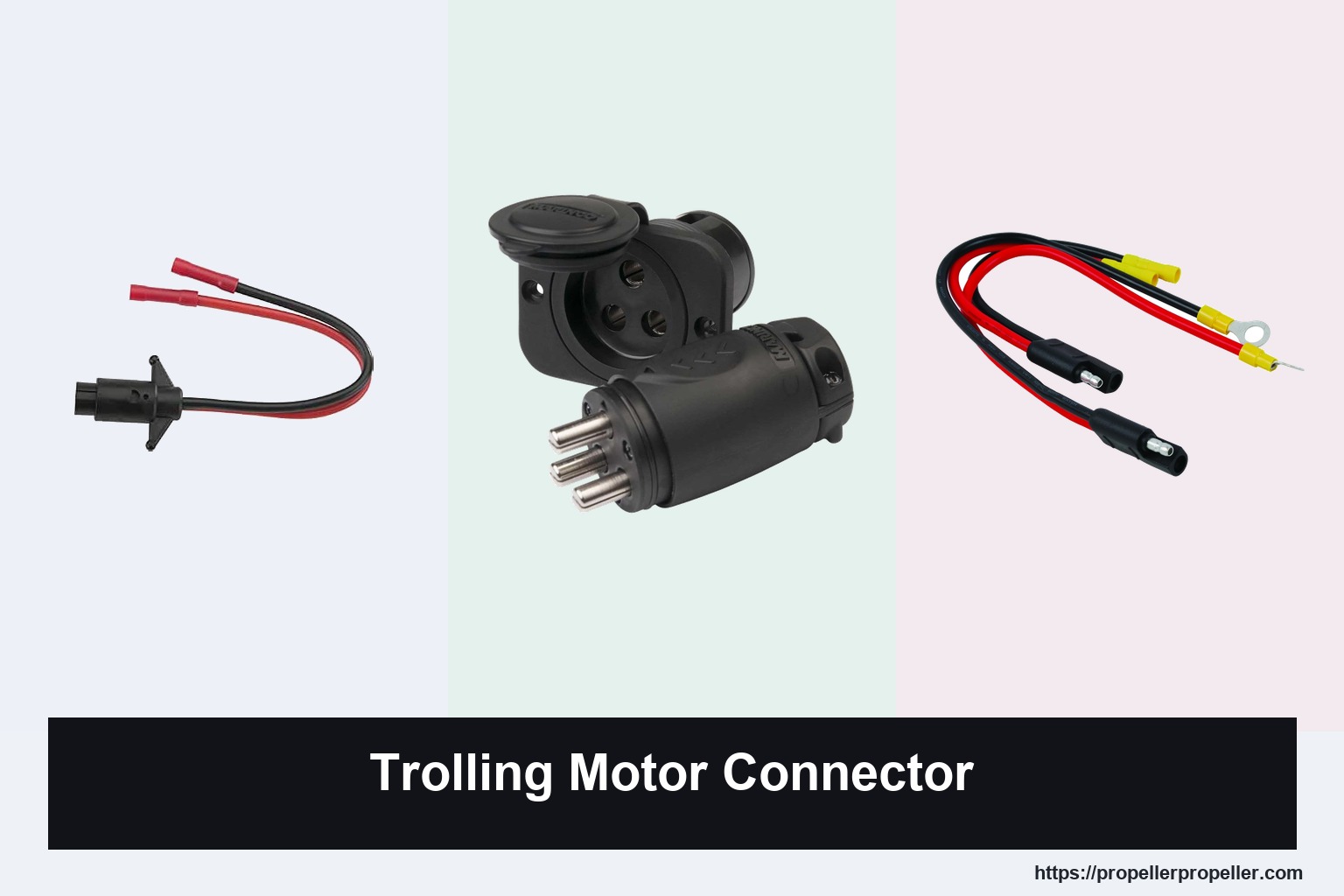
A trolling motor connector has a simple job, but the wrong one can turn a clean battery setup into a nuisance. Connection choice affects how often you unplug, how securely current travels under load, and how much confidence you have when the boat is bouncing through chop or spray. For a category this small, the differences that matter are not cosmetic. Wire gauge, voltage range, sealing, and the way the plug locks or releases all shape how usable the system feels on the water.
The five options here cover the main buying paths. Some are compact two-wire quick connectors for straightforward battery hookups. Others are full plug-and-receptacle kits built for higher current and broader voltage ranges. The best choice depends on how much power your motor draws, how often you want to disconnect it, and how much protection you want from corrosion and wet conditions. A connector that matches your electrical setup and your boat’s layout will save time every trip.
Top Trolling Motor Connector on the Market

Attwood Heavy-Duty 8-Gauge Male Plug
- 6-inch wire harnesses
- 8-gauge 2-wire design
- 12V motor-side plug
- Wing tabs for removal

Marinco 70-Amp Plug Kit
- 70A continuous rating
- 12 to 48V systems
- Keyed plug and receptacle
- Watertight sealing cap

attwood 10-Gauge Quick Connectors
- 10-gauge copper wire
- 22-inch connectors
- Set of 2
- Battery clip replacement

Moestoont Waterproof 8-Gauge Plug
- 8-gauge copper leads
- Waterproof gasketed cover
- 12V to 24V use
- Flame-retardant housing

NOVINO 50-Amp Plug Set
- 50A continuous rating
- 8 AWG marine wire
- IP67 waterproofing
- Self-locking connector
This article may contain affiliate links. As an Amazon Associate, the website may earn from qualifying purchases at no additional cost to you.
Trolling Motor Connector Reviews
Attwood Heavy-Duty 8-Gauge Male Plug
Advantages
- Compact 6-inch harnesses
- 8-gauge wire construction
- Easy motor-side removal
- 12V trolling setup
- Lightweight connector assembly
Limitations
- Requires matching receptacle
- Less versatile than full kits
This connector suits a buyer who wants a direct, compact motor-side plug without extra bulk. The 8-gauge 2-wire construction is the key detail because it keeps the connection oriented toward 12-volt trolling setups rather than larger multi-voltage systems. The male plug design with wing tabs also matters in everyday use. It makes attaching and removing the motor side easier when the boat is stored, trailered, or reconfigured between outings.
The short 6-inch harnesses with butt connectors point to a setup that is meant to be installed cleanly rather than improvised. That length keeps the assembly compact, which can help when space around the motor leads is tight. Because it is a plug-only approach, the buyer needs a compatible socket on the other side. That makes it less universal than a full kit, but also more focused if you already know your connection style and just need a sturdy replacement or upgrade.
Compared with the broader plug-and-receptacle kits in this group, this Attwood option is the more stripped-down choice. It does not try to cover every voltage range or every boat layout. Instead, it leans into simplicity and directness. That makes it the right recommendation for someone who wants a no-frills, motor-side connector and values compact wiring over extra system flexibility.
PHOTO: Attwood Heavy-Duty 8-Gauge Male – Two-Wire Lead Connector → Source: Amazon.com
Marinco 70-Amp Plug Kit
- Amperage
- 70 A
- Voltage
- 48 volts
- Item Weight
- 8 ounces
- Warranty Description
- LIMITED WARRANTY
Advantages
- 70-amp continuous rating
- Works across 12 to 48V
- Watertight sealing cap
- Integrated strain relief
- Keyed locator design
Limitations
- Higher price than basic plugs
- Bulkier than compact connectors
This is the most capacity-focused option in the group. The 70A continuous rating and 12/24/36/48V system support make it the clearest match for buyers who need a connector built around broader electrical demands. That range matters because it lets one kit serve multiple trolling motor configurations, which is useful if your boat may change over time or if you want a connector that is not locked to a single voltage class.
The practical strengths are in the details around contact security and environmental protection. The receptacle’s watertight sealing cap helps keep the opening protected when the plug is not connected. The plug’s integrated strain relief reduces stress where the wire meets the connector, which is important on boats where movement and vibration are constant. The keyed design with a thumbprint locator also reduces confusion when you are reconnecting by feel or in low light. That makes the kit more deliberate to use than simpler quick-disconnect hardware.
Relative to the smaller two-wire connectors here, this Marinco kit is the more serious infrastructure piece. It costs more, but it also brings the broadest voltage support and the strongest current rating. For buyers outfitting a higher-demand setup, or for anyone who wants one connector standard that can last through future motor changes, this is the strongest recommendation and the most complete package in the lineup.
PHOTO: Marinco 70-Amp Plug Kit – Plug and Receptacle → Source: Amazon.com
attwood 10-Gauge Quick Connectors
- Material Type
- heavy-duty 10-gauge copper wire
- Item Weight
- 5.28 ounces
- Recommended Uses For Product
- Trolling boat battery connections for trolling motors
- Manufacturer Warranty Description
- Please contact us if you experience any issues within 30 days of receipt.
Advantages
- 10-gauge wire
- 22-inch connector length
- Includes two connectors
- Replaces battery clips
- Secure disconnect system
Limitations
- Not a full plug-and-receptacle kit
- Less voltage flexibility
This kit is aimed at a buyer who wants an easy disconnect without relying on battery clips. The 10-gauge copper wire is the central specification because it signals a heavier-duty path than lightweight temporary leads. The 22-inch length also matters. It gives enough reach for many trolling boat battery layouts, so the disconnect point can be positioned in a way that is practical instead of cramped. With two connectors included, it is set up as a matched pair rather than a one-off part.
Its main value is in reducing loose, unreliable battery connections during use. Battery clips can slip in rough water, and this kit is built to replace that style of connection with something more secure. The tradeoff is that it is still a quick-connect approach rather than a full plug-and-receptacle system, so it fits a different kind of installation. If you already have a layout that calls for simple battery-side disconnection, this keeps the job straightforward and cleaner than makeshift clips.
Against the larger plug kits in this list, this attwood set is the pragmatic middle ground. It is not trying to be a universal, multi-voltage connector. It is built around a reliable battery connection and a clean disconnect path. That makes it a strong choice for boaters who want durability and convenience without moving to a more elaborate plug system. For that use case, it earns the recommendation.
PHOTO: attwood 10-Gauge Quick Connectors – Quick Connect Leads → Source: Amazon.com
Moestoont Waterproof 8-Gauge Plug
- Voltage
- 12 volts
- Material Type
- Flame Retardant Material
- Mounting Type
- Bow Mount
- Manufacturer Warranty Description
- 1 Years
Advantages
- 8-gauge copper leads
- Waterproof gasketed cover
- Flame-retardant housing
- Simple quick-connect setup
- Corrosion-resistant contacts
Limitations
- Less current headroom than 70A kits
- Voltage range not fully specified
This connector is built for buyers who want a practical waterproof quick-connect setup without moving into the highest-priced option. The 8-gauge copper wire leads are important because they support lower resistance and less heat buildup than thinner wiring. The flame-retardant material housing adds another layer of confidence for marine use where heat, spray, and vibration all matter. For a midrange setup, those are the kinds of details that affect whether a connector feels like a temporary accessory or a real part of the boat.
The waterproofing approach is one of its strongest practical advantages. A gasketed cover and moisture-focused design help keep spray, sand, and water out of the connection area. That is especially useful for boats that are launched often or stored in conditions where the connector is exposed between trips. The kit is also presented as a simple two-wire quick-connect, so installation is meant to be direct rather than complicated. That keeps setup manageable for buyers who want a clean connection point but do not want to rework the entire boat.
Compared with the Marinco kit, this option is less about maximum current headroom and more about value-oriented protection and convenience. Compared with the simpler attwood quick connectors, it offers a more sealed, weather-focused design. That combination makes it a strong recommendation for anglers who prioritize wet-weather durability and a straightforward install over multi-voltage flexibility.
PHOTO: Moestoont Waterproof 8-Gauge Plug – Plug and Receptacle Set → Source: Amazon.com
NOVINO 50-Amp Plug Set
- Voltage
- 48 volts
- Material Type
- Plastic
- Recommended Uses For Product
- For Fishing Boats, For Fresh Water
Advantages
- 50A continuous rating
- 8 AWG marine wire
- IP67 waterproof performance
- Self-locking design
- Pre-wired installation
Limitations
- Lower capacity than 70A kits
- Less compact than plug-only parts
This set is designed for buyers who want broad compatibility without jumping to the highest-capacity kit. The 50A continuous rating and 12V/24V/36V/48V support are the key decision points. They give the connector enough range for many common trolling motor systems while leaving room for future changes. The 8 AWG marine wire also matters because it supports lower resistance and more efficient power transfer, which becomes more relevant as load and cable length increase.
The sealing approach is more advanced than a basic open connector. The self-locking design, waterproof internal gasket, and watertight sealing cap are all aimed at keeping the connection secure in harsh conditions. That is useful for boats that see spray, rain, or repeated plugging and unplugging. The pre-wired format also reduces installation complexity because the connector arrives ready for a straightforward 2-wire hookup. For many buyers, that is the difference between a connector that gets installed once and one that turns into a wiring project.
Against the Marinco option, this NOVINO set gives up some current capacity but still covers a broad voltage spread and adds strong waterproofing. Against the smaller, more basic connectors, it offers a more complete kit with better system-level versatility. That balance makes it the best all-around recommendation for buyers who want one connector set to handle many common trolling motor jobs without overcommitting to a more expensive high-current platform.
PHOTO: NOVINO 50-Amp Plug Set – Right-Angle Connector Set → Source: Amazon.com
How to Choose a Trolling Motor Connector
The right connector is less about brand loyalty and more about matching the electrical demands of your boat. You want a connection that carries current cleanly, disconnects when needed, and stays dependable around water, vibration, and storage. Once you sort out voltage, wire size, and the kind of connection your layout needs, the decision becomes much easier. The best option is the one that fits your motor, your battery arrangement, and how often you expect to break the circuit.
Voltage Match
Voltage compatibility is the first filter because a connector should match the way your motor system is actually wired. A simple 12-volt setup can use a more compact connector approach, while larger systems may need hardware rated for 24, 36, or 48 volts. If the voltage range is too narrow, you limit future upgrades and can create an unnecessary replacement later. Start with the motor system you have now, then think about whether your next boat or motor might require more flexibility.
Current Capacity
Amperage rating matters because a connector is only as strong as the current it can carry safely. Higher draw motors need hardware that can handle sustained load without excess heat or voltage loss. A connector with more headroom is usually the safer long-term choice if your setup is power-hungry or if you expect long runs at higher throttle. Buyers with smaller motors can often stay with a lighter-duty connector, but there is little benefit in under-sizing the connection just to save a few dollars.
Wire Gauge
Wire gauge affects how efficiently power reaches the motor. Thicker wire generally means less resistance and less heat buildup, which becomes more important as cable length and amperage increase. For a trolling motor connector, that can translate into steadier output and fewer performance losses under load. If the leads are too small for the current demand, the connection can become the weak point in an otherwise solid electrical system. Matching gauge to the motor’s needs is one of the most practical ways to protect performance.
Water Protection
Marine use exposes connectors to spray, splash, condensation, and sometimes direct washdown. That is why sealing details matter. A watertight cap, gasket, or locking design can help keep moisture and debris away from the contact area, where corrosion and intermittent connection problems usually start. If your boat lives outdoors, gets launched often, or sees rougher conditions, better sealing is worth prioritizing. Dry storage and light use reduce the risk, but most buyers are still better off choosing a connector that is built for wet environments from the start.
Connection Style
There are two broad approaches in this category. Some connectors are full plug-and-receptacle systems, while others are quicker disconnect solutions built around simpler wiring layouts. A plug-and-receptacle system is usually the cleaner choice if you disconnect the motor often and want a repeatable, keyed connection. A simpler disconnect can be fine when your layout is fixed and you just need an easy way to separate the battery circuit. Choose the style that matches how often you remove the motor and how tidy you want the installation to be.
Installation Effort
Installation difficulty can make a good connector feel like a bad purchase if it does not match your comfort level. Pre-wired connectors and harnesses reduce the amount of work, while bareer or more integrated systems may demand more attention to routing and terminations. If you prefer a fast setup, look for parts that clearly support straightforward two-wire installation. If you are building a more permanent electrical layout, a slightly more involved kit may be worthwhile because it can produce a cleaner final result and fewer loose ends.
Connector Comparison Table
| Product | Best For | Voltage | Wire Size | Color | Engine Type | Fuel Type |
|---|---|---|---|---|---|---|
| Attwood Heavy-Duty 8-Gauge Male Plug | Best Compact Plug | Not Specified | Not Specified | Not Specified | Not Specified | Not Specified |
| Marinco 70-Amp Plug Kit | Best High-Current Kit | 48 volts | Plastic | Black | Not Specified | Not Specified |
| attwood 10-Gauge Quick Connectors | Best Quick Disconnect | Not Specified | heavy-duty 10-gauge copper wire | Not Specified | electric | Battery |
| Moestoont Waterproof 8-Gauge Plug | Best Waterproof Value | 12 volts | Flame Retardant Material | Plug and Receptacle | electric | electric |
| NOVINO 50-Amp Plug Set | Best All-Around Set | 48 volts | Plastic | 2-Prong,Elbow (1pk blue) | electric | electric |
How We Tested & Analyzed Trolling Motor Connector
This roundup prioritized electrical fit, connector capacity, and marine durability because those are the factors that most directly affect whether a trolling motor connection performs safely and consistently. The analysis focused on verified details such as voltage range, amperage rating, wire gauge, sealing features, and the practical style of the connection itself. Those elements matter more than cosmetics or generic product claims because they determine how well the connector will handle load, moisture, and repeated use.
Comparison also considered how each connector changes the installation experience. Some options are compact and simple, while others are complete plug-and-receptacle kits that are better suited to higher-demand or more flexible systems. That distinction matters because a buyer is not just choosing a part. They are choosing how easy the boat will be to connect, disconnect, and maintain over time. The strongest recommendations balance capacity, convenience, and environmental protection rather than excelling in only one area.
Limitations were handled conservatively. When a product record did not clearly state a feature, it was not assumed. That is especially important in this category because connector compatibility and electrical safety depend on exact details. The result is a buying guide built around grounded tradeoffs, not inflated claims. The goal is to help you choose a connector that matches your setup today and reduces friction on the water tomorrow.
Frequently Asked Questions
What matters most when choosing a trolling motor connector?
Voltage compatibility and current capacity matter most. If the connector cannot match the motor’s electrical demands, it becomes a weak point in the system. After that, look at wire gauge and sealing. Those two details influence how efficiently power moves and how well the connection holds up around moisture and vibration.
Do I need a plug-and-receptacle kit or a simpler connector?
That depends on how often you disconnect the motor and how tidy you want the installation to be. A plug-and-receptacle kit is better when you want a repeatable, keyed connection. A simpler disconnect can work well when your layout is fixed and you mainly want an easier separation point than battery clips.
Why does wire gauge matter in a trolling motor connection?
Wire gauge affects resistance and heat. Thicker wire generally carries current more efficiently, which is especially useful on longer runs or higher-draw motors. If the gauge is too small, the connector can limit performance even when the motor itself is capable of more.
How important is waterproofing for this category?
Very important for most boaters. Spray, splash, rain, and storage exposure can all lead to corrosion or unstable contact if the connector is not sealed well. Good caps, gaskets, and locking designs help keep the connection reliable and reduce maintenance over time.
Final Thoughts
The best trolling motor connector is the one that fits your electrical setup without forcing compromises elsewhere. A compact plug can be perfect for a simple 12-volt motor. A higher-rated kit makes more sense when you need broader voltage support or stronger current handling. What you do not want is a connector chosen only by price or convenience if it leaves you short on capacity, protection, or compatibility.
For most buyers, the smartest path is to match the connector to the motor’s demand and the boat’s real operating conditions. If your boat sees frequent launching, wet storage, or repeated disconnection, prioritize sealing and secure locking. If your system is more fixed, a straightforward, well-sized connector can be the cleaner and more economical choice. Choose for the way you actually fish, and the connection will disappear into the background, which is exactly what a good marine connector should do.