
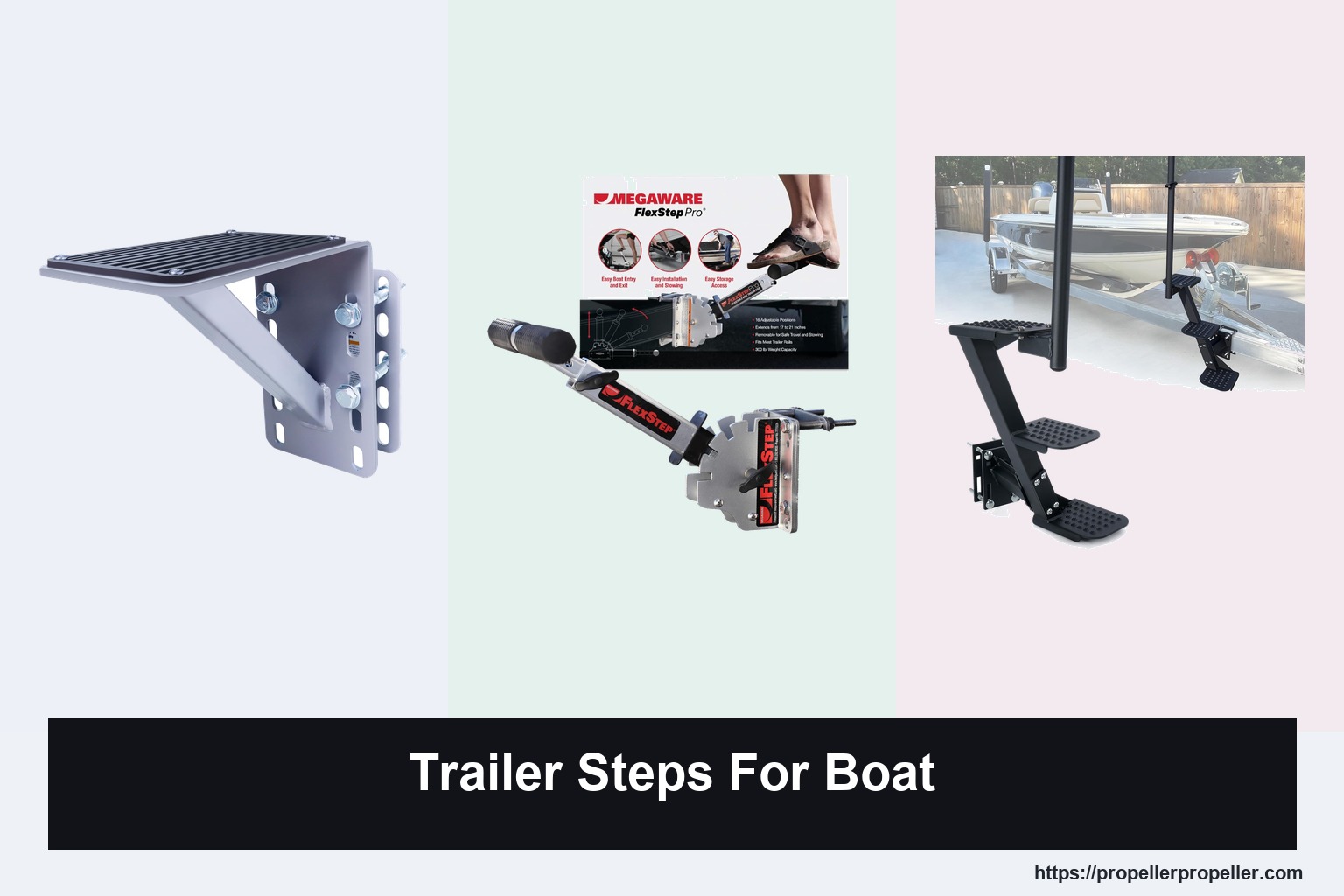
Getting on and off a trailered boat should feel stable, not improvised. The right trailer step changes the routine from balancing on a hitch or fender to stepping onto a purpose-built platform that can handle wet decks, muddy ramps, and awkward gear transfers. For many boat owners, the decision comes down to fit, footing, and how much access they need to the bow, storage, or cockpit without climbing in an uncomfortable way.
The four options here cover a wide spread of use cases. One is a compact fixed step with a 300-pound rating and a simple steel build. Another adds adjustability and quick removal for owners who want a more flexible boarding point. The remaining two are heavier three-step tongue solutions with handrail support and broader frame compatibility. The best choice depends on your trailer layout, the height you need to reach, and how much convenience you want to trade for cost and structure.
Top Trailer Steps For Boat on the Market

MaxxHaul 70089 Steel Trailer Step
- 300-pound capacity
- Fits 3 x 5 frames
- Non-slip textured surface
- Powder-coated steel finish

Megaware KeelGuard FlexStep Adjustable Step
- 16 adjustable positions
- Extends 17 to 21 inches
- 300-pound capacity
- Quick-detach pin

Aupar 3-Step Trailer Tongue Steps
- Three-step design
- Handrail bar included
- Fits 3 x 3, 4 x 4, 3 x 5
- Textured anti-slip tread

Aupar Heavy Duty Trailer Tongue Step
- Three-step design
- Handrail support
- Fits 3 x 3, 4 x 4, 3 x 5
- Black powder coat
This article may contain affiliate links. As an Amazon Associate, the website may earn from qualifying purchases at no additional cost to you.
Trailer Steps For Boat Reviews
MaxxHaul 70089 Steel Trailer Step
- Pull Force
- 300 pounds
- Material Type
- Carbon Steel
- Finish Type
- Powder Coated
- Item Weight
- 8 pounds
- Manufacturer Warranty Description
- 90 days
Advantages
- Lowest-friction installation
- Anti-slip textured footing
- Powder-coated steel construction
- Compact 8-pound design
- Vehicle-specific trailer fit
Limitations
- Only one step
- Limited to 3 x 5 frames
The MaxxHaul 70089 is the most straightforward choice in this group for owners who want a simple boarding step without adding a large structure to the trailer. Its 300 pounds rating and carbon steel construction point to a compact step that is meant to support ordinary climb-in and climb-out use rather than transform the whole trailer into a staircase. The anti-slip surface matters most when the boat ramp is wet or the trailer is muddy, because that is exactly when a small step can feel least forgiving. A powder coated finish also matters here because it helps the steel part survive the kind of repeated exposure trailer accessories see.
Its fit is deliberately narrow in scope, which is both a strength and a limitation. Compatibility is listed for trailer frames up to 3 x 5 inches, so owners who match that footprint get a more secure mounting expectation than a universal guess. The included mounting hardware lowers the friction of installation, and the 8-pound weight keeps the part manageable during setup. The tradeoff is that this is still a single-step solution with a 5-inch platform, so it is better suited to a stable assist point than to long, repeated climbing or higher-access needs.
Against the more elaborate options in this roundup, the MaxxHaul stands out for keeping the concept minimal. It does not try to reach multiple heights or add a handrail, so it is the most sensible pick for buyers who need a lower-cost, fixed helper at the trailer tongue or frame. That simplicity is exactly why it earns a recommendation. If your trailer already presents a workable step height and you mainly want safer footing, this is the most efficient buy in the group.
PHOTO: MaxxHaul 70089 Steel Trailer – Anti-Slip Step Platform → Source: Amazon.com
Megaware KeelGuard FlexStep Adjustable Step
- Weight Capacity Maximum
- 300 pounds
- Maximum Height
- 21 inches
- Material Type
- Aluminum
- Item Weight
- 7.7 pounds
- Manufacturer Warranty Description
- Warranty.
Advantages
- 16-position adjustment
- Removable with one pin
- Lightweight aluminum build
- Four-bolt mounting
- 300-pound load capacity
Limitations
- Higher price
- More moving parts
The MEGAWARE KEELGUARD FlexStep is the most adaptable option here, and that is its main reason to exist. A 16-position adjustment range gives you more control over where the step lands relative to the trailer frame, which is useful when boarding angle and gear access matter as much as raw stability. The step also extends from 17 to 21 inches, so it can bridge a practical height gap without forcing you to commit to a fixed mounting point. Its 300-pound capacity keeps it in the same general load class as the fixed steel step, but the value is in flexibility rather than brute simplicity.
The aluminum construction changes how this one feels in daily use. At 7.7 pounds, it is lighter than the heavy steel alternatives, which matters during installation and removal. Four-bolt mounting keeps the setup straightforward, and the single-pin disconnect makes the step more convenient to stow when traveling. That removable design is a real advantage if you want to reduce protrusions at the trailer or avoid leaving an access aid exposed while the rig is in transit. The tradeoff is that more adjustability also means more moving parts and a higher purchase price.
This is the most deliberate choice in the lineup for owners who know they need access flexibility and are willing to pay for it. Compared with the fixed MaxxHaul step, it gives far more positioning freedom. Compared with the larger three-step units, it is less imposing and easier to take off the trailer when the trip starts. That balance makes it the strongest recommendation for buyers who value placement, reach, and storage convenience over having a built-in staircase.
PHOTO: Megaware KeelGuard FlexStep Adjustable – Adjustable Trailer Step → Source: Amazon.com
Aupar 3-Step Trailer Tongue Steps
- Product Dimensions
- 25.5 x 11.8 x 7.8 inches
- Item Weight
- 18 pounds
- Exterior
- Carbon Steel
Advantages
- Three-step climbing aid
- Stable handrail support
- Universal frame fit options
- Textured tread surface
- Heavy-duty steel build
Limitations
- Bulky footprint
- Heaviest option here
The Aupar three-step unit is aimed at buyers who want a real climb-up solution rather than a single boarding assist. Its ladder-like layout, handrail bar, and triangular support make it the most confidence-oriented design in the group for repeated use at the trailer tongue. The three-step design is the key difference, because it spreads the climb across multiple points instead of forcing one large step up. That is especially helpful when the trailer sits high or when you are carrying a cooler, tackle, or other gear that makes balance less forgiving.
This model also has the broadest obvious trailer-fit story in the roundup. It is designed for 3 x 3, 4 x 4, and 3 x 5 crossmember widths, which gives more owners a realistic path to compatibility than a single-size mount. The heavy-duty solid steel build and black powder coat are practical here because a larger structure sees more stress at the mounting point and more environmental exposure. At 18 pounds and 25.5 x 11.8 x 7.8 inches, it is clearly more substantial than the compact steps, so installation and clearance should be considered carefully before ordering.
Relative to the other products, this is the strongest pick when the goal is safer, easier ascent rather than a discreet helper. The handrail and multi-step layout are a clear upgrade over single-step platforms, but that also means more bulk and a more visible footprint on the trailer. Buyers who routinely board from a higher trailer tongue, or who simply want a sturdier climb with less strain, should look here first. It earns a recommendation for users who need structure more than portability.
PHOTO: Aupar 3-Step Trailer Tongue – Three-Step Trailer Step → Source: Amazon.com
Aupar Heavy Duty Trailer Tongue Step
- Product Dimensions
- 25.5 x 11.8 x 7.8 inches
- Item Weight
- 18 pounds
Advantages
- Lower price than similar design
- Three-step access
- Handrail included
- Universal trailer fit range
- Corrosion-resistant coating
Limitations
- Large physical footprint
- Less compact for travel
This Aupar step covers the same basic use case as the other three-step unit, but it does so at a lower cost. It keeps the three-step design and handrail bar that make climbing easier than a single platform, while retaining the solid steel construction and anti-slip surface that matter for wet launches and repeated access. The result is a practical middle ground for buyers who want a more substantial trailer access point without paying for more than they need. The 18-pound weight tells you it is still a serious piece of hardware, not a small add-on.
The installation story stays familiar. It uses an adjustable bracket and mounting hardware for trailer tongue crossmembers in the same 3 x 3, 4 x 4, and 3 x 5 range, so the basic fit logic is broad enough for many bass boat setups. Because the overall dimensions are 25.5 x 11.8 x 7.8 inches, buyers should think about how much space the step will occupy under the tongue and whether that affects walking room or towing clearance. The black powder coat is valuable here because a larger steel accessory benefits more from corrosion resistance over time.
This version is the better choice for buyers who want the structural benefits of a climbing step but do not need to spend extra on a higher-priced twin. Compared with the pricier three-step model, it is the value play. Compared with the compact MaxxHaul and adjustable Megaware options, it is less subtle but more supportive when repeated climbing is the priority. If your trailer setup can accommodate a larger fixed step and you want the most function per dollar, this is the one to target.
PHOTO: Aupar Heavy Duty Trailer – Three-Step Trailer Step → Source: Amazon.com
How to Choose Trailer Steps for Boat
Trailer steps look simple until you have to use one with wet shoes, a loaded cooler, or a steep trailer tongue. The right design should match your frame size, the height you need to reach, and how often you will remove it for travel. Small differences in surface texture, mounting style, and step count can change how secure the climb feels in real use.
Step Count
One-step designs are usually the easiest to mount and the least intrusive on the trailer. They work best when you only need a stable boost into the boat and you already have a comfortable reach to the deck or bow. Once the trailer sits higher or the boarding angle becomes awkward, a multi-step unit can reduce strain and make the climb feel much more natural. The right count depends on whether you want a quick assist or a true ladder-like path.
Frame Fit
Trailer steps live or die by fit. A mount that lines up with your frame or tongue is more important than a long list of general claims about universal compatibility. Measure the crossmember before you buy, and pay attention to whether the step is meant for a specific width range or a narrow frame type. A precise fit is not just about installation ease. It also affects how stable the step feels when you load your weight onto it.
Surface and Footing
A textured or anti-slip surface matters most in the conditions where trailer access gets risky. Wet ramps, muddy launch areas, and rain-slick shoes can turn a flat step into a liability. Look for a tread pattern that gives your boot a real bite instead of a smooth painted plate. If you often board while carrying gear, prioritize a design that still feels secure when you cannot watch every foot placement.
Mounting and Removal
Some buyers want a step that stays on the trailer all the time. Others need something that comes off before highway travel or when the trailer has to clear tight spaces. Fixed mounts are generally simpler and more compact. Removable or adjustable systems add convenience, but they also introduce pins, bolts, or moving parts that should be checked periodically. Choose the setup that matches how often you want to leave the step in place.
Durability and Corrosion
Boat trailer accessories live in a rough environment. Steel can be a strong choice when it has a protective coating that resists rust and wear. Aluminum can cut weight and still hold up well, especially when the design is intended to be exposed to weather. Either way, the finish matters as much as the base material because salt spray, road grime, and standing water are what usually shorten the life of a step.
Access Needs
Think about what you actually do when you use the trailer. If you only need one stable foothold, a compact step may be enough. If you are reaching storage, bow hardware, or a higher deck, a larger platform or multi-step layout becomes more valuable. The best choice is the one that reduces awkward stretching and improves balance for your most common tasks, not the one with the most dramatic-looking design.
Trailer Step Comparison Table
| Product | Best For | Weight | Material | Size | Global Trade Identification Number | Manufacturer Warranty Description |
|---|---|---|---|---|---|---|
| MaxxHaul 70089 Steel Trailer Step | Best budget step | 8 pounds | Carbon Steel | Not Specified | 00817399010899, 10817399010896 | 90 days |
| Megaware KeelGuard FlexStep Adjustable Step | Best adjustable step | 7.7 pounds | Aluminum | Not Specified | 00672057800119 | Warranty. |
| Aupar 3-Step Trailer Tongue Steps | Best for easier climbing | 18 pounds | Not Specified | 25.5 x 11.8 x 7.8 inches | Not Specified | Not Specified |
| Aupar Heavy Duty Trailer Tongue Step | Best three-step value | 18 pounds | Not Specified | 25.5 x 11.8 x 7.8 inches | Not Specified | Not Specified |
How We Tested & Analyzed Trailer Steps for Boat
This roundup was built around category-level purchase factors that matter in daily trailer use: frame compatibility, step count, mounting style, surface traction, construction material, and load support. Those criteria were weighed against practical consequences such as how easy the step should be to install, whether it stays on the trailer during travel, and how much climbing assistance it actually provides. The goal was to separate simple boarding aids from more substantial access solutions without overstating what any one design can do.
Meaningful differences were judged by how directly each product’s verified attributes affect real ownership tradeoffs. A compact fixed step can be the right answer when space and simplicity matter. An adjustable or removable model serves a different buyer who needs placement flexibility. Larger tongue steps were treated as a separate tier because they change the boarding experience more dramatically, but they also add bulk and installation considerations. Where details were limited, the analysis stayed conservative and avoided assumptions about performance not grounded in the product record.
The same decision standard was applied across the group so the comparison would stay useful rather than promotional. A lower price did not automatically mean a better value. A larger structure did not automatically mean a better choice. Each product was considered in terms of fit, convenience, durability, and the amount of access improvement it realistically delivers. That approach matters in this category because the wrong step can be inconvenient at best and unstable at worst.
Frequently Asked Questions
What matters most in a trailer step for a boat?
Fit and footing come first. The step should match your trailer frame or tongue width and give you reliable traction when surfaces are wet. After that, decide whether you want a simple one-step assist or a larger climbing solution. Load capacity and corrosion resistance matter too, but only if the step can be mounted securely in the first place.
Is a removable trailer step worth it?
It can be, if you travel often or need to keep the trailer clear for loading and storage. Removable designs reduce clutter and can make transport easier. The tradeoff is added hardware and one more thing to check before each use. If you want a permanent boarding point, a fixed design is usually simpler.
Should I choose steel or aluminum?
Steel is often the better choice when you want a rigid, sturdy feel and a coated finish to resist weather. Aluminum is attractive when weight and easy handling matter more, especially for removable or adjustable setups. The better material is the one that matches how often you install, stow, and expose the step to the elements.
How many steps do most buyers need?
Many buyers only need a single stable step if the trailer height is manageable. Once access feels awkward or you routinely carry gear, a two- or three-step design can improve comfort and balance. The right answer depends less on the number itself and more on how high you are climbing and how much support you want.
Final Thoughts
A good trailer step should make boarding calmer, safer, and less awkward every time you launch. The strongest choices here separate neatly by use case. Compact fixed steps reward simplicity, adjustable steps reward flexibility, and three-step tongue units reward buyers who want a real climbing aid. That is why the best option is not the most elaborate one. It is the one that matches your trailer height, frame size, and storage habits without creating new hassles.
If you want the cleanest path to better access, start with your mounting space and then decide how much structure you actually need. A smaller step is easier to live with. A larger step is easier to climb. The right buy balances those two realities in a way that fits your trailer and your routine. Choose for the way you launch now, not the way you hope you might launch someday.



