
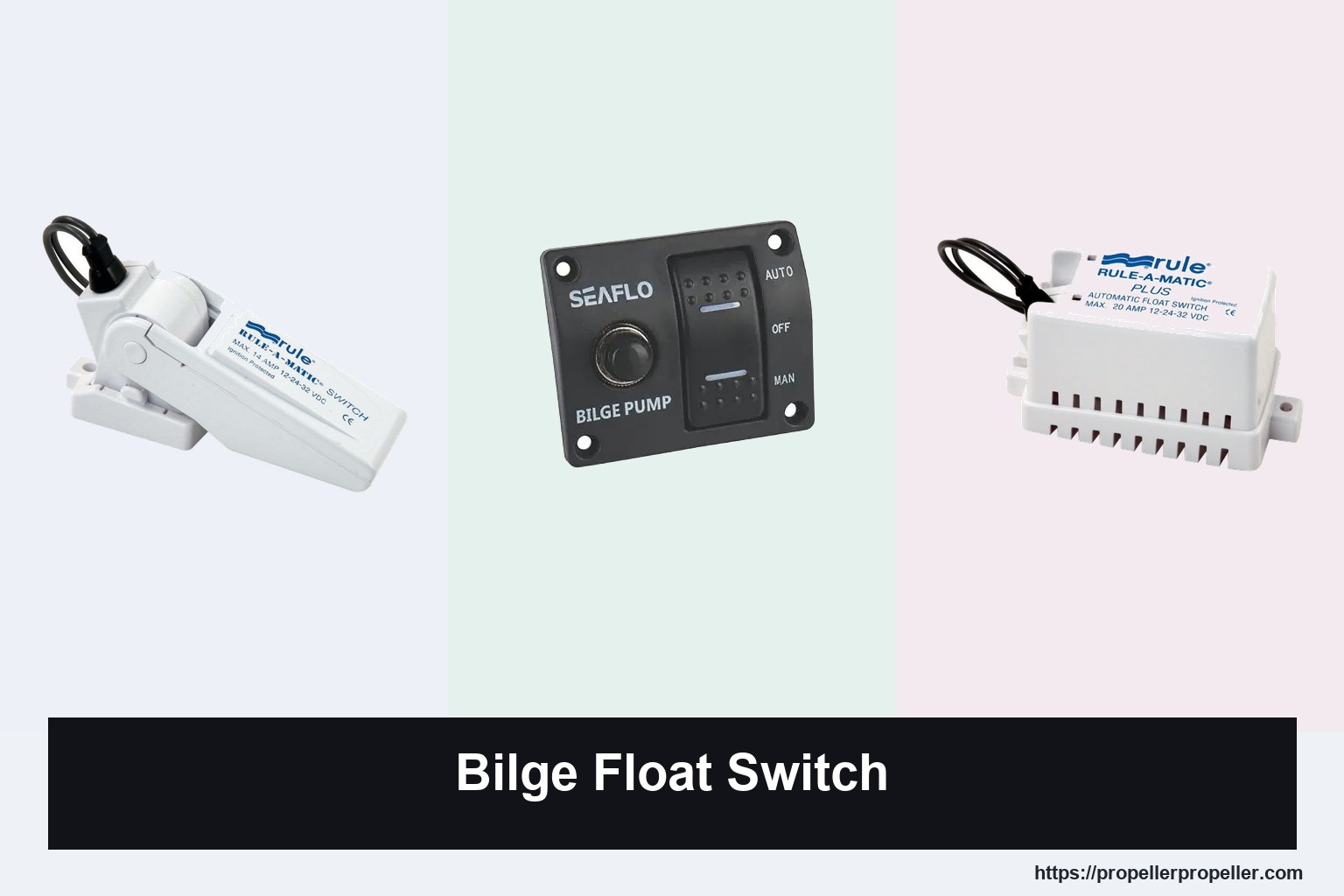
A bilge float switch is one of those boat parts you do not think about until it fails. When water starts collecting below deck, the switch has to wake the pump at the right time, survive a wet and dirty compartment, and keep doing that season after season without sticking or chattering. That is why the best options are not just about turning a pump on. They are about dependable activation, corrosion resistance, sensible wiring, and the right level of control for how your boat is used.
The five picks below cover that range from simple automatic float control to complete pump-and-switch packages and panels with manual override. Some buyers want the most straightforward replacement for an existing automatic system. Others need a setup that adds visual feedback, circuit protection, or a bundled pump for a cleaner install. The differences matter because bilge protection is only as good as the weakest part of the system, and a good choice depends on voltage, mounting space, control preference, and how much redundancy you want when conditions get rough.
Top Bilge Float Switch on the Market
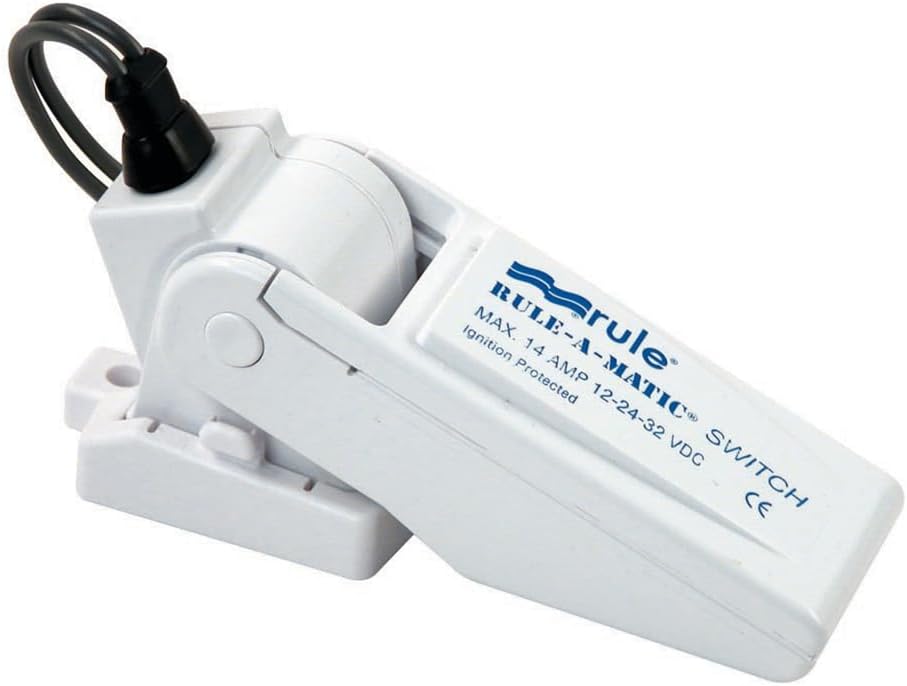
Rule 35A Rule-A-Matic Switch
- 12-24 VDC operation
- Mercury-free design
- Compact float switch
- Easy marine installation

SEAFLO 3-Way Bilge Panel
- Automatic-off-manual control
- Built-in 15A breaker
- 12V and 24V support
- Panel-mount design

Rule 40A Float Switch
- 12, 24, or 32 volts
- Impact-resistant cover
- Moisture-tight seals
- USA-made

AIRTAK 1500 GPH Pump Kit

MAXZONE 1100GPH Auto Pump
- 1100 GPH output
- Built-in float switch
- 3-meter lift height
- Compact 12V design
This article may contain affiliate links. As an Amazon Associate, the website may earn from qualifying purchases at no additional cost to you.
Bilge Float Switch Reviews
Rule 35A Rule-A-Matic Switch
- Power Source
- Corded Electric
- Material Type
- Plastic
- Manufacturer Warranty Description
- 2 years
Advantages
- 12-24 VDC compatibility
- Mercury free
- Very light switch body
- Compact footprint
- 2-year warranty
Limitations
- No manual override
- No built-in indicator
The Rule 35A is the most straightforward option in this group for owners who already have a compatible bilge pump and only need automatic level control. Its role is narrow but important. The 12-24 VDC rating broadens compatibility across common marine electrical setups, and the mercury-free design is a meaningful selling point for anyone replacing older hardware with a cleaner modern switch. At just 13 g, it is also easy to place without adding bulk in a cramped bilge.
Installation is where this switch earns its reputation. The compact plastic housing keeps the unit light, and the simple corded-electric setup suits a basic automatic circuit rather than a more complicated control station. That matters if you are replacing a worn switch in an existing system and want minimal rework. The tradeoff is that this is a pure float switch, so it does not add manual override, circuit protection, or built-in status feedback. Buyers should see that as intentional simplicity rather than a missing feature.
Against the other picks, the Rule 35A is the cleanest choice when reliability and replacement ease matter more than extra controls. It is less versatile than a pump-and-panel package, and it does not bundle the pump itself, but that also keeps the system lean. For boat owners who want automatic activation with the fewest moving parts and the least learning curve, this is the most practical recommendation in the lineup.
PHOTO: Rule 35A Rule-A-Matic Switch – Automatic Float Switch → Source: Amazon.com
SEAFLO 3-Way Bilge Panel
- Operation Mode
- ON-OFF-ON
- Current Rating
- 15 A
- Operating Voltage
- 12 volts
- Mounting Type
- Panel Mount
- Connector Type
- Screw Terminals
Advantages
- Automatic-off-manual positions
- Built-in 15A protection
- LED status light
- Spring-return manual mode
- 12V and 24V support
Limitations
- Requires panel mounting
- More wiring than a basic switch
SEAFLO takes a different approach by putting bilge control on the dashboard or bulkhead instead of hiding everything in the bilge. The main draw is the 3-way control with automatic, off, and manual positions. That gives the operator direct authority when conditions change, while the built-in 15 A circuit protection adds a safety layer that many simple switches do not provide. It is a stronger fit for buyers who want one visible control point rather than a hidden automatic trigger.
That flexibility comes with installation consequences. The panel-mount format and screw terminals suit a more deliberate wiring job, so this is less of a drop-in replacement and more of a control upgrade. The spring-loaded manual return is a useful safeguard because it prevents the pump from being left on accidentally. The LED indicator also matters in the real world. It gives a quick status check at a glance, which is valuable when you are managing multiple switches or checking the system in poor light.
Compared with the pure float switch, SEAFLO is the more complete control solution. It is not the simplest option, but it is the better pick when you want manual override, visible operation, and electrical protection in one compact unit. Buyers upgrading a helm or electrical panel should place this high on the list, especially if they value operator control as much as automatic activation.
PHOTO: SEAFLO 3-Way Bilge Panel – Bilge Pump Switch Panel → Source: Amazon.com
Rule 40A Float Switch
- Voltage
- 32 volts
- Material Type
- Stainless Steel
- Item Weight
- 8 ounces
- Manufacturer Warranty Description
- as listed
Advantages
- Impact-resistant cover
- 12-24-32V compatibility
- Moisture-tight seals
- Made in the USA
- Compact housing
Limitations
- No manual override
- No control panel features
The Rule 40A is aimed at buyers who want a tougher float-switch build without moving to a full control panel. Its most important distinction is the impact resistant cover, which helps protect the mechanism from debris and jamming in a busy bilge. The 12, 24 or 32 Volt compatibility also gives it unusually broad electrical flexibility, which is helpful when the boat’s system is not a simple single-voltage install. That combination makes it a strong upgrade path for more demanding environments.
The compact body and moisture-tight seals support the kind of install where reliability matters more than convenience features. Because it is still a dedicated float switch, the setup stays focused on automatic pump triggering rather than user controls or circuit management. At 8 ounces, it is heavier than the lightest switches here, but that weight is part of a more substantial housing. Buyers should see that as a tradeoff in exchange for a more protected mechanism that is less exposed to floating debris and repeated splashing.
Relative to the Rule 35A, this model leans toward durability and voltage flexibility rather than minimal size. Compared with the SEAFLO panel, it gives up manual override and visible control, but it avoids the extra wiring and mounting complexity. That makes the Rule 40A the best fit for boat owners who want a more robust automatic switch and are willing to pay for a sturdier physical design.
PHOTO: Rule 40A Float Switch – Automatic Float Switch → Source: Amazon.com
AIRTAK 1500 GPH Pump Kit
- Flow Rate
- 25 gpm
- Voltage
- 12 volts
- Item Weight
- 1.8 pounds
Advantages
- Complete pump-and-switch kit
- 1500 GPH capacity
- Water-cooled motor
- Stainless steel shaft
- 1-1/8-inch outlet
Limitations
- Less modular than separate parts
- More component weight than a switch
AIRTAK stands out because it is not just a switch or just a pump. It is a complete automatic drainage setup. The bundled 1500 GPH pump and included float switch remove the guesswork of pairing separate components, which is a real advantage if you want a faster path to a working bilge system. The 12V DC design and 1-1/8-inch outlet make it especially relevant for straightforward marine installs where standard hose sizing matters.
The practical value of the package is that the float switch, pump, and wiring are meant to work together from the start. The system uses a submersible, water-cooled motor and a stainless steel shaft, both of which are aimed at longer service life in wet conditions. The switch design also includes silver contacts and a detachable base for cleaning, which matters because bilge hardware often fails through neglect and buildup rather than dramatic breakdowns. At 1.8 pounds, the unit is still compact enough for many boat compartments, but it is obviously more involved than a standalone switch.
Against the rest of the group, this is the option for buyers who want the fewest missing pieces. It gives up the modularity of picking a separate switch and pump, and it is more focused on complete drainage than on control-panel sophistication. Even so, that bundled simplicity is exactly the reason to choose it. If you need an automatic pump system and do not want to source matching parts separately, this is the most efficient route.
PHOTO: AIRTAK 1500 GPH Pump – Float Switch and Pump → Source: Amazon.com
MAXZONE 1100GPH Auto Pump
- Flow Rate
- 18.33 gpm
- Maximum Lifting Height
- 3 meters
- Voltage
- 12 volts
Advantages
- Integrated float control
- Compact housing
- 3-meter lift height
- 12V operation
- Lower current draw
Limitations
- Lower flow than 1500 GPH kits
- Less flexible than separate components
MAXZONE is the compact automatic solution in this lineup. It is more than a switch because the pump and float function are integrated into one unit, so there is no separate float switch to mount or wire. The 1100GPH output is lower than the AIRTAK kit, but that also keeps the package small and focused on everyday bilge management rather than maximum throughput. The built-in float switch is the key convenience feature for buyers who want automatic operation without assembling a multi-part system.
Its operating profile is well suited to smaller compartments or boats where space is tight. The 12V design, 3-meter maximum lifting height, and 1-1/8-inch hose compatibility line up with common marine plumbing expectations, and the integrated reed-sensor system means the pump stays dormant until water rises. That matters in practice because unnecessary cycling is one of the main ways compact pumps wear out early. The 3.8A current figure also suggests a lighter electrical load than some larger-capacity alternatives.
Compared with the AIRTAK kit, MAXZONE gives up raw output and the bundled completeness of a more fully specified system, but it wins on compactness and straightforward automatic operation. Against the stand-alone switches, it is the more self-contained answer for owners who want one purchase and a small footprint. If your boat does not need the highest flow in the group and space efficiency matters, this is the most sensible compact automatic choice.
PHOTO: MAXZONE 1100GPH Auto Pump – Automatic Bilge Pump → Source: Amazon.com
How to Choose a Bilge Float Switch
The right bilge float switch depends on how much control you want and how much wiring you are willing to touch. Some boat owners only need an automatic trigger that quietly starts the pump when water rises. Others want a panel with manual override, visible status, and circuit protection. A few will be better served by a complete pump-and-switch package that reduces compatibility questions. The best choice is the one that matches your electrical system, installation space, and tolerance for complexity.
Control Style
Start by deciding whether you want pure automatic operation or a control point you can reach from the helm. A simple float switch is usually the leanest solution because it turns the pump on only when water rises. A panel with automatic, off, and manual positions gives you more authority, which matters when you want to test the system or force drainage after heavy rain. The tradeoff is extra wiring and a more visible installation. Choose the simpler path when reliability and ease matter most. Choose the panel when direct control is part of how you manage the boat.
Voltage Match
Voltage compatibility should never be an afterthought. A switch or pump has to match the boat’s electrical system closely enough to operate safely and consistently. Many marine setups are 12V, but some products support more than one voltage, which can simplify a replacement if the system is not standard or may be upgraded later. Matching voltage is not only about function. It also affects how easily the unit integrates with existing wiring and accessories. If you are replacing hardware, confirm the full circuit voltage before buying anything else.
Installation Space
Bilge compartments are often cramped, wet, and awkward to reach. That is why physical size and mounting style matter as much as electrical specs. A compact switch is easier to place in a crowded bilge, while a panel-mount control belongs at an accessible operating point rather than down below. Bundled pump-and-switch kits can simplify selection, but they still require room for both the pump body and hose routing. Measure the available area before you choose. A slightly larger component can be the wrong choice if it forces a bad angle, a kinked hose, or difficult maintenance access.
Protection & Durability
Marine hardware fails fastest when it cannot handle moisture, debris, and repeated cycling. That is why durable housings, sealed components, and debris resistance deserve close attention. A protected float mechanism is less likely to jam in a dirty bilge, and moisture-tight construction helps the switch survive constant splash exposure. If you boat in rougher conditions or leave the vessel unattended for long periods, durability should outweigh cosmetic simplicity. The cheapest part is not cheap if it sticks, corrodes, or forces repeated replacement. Buy for the conditions your bilge actually sees.
Pump or Switch
Some buyers only need a replacement switch. Others need the whole automatic drainage system. That difference changes both budget and installation effort. A stand-alone switch preserves the rest of your setup and is often the better fit for a functioning pump that only needs a new trigger. A complete pump-and-switch package is easier when you want to reduce compatibility questions or rebuild a tired system from the ground up. Decide which part of the system is actually the weak link. Replacing only the failing piece is usually the most efficient move, but a full kit can be smarter when multiple parts are already due.
Bilge Float Switch Comparison Table
| Product | Best For | Voltage | Flow Rate | Weight | Color | Material Type |
|---|---|---|---|---|---|---|
| Rule 35A Rule-A-Matic Switch | Best Simple Automatic Switch | Not Specified | Not Specified | 13 g | White | Plastic |
| SEAFLO 3-Way Bilge Panel | Best Control Panel | Not Specified | Not Specified | 3.74 ounces | Black | Plastic |
| Rule 40A Float Switch | Best Rugged Upgrade | 32 volts | 5678 liters per hour | 8 ounces | White | Stainless Steel |
| AIRTAK 1500 GPH Pump Kit | Best All-in-One Kit | 12 volts | 25 gpm | 1.8 pounds | Blue, Red, White | Plastic |
| MAXZONE 1100GPH Auto Pump | Best Compact Auto Pump | 12 volts | 18.33 gpm | Not Specified | Blue | Plastic |
How We Tested & Analyzed Bilge Float Switch
This category was judged on the factors that directly affect bilge protection in use: activation style, electrical compatibility, physical size, mounting approach, and whether the product is a switch alone or part of a larger pumping system. Those differences matter because a bilge setup has to work in a confined, wet environment where access is limited and failure is expensive. The analysis therefore focused on how each design changes installation effort, operational control, and the likelihood of reliable automatic drainage.
Comparisons were made by separating core automatic triggers from control-panel solutions and from complete pump kits. That distinction is important because one product may be better as a replacement part while another is more suitable for a system upgrade. Where a product offered broader voltage support, an integrated breaker, a protected housing, or a bundled float mechanism, those were weighed as decision-making advantages only when they were clearly relevant to real marine use. Unsupported claims, vague durability language, and missing details were not treated as meaningful benefits.
Because bilge hardware is mostly judged by fit and function rather than cosmetic appeal, the review also considered tradeoffs that buyers often miss. More control can mean more wiring. A compact unit can mean less flexibility. A complete kit can reduce uncertainty, but it may be less modular than separate parts. The goal was to translate those technical differences into practical consequences so that the final recommendations help a buyer choose the right level of simplicity, protection, and control for a specific boat.
Frequently Asked Questions
Do I need a separate switch or a complete pump kit?
If your existing pump is still good, a separate switch is usually the cleaner replacement. If the pump, wiring, and trigger are all aging or mismatched, a complete kit can simplify the job and reduce compatibility headaches. The right answer depends on which part of the system is actually failing and how much rework you want to do.
Is manual override necessary on a bilge control?
Not strictly, but it is very useful. Manual override lets you force pumping when you want to test the system or clear water after unusual conditions. For small, simple setups, an automatic-only switch can be enough. For boats that see variable conditions or frequent monitoring, a manual position adds real operational flexibility.
Why does voltage compatibility matter so much?
The switch or pump has to match the boat’s electrical system to operate correctly and safely. If the voltage is wrong, the unit may not function as intended or may be harder to wire into the existing circuit. Matching voltage also reduces surprises during installation and helps the system integrate with other marine electrical components.
What makes a float switch more reliable in a bilge?
Reliability usually comes from a mix of protected construction, sensible mounting, and a mechanism that resists debris and moisture. Sealed components and debris protection reduce jamming. Clear electrical matching and a clean installation reduce nuisance cycling. In a bilge, the best reliability comes from preventing both physical sticking and wiring-related problems.
Final Thoughts
The strongest bilge float switch is the one that fits the boat you actually have, not the boat you wish you had. A simple automatic switch suits owners who want quiet, dependable activation with minimal complexity. A control panel makes sense when you want manual authority and visual confirmation. A complete kit is the best way to remove compatibility uncertainty when rebuilding the drainage system from scratch. The right answer comes from balancing control, protection, and installation effort rather than chasing the biggest specification.
For most buyers, the decision comes down to whether the existing pump is worth keeping and whether you want the system hidden or managed from above deck. Once that is clear, the right product choice becomes much easier. Prioritize voltage match, physical fit, and the level of control you will actually use. Do that, and you end up with a bilge system that is not just automatic, but dependable when the water starts rising.



